Open today · 00:00 – 23:59

Cai Rang Floating Market Tour

Cai Rang Floating Market Tour — Sunrise Boats on the Can Tho River

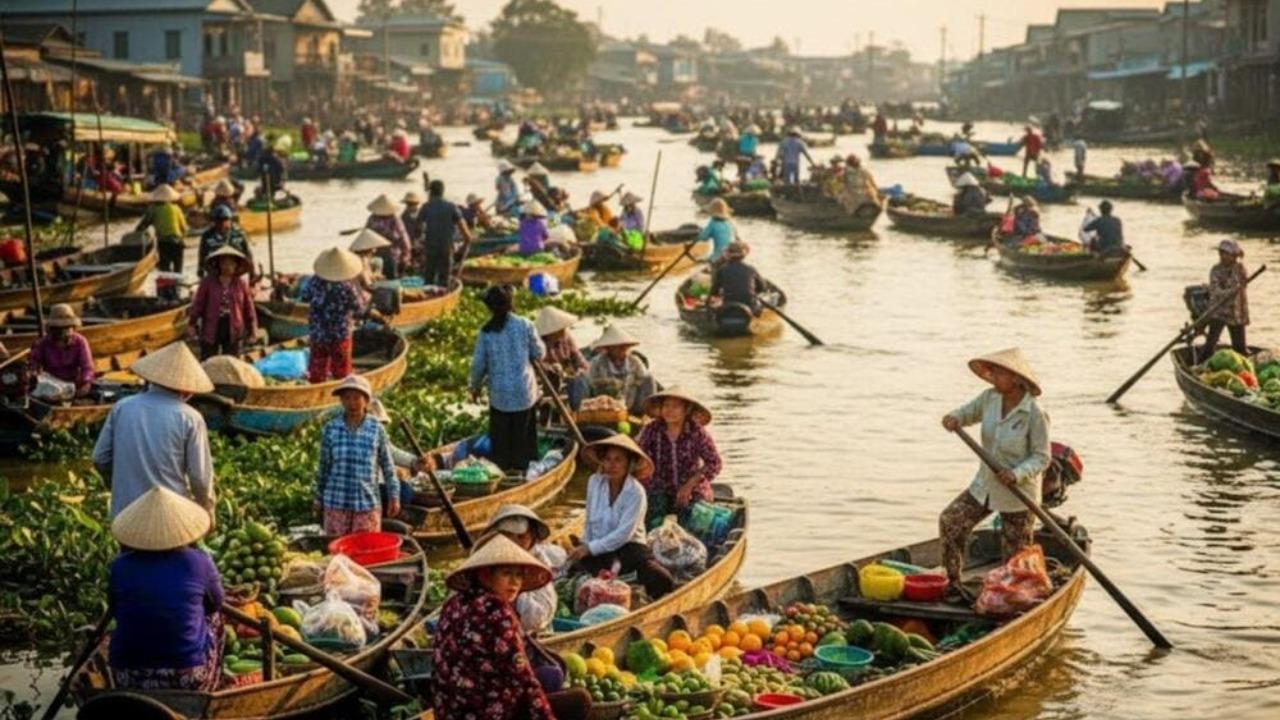
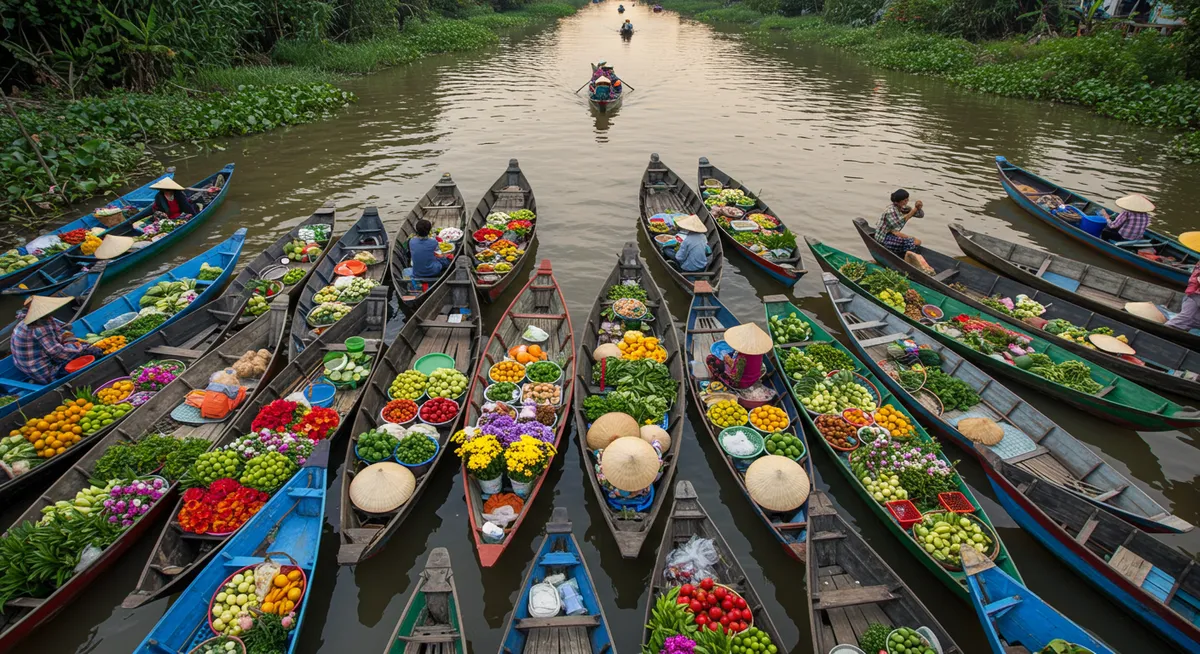
Wholesale barges wake at dawn, produce poles marking the trade.

88K+ travelers chose this
Free Cancellation
Right now: Moderate — dry season weekday morning Arrive by 06:00 for the fullest spread of trading boats before the 9am thin-out
4-6 hours recommended
1 Languages
Small groups, 2-12 people
Free Cancellation
Free cancellation Instant confirmation Mobile voucher Verified partner Book now, pay later
6 km
Distance from Ninh Kieu Pier
By boat from Can Tho city
2016
Heritage recognition year
National intangible cultural status
200-300
Daily local boats
Trading river vendors
05:00-08:00
Peak trading window
Busiest before 9am
Choose your ticket

Ticket options at a glance

Compare fares, pick the fit — all bookings are mobile-voucher and eligible for free cancellation where shown.

Can Tho Mekong Delta: Floating Market, Secret Canals & Cacao Farm 6 hr 30 min
Guided Experience

Can Tho Mekong Delta: Floating Market, Secret Canals & Cacao Farm

4.9 (984)
€25
  • Expert local guide
  • Small group
  • Skip-the-line access
  • Free cancellation
Book this ticket
Mekong Delta & Cai Rang Floating Market 2-Day Tour from Ho Chi Minh City 48 hr
Guided Experience

Mekong Delta & Cai Rang Floating Market 2-Day Tour from Ho Chi Minh City

4.6 (1804)
€57
  • Expert local guide
  • Small group
  • Skip-the-line access
  • Free cancellation
Book this ticket
Head to head

Cai Rang Floating Market Tour Or Phong Dien: Which Should You Book?

Most Can Tho visitors who compare both call Cai Rang the better single pick for scale and photography, while Phong Dien wins for a quieter, more retail-style river experience; a cai rang floating market tour still edges out Phong Dien as the essential first-timer choice.

Top pick
Cai Rang Floating Market
Phong Dien Floating Market
Market scale and boat count Under 10–45 boats, much smaller
Distance and travel time from Can Tho About 17–20 km, ~45 min road / 1.5–2 hrs boat
Crowd levels and touristiness Sparse crowds, few tourists
Trading focus (wholesale vs retail) Small retail and household-goods market
Typical start and wind-down time Starts ~4–5am, quiets by 7:30–8am
Best fit for photography vs quiet immersion Best for quiet, authentic immersion

Verdict: Choose Cai Rang for scale, color, and easy access; choose Phong Dien if you want fewer tourists and a slower, more local river scene.

Featured Experiences

Popular tours & activities

Hand-picked experiences loved by thousands of travelers

Recommended Experience

Powered by GetYourGuide

Another traveler favorite

Powered by GetYourGuide
Mekong Delta Day Tour: Cai Rang Floating Market & Con Son Islet 12 hours Free Cancellation

Mekong Delta Day Tour: Cai Rang Floating Market & Con Son Islet

Drift through a legendary floating market, explore a lush river islet, and taste real Mekong life in one epic day.

4.7 (710)
FromFrom €60.47
See details
Mekong Delta & Cai Rang Floating Market 2-Day Tour from Ho Chi Minh City 2 days / 1 night Free Cancellation

Mekong Delta & Cai Rang Floating Market 2-Day Tour from Ho Chi Minh City

Drift through river canals, discover floating markets, and soak up authentic delta life on this immersive 2-day escape from Saigon.

4.7 (132)
FromFrom €77.49
See details
Can Tho Sunrise Floating Market & Mekong Forest Private Tour 5.5 hours Free Cancellation

Can Tho Sunrise Floating Market & Mekong Forest Private Tour

Drift through Cai Rang's bustling sunrise market and glide into a serene flooded cajuput forest on this unhurried 5.5-hour private adventure.

4.9
FromFrom €88.79
See details
Your journey

Step-by-step — what your day looks like

1

Board sampan at Ninh Kieu Pier

Depart by boat downstream toward the trading grounds on the Can Tho River

2

Arrive at the trading zone

Weave between wholesale boats stacked with fruit and vegetables as sellers hail buyers

3

Floating breakfast stop

Buy noodle soup or coffee directly from a vendor boat moored alongside

4

Orchard or noodle house detour

Optional stop at a riverside fruit orchard or rice-noodle workshop before heading back

5

Return to Ninh Kieu Pier

Cruise back as trading thins out after 08:00

What you'll see

Highlights not to miss

Main Trading Grounds

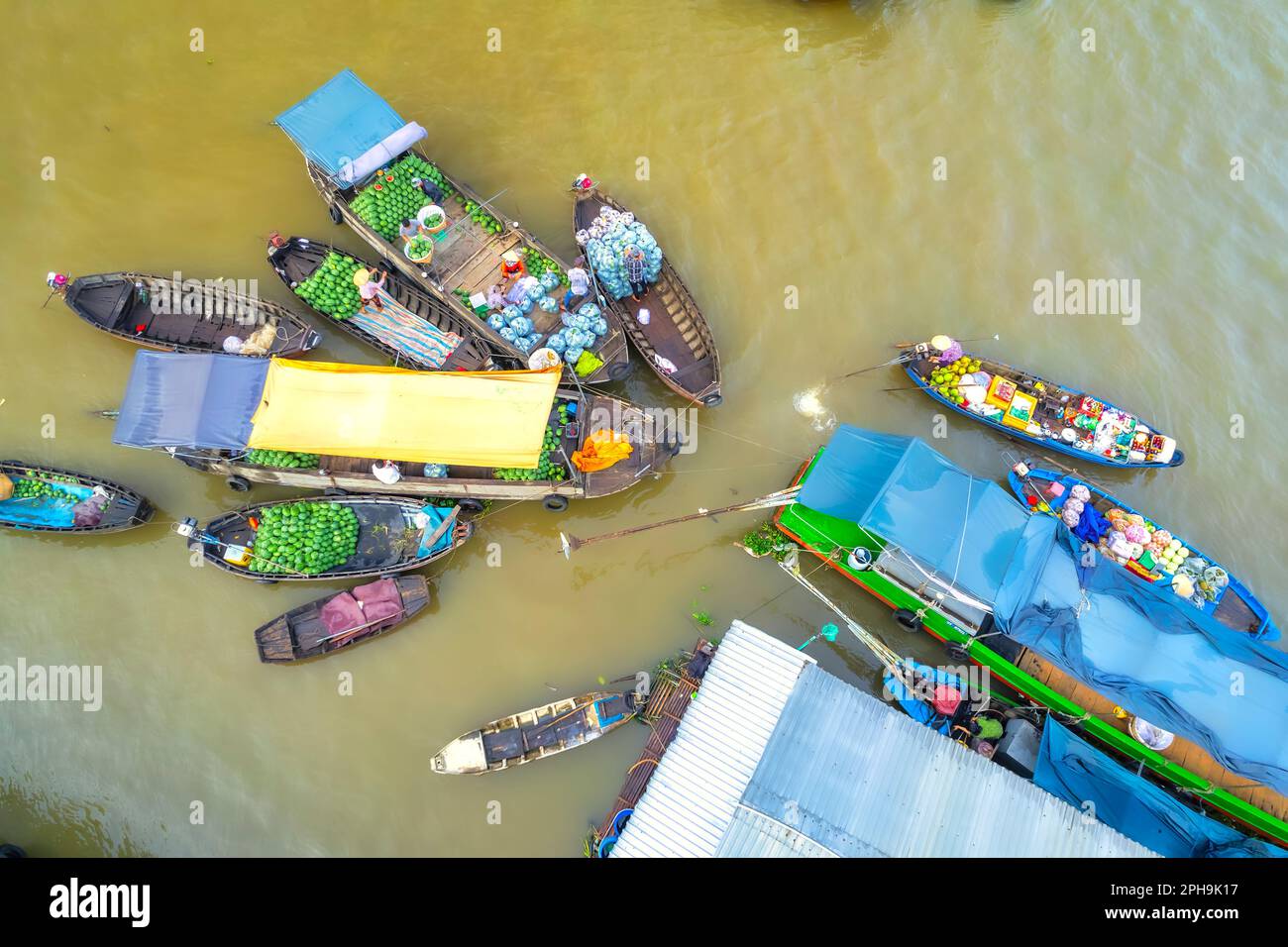
The heart of Cai Rang floating market stretches roughly 1,300-1,500 meters downstream of Cai Rang Bridge, where 300-400 boats gather daily loaded with fruit and vegetables. Wholesale trading dominates here, distinguishing it from the smaller retail-focused markets elsewhere in the delta.

Cay Beo Bamboo Poles

Traders hang a sample of their produce from a tall bamboo pole at each boat's bow, a signaling system locals call "cây bẹo" that lets buyers spot a boat's goods from a distance. It is one of the market's most photographed and distinctly functional features.

Cai Rang Bridge

This cable-stayed bridge spans the Can Tho River about 500-600 meters from the market's main trading zone and serves as a fixed landmark for orienting boat routes. It also marks the boundary locals use to describe the market's approximate location.

Floating Breakfast Vendors

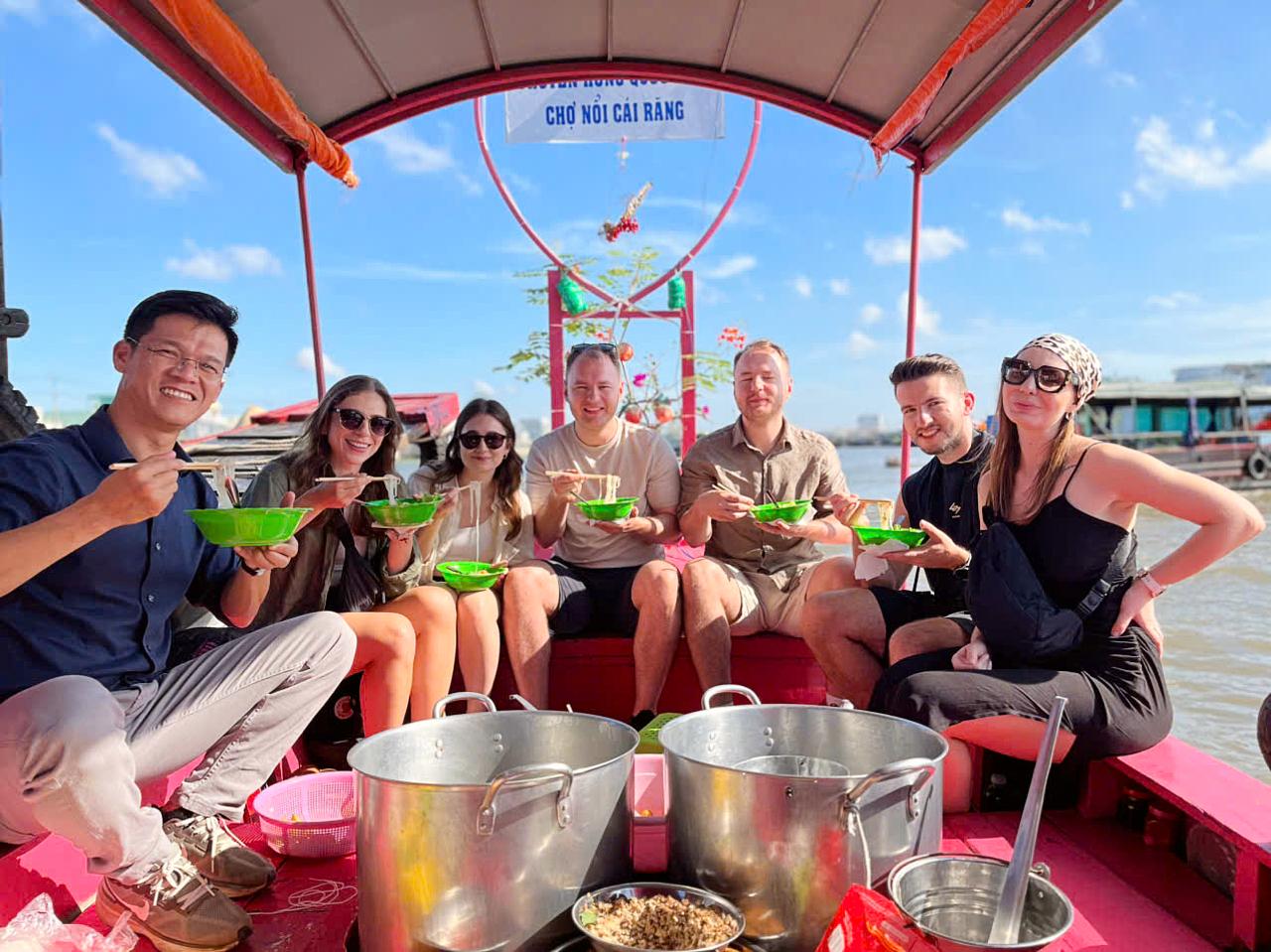
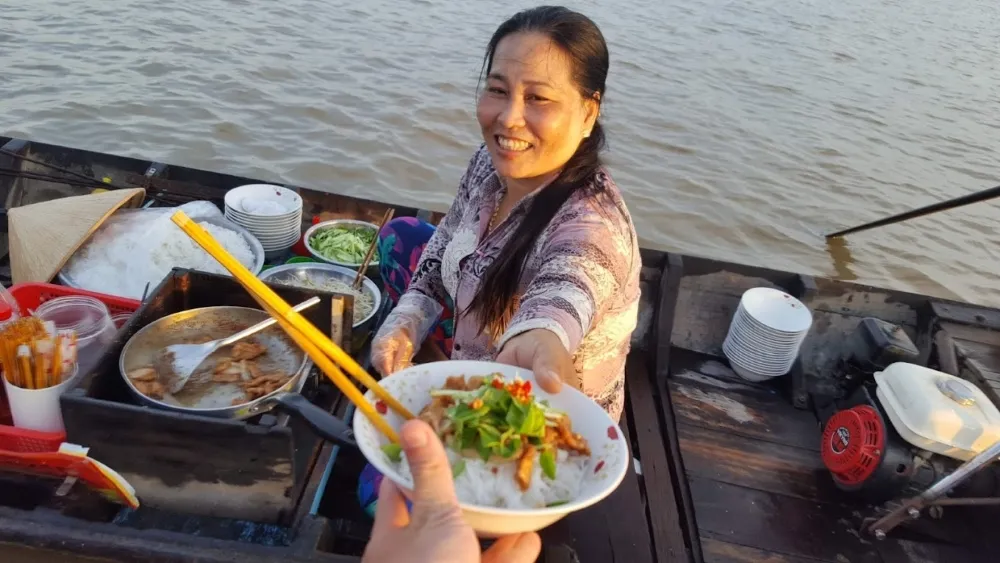
Boats selling hot noodle soup, coffee, and tea drift among the trading vessels each morning, allowing visitors to eat breakfast directly on the water. Some floating cooks have drawn attention from international food personalities visiting the delta.

Ba Cong Orchard Garden

A roughly 2-hectare fruit farm near the market that supplies produce to Cai Rang's traders, commonly added as a short stop after the main river route. It offers a land-based counterpoint to the water-based trading scene.

Cai Rang Rice Noodle Workshop

A traditional noodle house near the market where visitors can watch or try making rice paper and noodles by hand using century-old techniques. It reflects the wider rice-based economy that historically fed the floating trade.

The experience

What the visit is really like

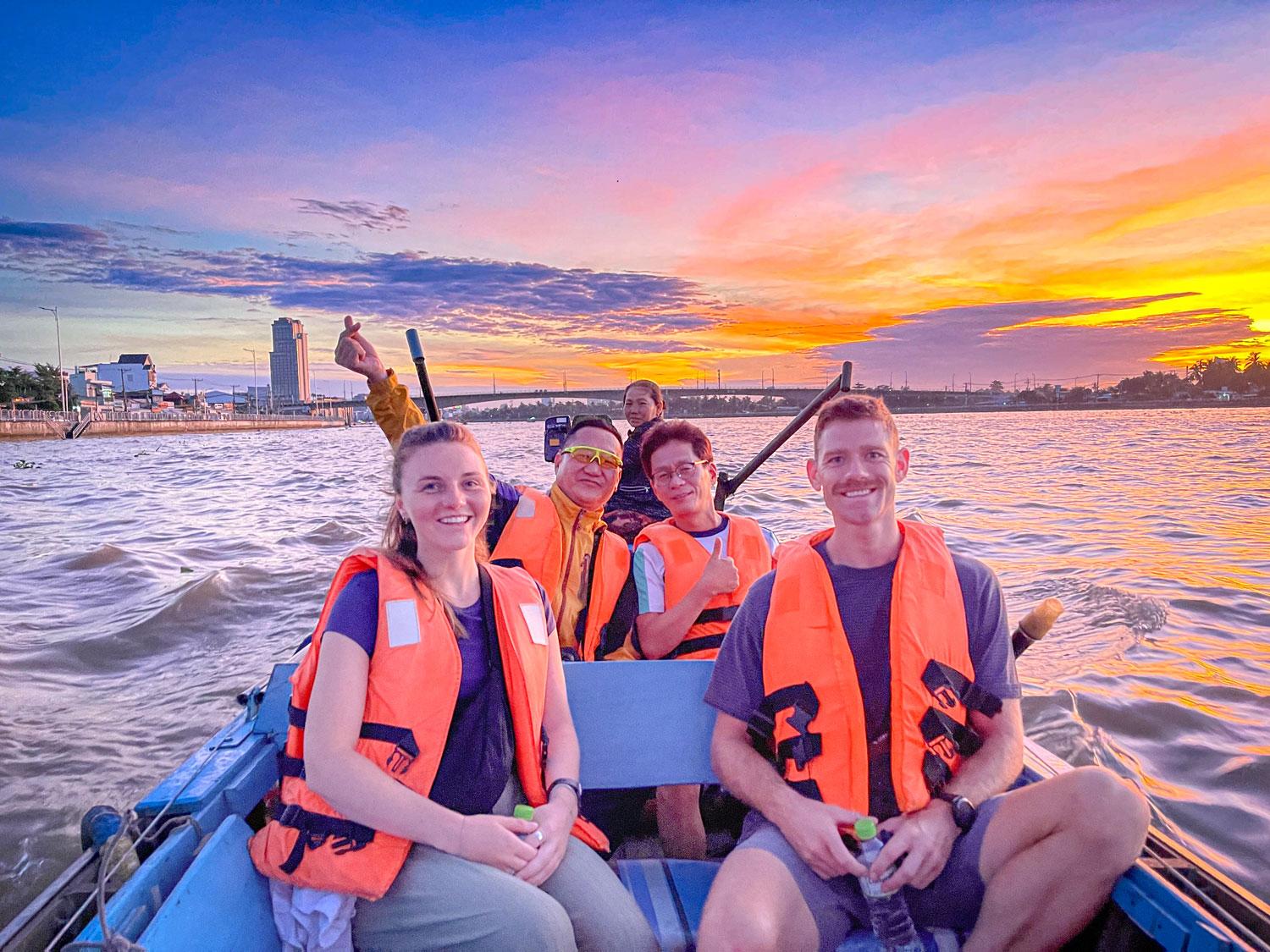
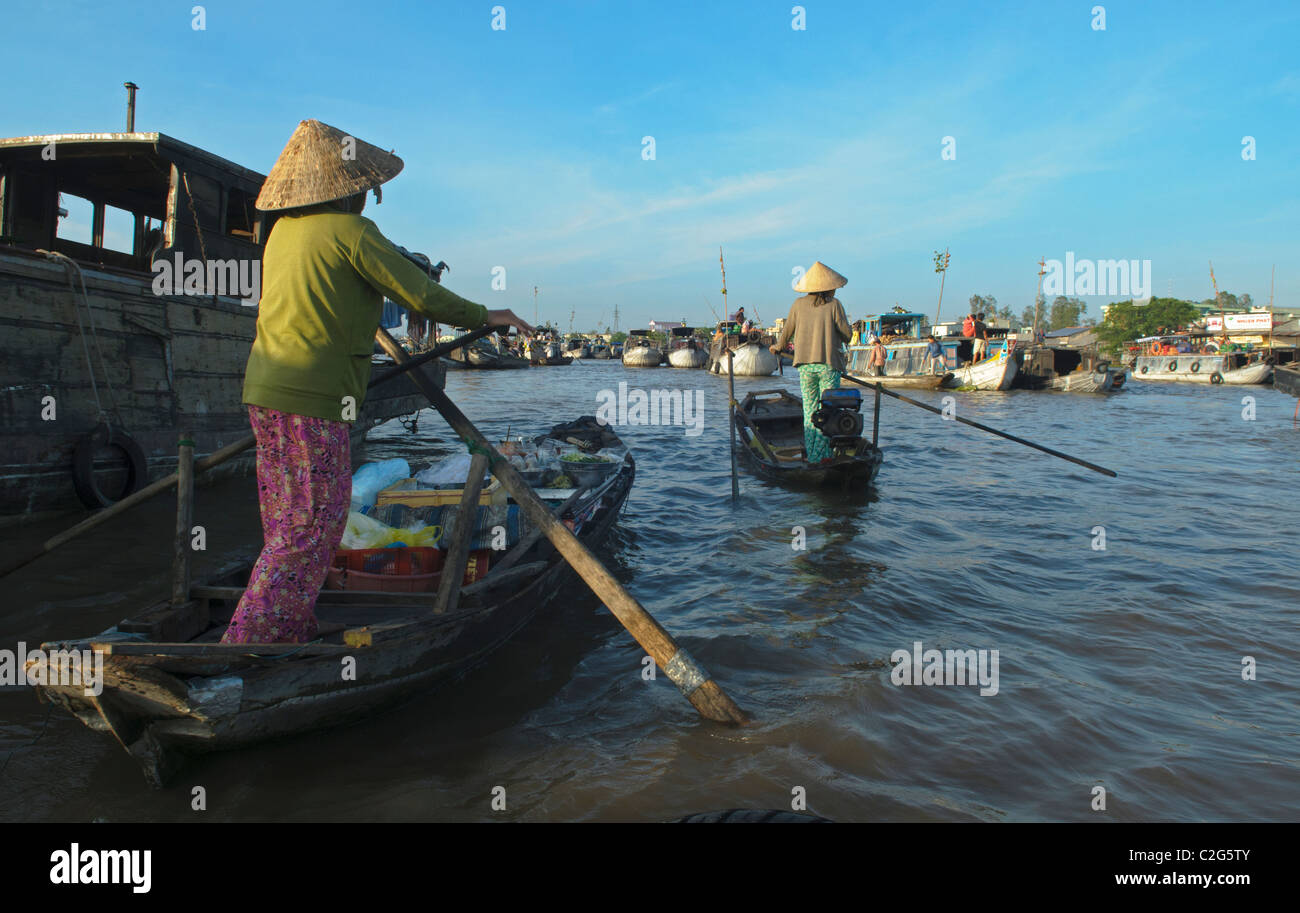
You board at Ninh Kieu Pier in the dark, the river still black and cool, and push off before the city has fully woken. The best arrival window runs 05:00–08:00, so you time the 6 km downstream run to reach the market as the first light greys the water. Trading peaks at sunrise and thins by 9am, and you feel that clock in your chest as the pilot opens the throttle. You arrive to a wall of hulls. Your boat slows, then noses between barges close enough to touch. You look up and read the produce poles — pineapple here, taro there — the way you would read shop signs. A woman rows alongside with a charcoal stove and hands you a bowl of hu tieu across the gap; you eat it balanced on your knees while watermelons the size of cannonballs pass hand to hand overhead. You drift on to smaller channels. The entrance is free — this is an open river market — and your boat rental covers the passage, so you spend your money on coffee poured from a thermos into a plastic bag. By the time the sun stands clear, the barges are loosening, and your cai rang floating market tour turns back toward the pier while the last vendors stow their poles. You reach Ninh Kieu again by mid-morning, salt-damp and awake.

Everything You Need to Know

Your complete experience guide

All the details about your upcoming adventure in one place

Your Cai Rang Floating Market Tour Experience

A cai rang floating market tour carries you along the Hau River aboard a wooden sampan to the largest wholesale market in the Mekong Delta, where traders hang produce on tall bamboo poles called cay beo to advertise their goods. Most cai rang floating market tour tickets pair the market with a stop at a rice noodle workshop and a glide through the narrow canals lined with fruit orchards. Booking these excursions early secures the pre-dawn boat departure when trading peaks and the water is busiest.

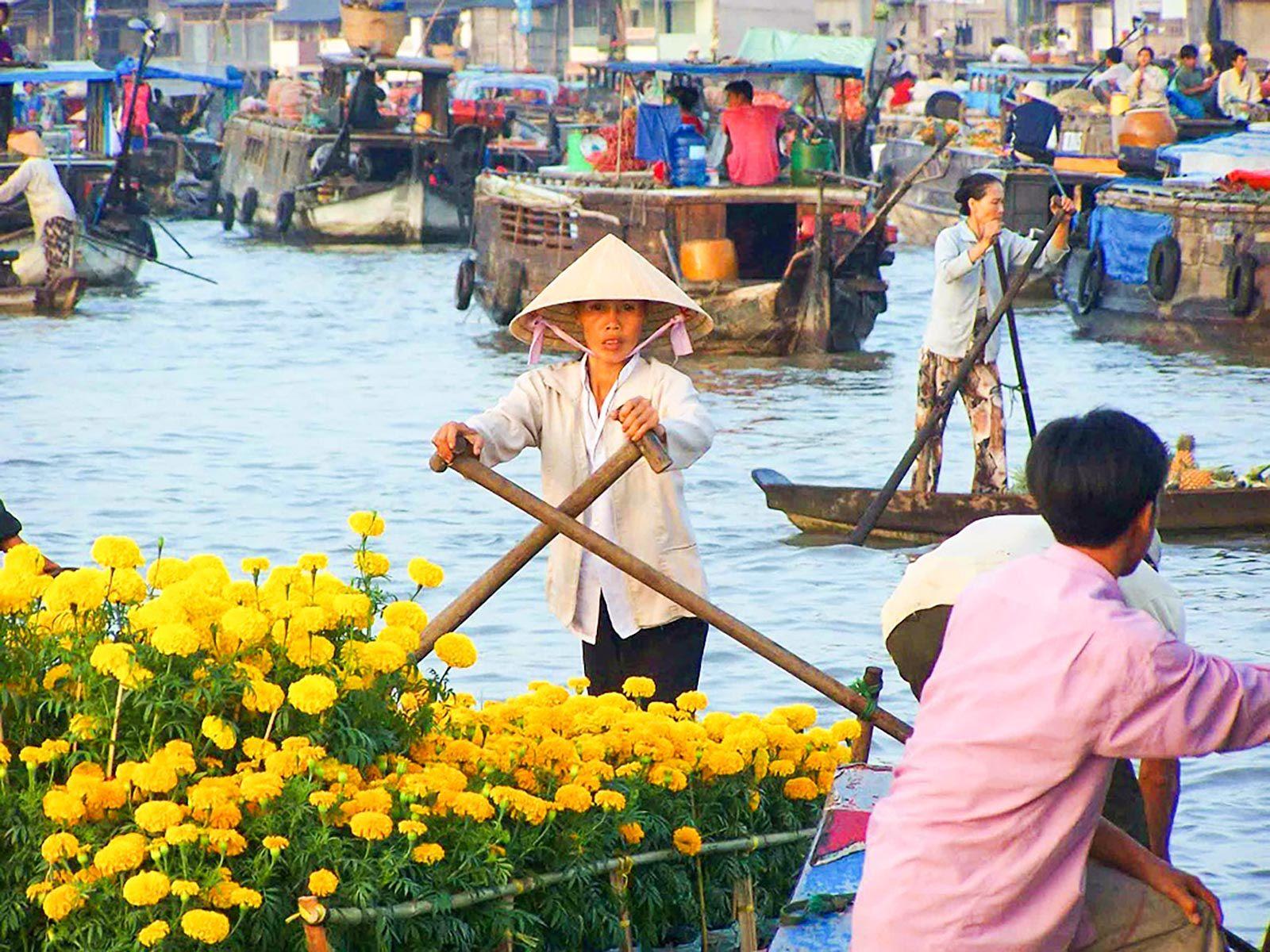
Vendors at Cai Rang do not shout their wares — they hang them from a bamboo pole called a beo, a pineapple or a bundle of water spinach swaying above each hull so buyers can read the market from a distance. This wordless signage has organised trade on the Can Tho River for more than a century, and it remains the surest way to navigate the largest wholesale floating market in the Mekong Delta. A cai rang floating market tour reaches it roughly 6 km from Ninh Kieu Pier, where the current widens and the boats thicken into a moving town. Cai Rang grew where it did for reasons of water and geography. Can Tho sits at the confluence of channels draining the delta's nine-armed river system, and before roads and refrigerated trucks, the fastest path between orchard and city was the tide. Wholesalers anchored midstream, retailers rowed out to meet them, and an economy assembled itself on the surface of the river. The market predates the French colonial cadastres that first recorded it, and its rhythms still answer to harvest and current rather than to any clock on shore. What holds the eye today is the density of purpose. Steel-hulled ghe carry tonnes of watermelon, longan, taro and jackfruit lashed under tarpaulins; smaller sampans thread between them selling coffee, hot noodle soup and lottery tickets to crews who live aboard for weeks. Cooking smoke rises from stern galleys. Children hand baskets across gunwales. The architecture here is entirely floating — no facade, no foundation — yet it is legible as any street, with the produce poles serving as shopfronts and the wakes as lanes. This is the texture a cai rang floating market tour is built to reveal, and why guided cai rang floating market tour tours favour the earliest departure. The market matters now partly because it is thinning. Bridges and highways have drawn much wholesale trade ashore, and the surviving river commerce has become as much heritage as economy; Vietnam has recognised Cai Rang's culture of floating trade as intangible national heritage. A cho noi Cai Rang outing therefore carries a documentary weight it did not have a generation ago. Among Can Tho landmarks it is the one still practised rather than preserved, a working market that happens to be beautiful. Visitors come for the spectacle of a Mekong Delta floating market and leave having watched an older logistics — orchard to barge to bowl — perform itself in real time on the water.

Vendors do not shout their wares — they hang them from a bamboo pole, a pineapple swaying above each hull so buyers can read the market from a distance.

Dress code

Light, quick-dry clothing is standard for a Cai Rang floating market tour since river spray and humidity are constant; a hat and sunglasses help once the sun climbs after 07:00. Closed-toe sandals with grip are safer than flip-flops when stepping between the sampan and larger trading boats.

Bags & security

There is no formal security checkpoint on the water; boat operators at Ninh Kieu Pier handle boarding informally. Keep valuables in a zipped dry bag, since sampans sit low and wake from passing boats can splash gear resting on open seats.

Photography

Photography from the boat is unrestricted and this is one of the most photographed river scenes in the Mekong Delta. Ask before photographing individual vendors up close, as some traders prefer not to be the subject of a close-up shot while working.

Families & strollers

Children over about 6 generally manage the boat ride well, but life jackets should be requested for younger kids since sampans sit low to the water. The 05:00 departure time is the main planning consideration for families with small children.

Accessibility

Access is by narrow wooden sampan or motorized boat, which requires stepping down from a fixed pier and is difficult for wheelchair users or those with limited mobility. There are no ramps, lifts, or accessible restrooms at Ninh Kieu Pier or on the trading boats themselves.

Food & drink

Vendors sell drinks, fruit, and hot noodle soup directly from their boats, and buying from them is part of the experience of a Cai Rang floating market tour. Bringing your own packaged snacks onto the boat is fine, but large coolers or glass containers are discouraged due to limited space.

Not allowed

× Glass bottles × Open flames × Large suitcases × Drones without permit × Speakers with loud music × Fishing without permission × Single-use plastic bags (discouraged) × Alcohol for resale × Unlicensed commercial filming equipment × Loose cash left unattended × Pets without a carrier × Fireworks

What to bring

✓ Cash in small VND notes ✓ Waterproof phone pouch ✓ Hat and sunglasses ✓ Sunscreen ✓ Light rain jacket ✓ Reusable water bottle ✓ Motion sickness tablets ✓ Insect repellent

Opening hours

Mon 00:00 – 23:59

River market, boats cluster 05:00-08:00

Tue 00:00 – 23:59
Wed 00:00 – 23:59
Thu 00:00 – 23:59
Fri 00:00 – 23:59
Sat 00:00 – 23:59

Weekend folk performance on the water

Sun 00:00 – 23:59

Busiest day for local shoppers

Closures & exceptions

  • ·Tet Lunar New Year (dates vary) — Reduced boat traffic, week of Vietnamese New Year

At a glance

Best window

05:00–08:00, sunrise trading peak thinning by 9am

Getting there

Taxi · 10-15 min to pier · 50,000-100,000 VND

Take a Grab or metered taxi directly to Ninh Kieu Pier, then board a boat to the market; door-to-door from most Can Tho hotels.

Walk · 10-20 min to pier · Free

Ninh Kieu Pier is walkable from central Can Tho hotels along the riverside promenade before transferring to a boat.

Boat · 20-40 min each way · 50,000-800,000 VND depending on boat type

The only way to reach the actual trading grounds; shared sampans or private charters depart from Ninh Kieu Pier for the roughly 6 km run downstream.

Bike · 10-15 min to pier · Free

Cycle to Ninh Kieu Pier on quiet early-morning streets, then dock the bike before switching to a boat.

Cancellation policy

Boat charters booked for a Cai Rang floating market tour can typically be cancelled or rescheduled up to 24 hours before the scheduled 05:00–08:00 departure for a full refund of the boat rental fee, since entrance to the river market itself is 0 VND. Same-day cancellations after boarding are generally non-refundable, as boat owners have already committed the vessel and fuel for the trip.

Plan your time

How long do you need?

Recommended time

2-3 hours

A basic cai rang floating market tour covers the round-trip boat ride from Ninh Kieu Pier plus drifting time among vendor boats, and 2-3 hours works if you are on the water before sunrise. Trading peaks between 05:00 and 08:00, so arriving after 8am means many sellers have already packed up and the canals feel quiet rather than lively. Add 30-45 minutes if your boat continues into smaller canals or stops at an orchard, and subtract time only if you skip breakfast on board. There is no queue at the pier itself, but boats fill up fast at sunrise, so early booking beats waiting around.

Crowd levels through the day

Pre-dawn (04:30-05:00) Light, boats gathering
Sunrise peak (05:00-06:30) Very busy
Mid-morning (06:30-08:00) Busy, still trading
Late morning (08:00-09:00) Thinning out
Midday onward (09:00-12:00) Mostly closed
Plan ahead

When to go — year at a glance

Weather · crowds · average price — dots go green to amber to red as each metric rises.

Dry season (Dec-Apr)

Cooler mornings and clearer skies make the dry season the most comfortable stretch for a Cai Rang floating market tour, with December through February bringing the lowest humidity of the year.

Rainy season (May-Nov)

The market still runs daily through the rainy months, though brief downpours are common in the afternoon; mornings before 09:00 usually stay dry.

March-July

Regional tourism guides flag this window as peak fruit season, when orchards and boats alike are stocked with seasonal produce.

Mid-Aug-late Nov

A secondary specialty-fruit season for the western Mekong Delta, offering a quieter alternative to the March-July rush.

Around Tet (Lunar New Year)

A week before Tet the market fills with flower boats and festive goods, though the days of Tet itself see thinner trading.

Insider tips

Helpful tips for your visit

Book the boat the night before

Arrange your sampan with a hotel reception or operator at Ninh Kieu Pier the evening before, since early departures fill up during peak season.

Negotiate the fare upfront

Agree on the boat price and return time with the operator before boarding, as prices for a Cai Rang floating market tour are rarely fixed.

Choose a small boat

A 2-6 person sampan gets closer to trading vessels and is generally cheaper than a large tour boat.

Carry small VND notes

Vendors on the water rarely have change for large bills, so bring 10,000-50,000 VND notes for snacks and drinks.

Watch for the bamboo pole signage

Traders hang a sample of their produce on a tall pole at the bow, a local system called "cây bẹo" that shows what each boat is selling.

Pair it with an orchard stop

Many operators include a short detour to a fruit orchard or noodle workshop on the return leg at no major extra cost.

Skip weekends if you want fewer tourists

Weekday mornings tend to have a higher ratio of local traders to visiting boats.

Where to meet

Meeting points

Ninh Kieu Pier

Ninh Kieu Wharf, Ninh Kieu District, Can Tho City

Main departure point with ticket kiosks and boat operators

Get directions

Cai Rang Bridge dock

Near Cai Rang Bridge, Cai Rang District

Secondary access point closer to the market itself

Get directions
The story

The history behind the site

Long before roads reached the lower Mekong, water was the only highway. The settlement at Cai Rang, on the Can Tho River about 6 km from Ninh Kieu Pier, grew where trade had no alternative. Farmers from Hau Giang, Vinh Long, and Soc Trang converged by sampan because their goods could travel no other way. By the early twentieth century, under French colonial administration, Can Tho became the Mekong Delta's commercial hub, and the market at Cai Rang swelled into the region's largest wholesale river exchange. The famous "bay hang" pole—a tall bamboo mast hung with sample produce—emerged here as a signboard visible across open water, a practical answer to a marketplace with no walls. The scale was agricultural, not touristic. Wholesalers in heavy boats bought jackfruit, pineapple, watermelon, and rice by the ton, redistributing to smaller vendors who fanned out through delta canals. Any modern cai rang floating market tour still traces those same trading channels. On 10 March 2016, Vietnam's Ministry of Culture, Sports and Tourism recognized the market as national intangible cultural heritage, formalizing what generations had built. That designation reshaped the local economy, turning a working wholesale hub into a heritage destination and giving rise to the organized cai rang floating market tour tours now booked from Ninh Kieu. Recognition, though, arrived as decline set in. Bridges and highways—the Can Tho Bridge opened in 2010—steadily replaced water transport. Trucks reach orchards that once depended on sampans. Wholesale traffic that peaked in the 1990s has thinned; hundreds of boats have dwindled to a fraction. What survives is a morning ritual of sunrise trading, preserved partly by the cai rang floating market tour tickets that sustain the remaining vendors. A cai rang floating market tour tour today documents a living tradition and its slow ebb at once—the delta's oldest form of Mekong Delta commerce, still afloat, quieter each year.

Pre-1900

Waterway trade concentrates at Cai Rang because no roads served the delta.

Early 1900s

French-era Can Tho becomes the delta's commercial hub, expanding the wholesale market.

1990s

Boat traffic peaks with hundreds of wholesale vessels trading at sunrise.

2010

The Can Tho Bridge opens, accelerating the shift from water to road transport.

2016

Vietnam recognizes the market as national intangible cultural heritage on 10 March.

2020s

Wholesale numbers fall sharply as highways divert cargo away from the river.

2026

Sunrise trading survives largely as heritage tourism sustaining remaining vendors.

Photo spots

Best photo spots

Cai Rang Bridge

Best light · Sunrise, before 08:00

An elevated concrete span crossing the Can Tho River just above the market clusters, giving photographers a wide-angle, bird's-eye view of boats and bamboo poles below. Stand along the pedestrian sidewalk on either side of the span; vehicles are not permitted to stop on the bridge itself.

Cay Beo Signal Poles

Best light · Golden hour, early morning

The tall bamboo poles hung with samples of produce mark each vendor boat and make a signature close-up subject against the water and sky. Best shot from a small sampan pulled in close beside a loaded boat, low to the waterline.

Low Boat-Level Vantage on the Main Channel

Best light · Before 08:00, light gets harsh after

Shooting from a rented sampan at water level puts overloaded fruit boats and trading activity at eye level, useful for a classic cai rang floating market tour photo with soft light before the sun climbs. Ask the boat driver to hold position mid-channel rather than tying up, since currents keep compositions shifting.

An Binh Market Pier

Best light · Early morning departure

The wooden landing behind An Binh Market is where most tour sampans depart and return, and the crowded jetty itself makes a good frame for departure and arrival shots with stacked boats along the bank.

Floating Coffee House Deck

Best light · Mid-morning, softer light

A two-storey coffee house moored on the river near the bridge offers an elevated open-air deck for wider shots across the anchored trading boats while having a drink.

Gallery

Moments from the experience

With kids

Visiting with kids

A cai rang floating market tour with young children means a very early start and a couple of hours on open water, so the trip works best when you build in downtime rather than treating it as nonstop sightseeing. Small sampan-style boats give kids more room to move and closer views of vendor boats than crowded group tours.

Best ages

Children around 5 and up tend to cope best with the pre-dawn start and the rocking motion of a small boat; toddlers can struggle with the 5am wake-up and the lack of space to nap. If traveling with a baby, ask your boat operator about a shaded seat away from the engine.

Boats for families

Choose a private sampan (4-7 seats) over a large shared group boat so children can move around, ask questions, and get closer to the fruit vendors without competing for space. A dedicated small boat also lets you turn back early if a child gets restless.

Pacing

Plan for 2-3 hours on the water and split it into a slow arrival, an unhurried hour weaving through vendor boats, then a calmer return leg; pushing straight through tends to overtire younger kids faster than the scenery entertains them.

Wake-up call

Peak trading happens right at sunrise, so families should be ready to leave the pier well before dawn; a Can Tho floating market tour for kids goes more smoothly if bags and clothes are laid out the night before.

Strollers

Strollers are not practical on boats or narrow pier walkways; a baby carrier works far better for the transfer to the boat and any brief stops.

Facilities

Onboard toilets and baby-changing facilities are limited to none on small private boats, so plan bathroom stops before departure and pack a portable changing mat as backup.

Food & drink

Where to eat nearby

Most of the eating on a cai rang floating market tour happens boat-to-boat: cooks pull alongside your sampan and hand over bowls of noodle soup before the trading crowd thins out. A couple of named, land-based spots near the pier cover a proper sit-down breakfast once you're back on shore.

Floating noodle vendors

$1-2

Vendor boats — bought from your sampan

Small sampans weave between the wholesale barges selling hu tieu, bun rieu, banh mi and coffee straight into your boat. Busiest 5:30-7am, thinning fast after; point at what you want since there's no menu and cash only.

Hủ Tiếu Xuân Phương

$1-3

Street food — on-site in Cai Rang

A small, well-reviewed noodle shop right in the district, known for a simple pork-bone broth version of hu tieu. Good option if you'd rather eat seated than balance a bowl on the water; gets busy once market-goers come ashore.

Hakia Garden

$3-8

Riverside restaurant — short walk/drive

A garden-set vegetarian restaurant on Tran Hung Dao in Le Binh, Cai Rang, with river and orchard views. Suits a relaxed sit-down breakfast or lunch after the market thins out around 9am; no meat options if you're craving hu tieu.

Customer Reviews

What travelers say

Real experiences from real travelers

4.5
Based on undefined reviews
1 ★ 520
2 ★ 410
3 ★ 940
4 ★ 2600
5 ★ 11800
H
Hannah M.
United States · 2026-06-14

Worth the early alarm

Our guide had us on the water before six and the cai rang floating market tour felt calm and unhurried at that hour. The boatwoman handed us a whole pineapple carved into a spiral and the river smelled of diesel and ripe fruit at once. Watching the sample poles sway in the mist made the 4am wake-up forgivable.

T
Thomas B.
Germany · 2026-05-30

Mekong morning done right

We booked a small-group cai rang floating market tour and there were only six of us on the wooden boat, which meant we could actually talk to the vendors. Bought coffee that got passed hull-to-hull without spilling. The chợ nổi Cái Răng is far more of a working wholesale market than a show, and I liked that.

Y
Yuki T.
Japan · 2026-04-11

Busy but rewarding

The water was more crowded than I expected around seven, with tour boats bunching near the biggest vendor barges. Still, the Can Tho floating market tour gave us close views of the bamboo poles strung with samples of what each boat sells. Bring a hat, the sun climbs fast once the mist burns off.

C
Camila R.
Brazil · 2026-07-02

Fruit for breakfast on the river

Floating along the Hau River eating fresh rambutan while sampans drifted past was the highlight of our delta trip. Our cai rang floating market tour tickets included a stop at a rice-noodle workshop afterward, which broke up the boat time nicely. The light at sunrise turned the whole river amber.

D
Daniel O.
United Kingdom · 2026-03-19

Quiet and authentic

Went in the low season and the market felt intimate, just fishing families and produce boats going about their morning. A bowl of hu tieu handed over from a floating kitchen while we bobbed on the current is something I still think about. The Mekong Delta boat trip guide pointed out how each pole advertised the goods below.

S
Sofia L.
Spain · 2026-01-22

Genuine river commerce

What struck me was how little the cai rang floating market tour is staged for visitors. Wholesalers were loading crates of watermelon at dawn and barely noticed us. Cold and misty in January, so pack a light jacket for the ride out from Ninh Kieu.

M
Marcus W.
Australia · 2025-11-08

Good, go early

By eight the best of the trading was winding down, so I'd push for the earliest departure you can get. The skip-the-line Cai Rang boat option we chose meant no queue at the wharf, which saved us maybe thirty minutes. Loved watching a coffee boat weave between the larger craft.

P
Priya S.
India · 2025-09-27

Sampans and sample poles

Our cai rang floating market tour drifted right into the thick of the vendor boats, close enough to see pomelos, pineapples and taro roped to the tall poles. The guide explained the pole system clearly and helped us buy fruit at local prices. A warm, humid September morning with soft grey light over the Hau River.

L
Lucas F.
France · 2026-06-25

A slice of delta life

We joined one of the sunrise cai rang floating market tour tours and were rewarded with mist, fruit boats and a floating breakfast of noodle soup. The pace suited us, gliding past homes built out over the water. Among Can Tho landmarks this felt the most alive and least polished, in the best way.

E
Elena K.
Germany · 2025-12-15

Cold morning, warm welcome

December on the Mekong was cooler than we'd guessed and the early start bit a little, but the vendors were generous with tastes of jackfruit and longan. The Cai Rang market boat trip showed a working river rather than a tourist set piece. Steam rising off the coffee boats in the chill was a small delight.

FAQ

Frequently asked questions

Everything you need to know for your journey

Around the corner

Nearby landmarks worth a detour

Ninh Kieu Pier

At the market's departure point

landmark

The riverside promenade and boat dock that anchors Can Tho's waterfront, with a Ho Chi Minh statue and evening night market nearby.

Cai Rang Bridge

Adjacent to the market

landmark

A cable-stayed bridge spanning the Can Tho River near the trading grounds, visible from most boats passing through.

Binh Thuy Ancient House

15-20 min by car

landmark

A French colonial-era home from the late 19th century, notable for its blend of Vietnamese and European architectural details.

Ong Pagoda

10-15 min by car

landmark

A Chinese-style temple near Ninh Kieu Wharf dedicated to a folk deity, popular with local worshippers.

Phong Dien Floating Market

30-40 min by boat

landmark

A smaller, quieter floating market further from the city center, favored by locals over tourists.

Where to stay

Where to stay nearby

Ninh Kieu District

10-15 min to pier

district

The main hotel cluster in central Can Tho, walkable to Ninh Kieu Pier for early boat departures.

Riverside boutique hotels

5-10 min to pier

boutique

Small hotels along the Hau River offering rooms with river views close to the boat docks.

Budget guesthouses, Can Tho center

10-20 min to pier

budget

Backpacker-friendly guesthouses scattered through central Can Tho within a short ride of the wharf.

Ready for Adventure?

Join thousands of happy travelers who have discovered this incredible experience

Book Your Experience Now