9 hr
Mekong Delta & Ben Tre Coconut Village Excursion
- Expert local guide
- Small group
- Skip-the-line access
- Free cancellation
Mekong Delta Private Tour — Sunrise Boats from Ninh Kieu Wharf
River wakes before the city, sampans trade at dawn.
Compare fares, pick the fit — all bookings are mobile-voucher and eligible for free cancellation where shown.
9 hr
9 hr
8 hr
At Ninh Kieu Wharf, there is no official ticket booth — a mekong delta private tour is booked directly with boat owners at the pier, so the real decision is which boat-access tier fits your group. Entrance to the wharf itself is free, with only the boat rental paid separately.
| Shared Joining Seat (Group Boat) |
Top pick Private Sampan (Small Boat) |
Group Charter (Multi-Passenger) | |
|---|---|---|---|
| Boat type | Wooden joining boat, shared with strangers | Small motorized sampan, 2–4 seats | Larger multi-cabin charter boat |
| Typical group size | 8–15 passengers pooled together | 1–4 travelers, own party only | 5–12 passengers, one booking |
| Route flexibility | Fixed route, no stops on request | Full control — detour into canals anytime | Moderate — set itinerary, some stops |
| Closeness to vendor boats | Limited, boat stays mid-channel | Very close — can pull alongside sellers | Close, but harder to maneuver in narrow arms |
| Noise and speed | Loud engine, faster transit | Quieter engine, slow paddled stretches possible | Louder engine, steadier cruising pace |
| Typical duration | 2–3 hours, fixed schedule | 3–4 hours, adjustable on request | 4 hours or half/full day charter |
| See tickets & prices |
Verdict: First-time visitors booking a Can Tho Mekong Delta tour should choose the private sampan for the closest vendor access and flexible timing, while larger families or groups may prefer the multi-passenger charter.
Most visitors booking a mekong delta private tour should pick Cai Rang for a bigger, wholesale-driven scene close to Can Tho, and add Cai Be only if a quieter, more rural detour toward Vinh Long appeals more than crowd size.
|
Top pick Cai Rang Floating Market |
Cai Be Floating Market | |
|---|---|---|
| Market size and number of boats | 200-400 boats daily, wholesale hub | Handful to 5-7 boats, much smaller |
| Distance and travel time from Can Tho | 6 km, 30-45 min by boat from Ninh Kieu | About 80 km by road, 1 hr by boat from Vinh Long |
| Crowd levels and touristiness | Busy with tourist boats mixed among traders | Sparse traffic, fewer tour groups |
| Trading focus (wholesale vs retail) | Wholesale fruit and produce trading | Mixed wholesale-retail, fruit specialties |
| Best time of day | 5:00-9:00, sunrise to mid-morning | Around 6:00, thins out quickly |
| Overall atmosphere | Lively, noisy, commercially dense | Rural, calm, small-town feel |
| See tickets & prices |
Verdict: Cai Rang delivers scale and easy access from Can Tho, while Cai Be suits travelers chasing a slower riverside detour rather than crowd-sized commerce, so choose Cai Rang first and treat Cai Be as an optional Vinh Long add-on for skip-the-line floating market tours seeking fewer tourists.
Hand-picked experiences loved by thousands of travelers
9 hours
Free Cancellation
Experience the beauty of the Mekong Delta in total comfort with a private-style limousine tour featuring local culture and cuisine.
2 days
Free Cancellation
Discover the Mekong Delta on this immersive 2-day trip featuring village cycling, scenic kayaking, and an authentic homestay.
8 hours
Free Cancellation
Explore the Mekong Delta's lush orchards, traditional canals, and rural villages on a private, full-day excursion from HCMC.
Board a rented boat at Ninh Kieu Wharf before sunrise for the ride toward Cai Rang
Cruise downstream on the Hau River past Can Tho Bridge toward the trading zone
Weave between wholesale boats loaded with fruit and produce during the busiest hour
Eat noodle soup or drink coffee bought directly from a vendor boat
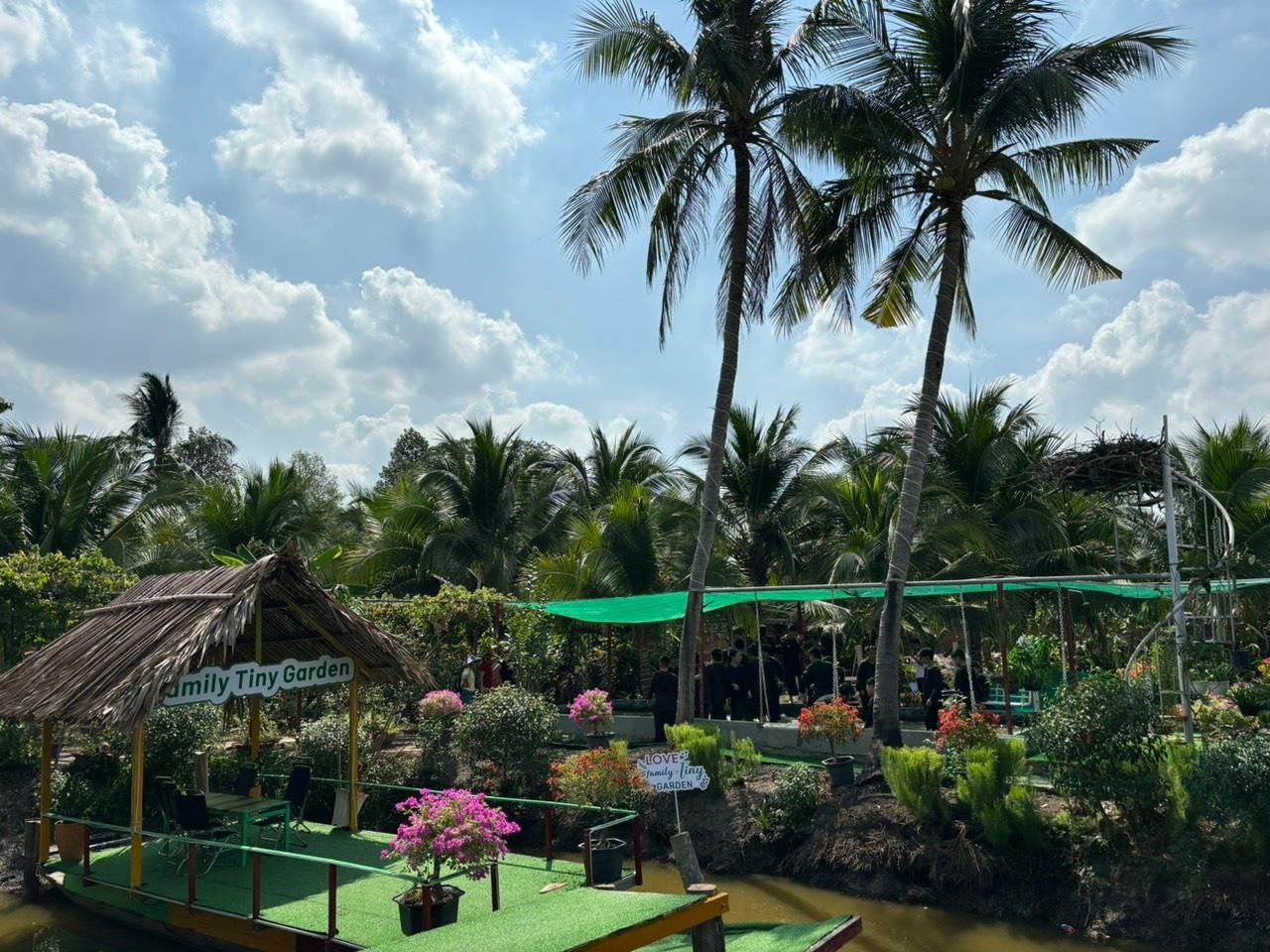
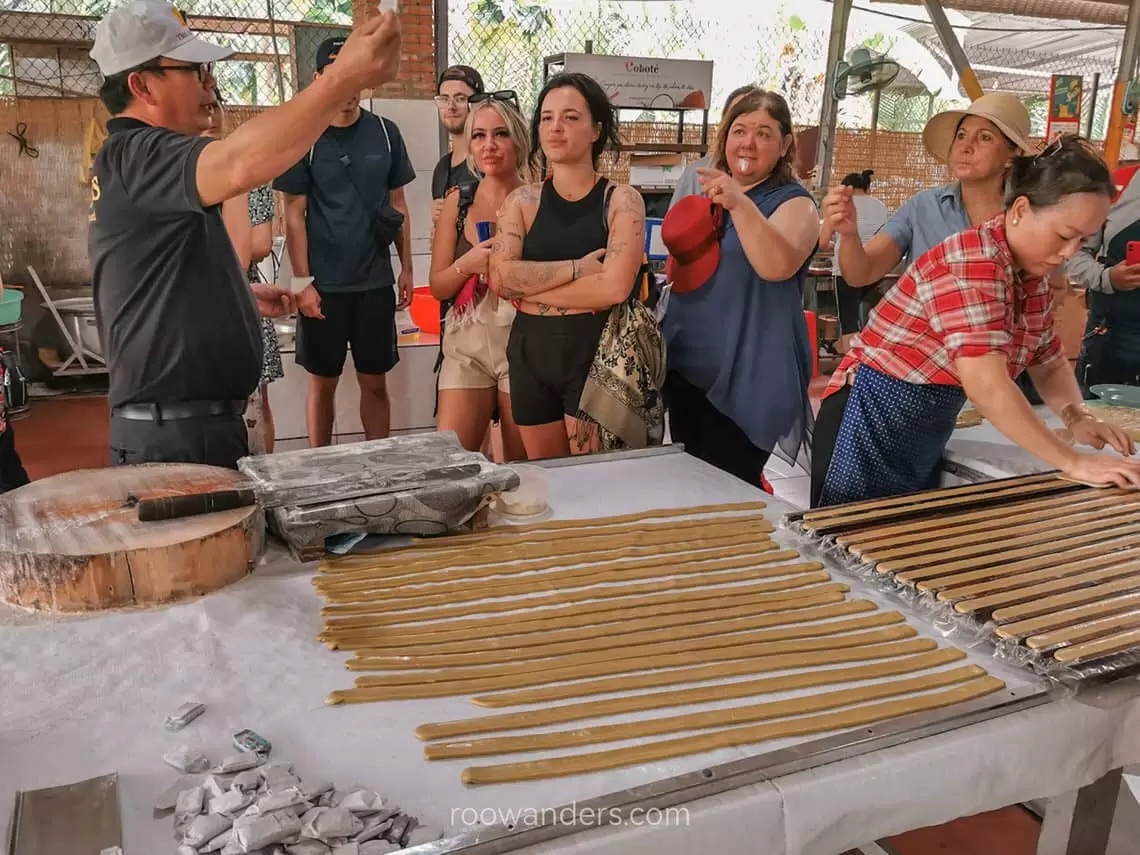
Continue into a narrower canal past orchards and a coconut-candy workshop
Cruise back to Ninh Kieu Wharf as the market thins after 9am
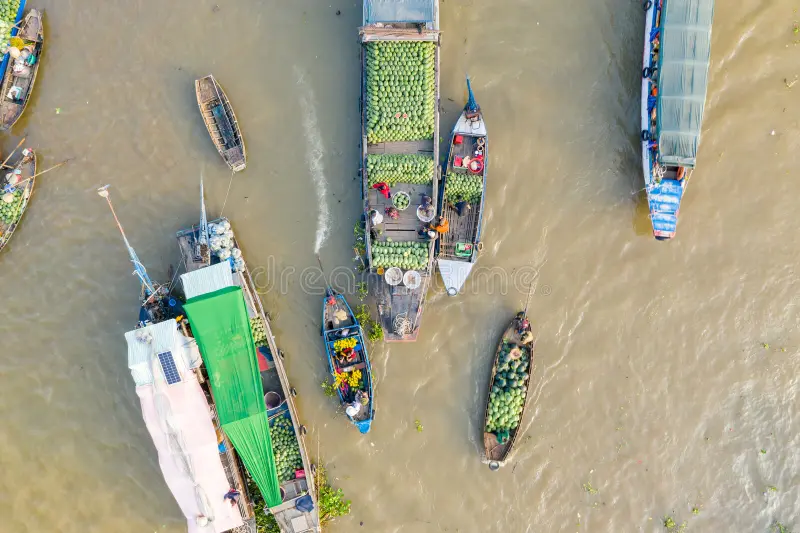
The core stretch of the Hau River where 300-400 boats gather daily, forming one of the largest floating markets in the Mekong Delta. The river here runs 100-120 meters wide over a 1,300-1,500 meter trading stretch.
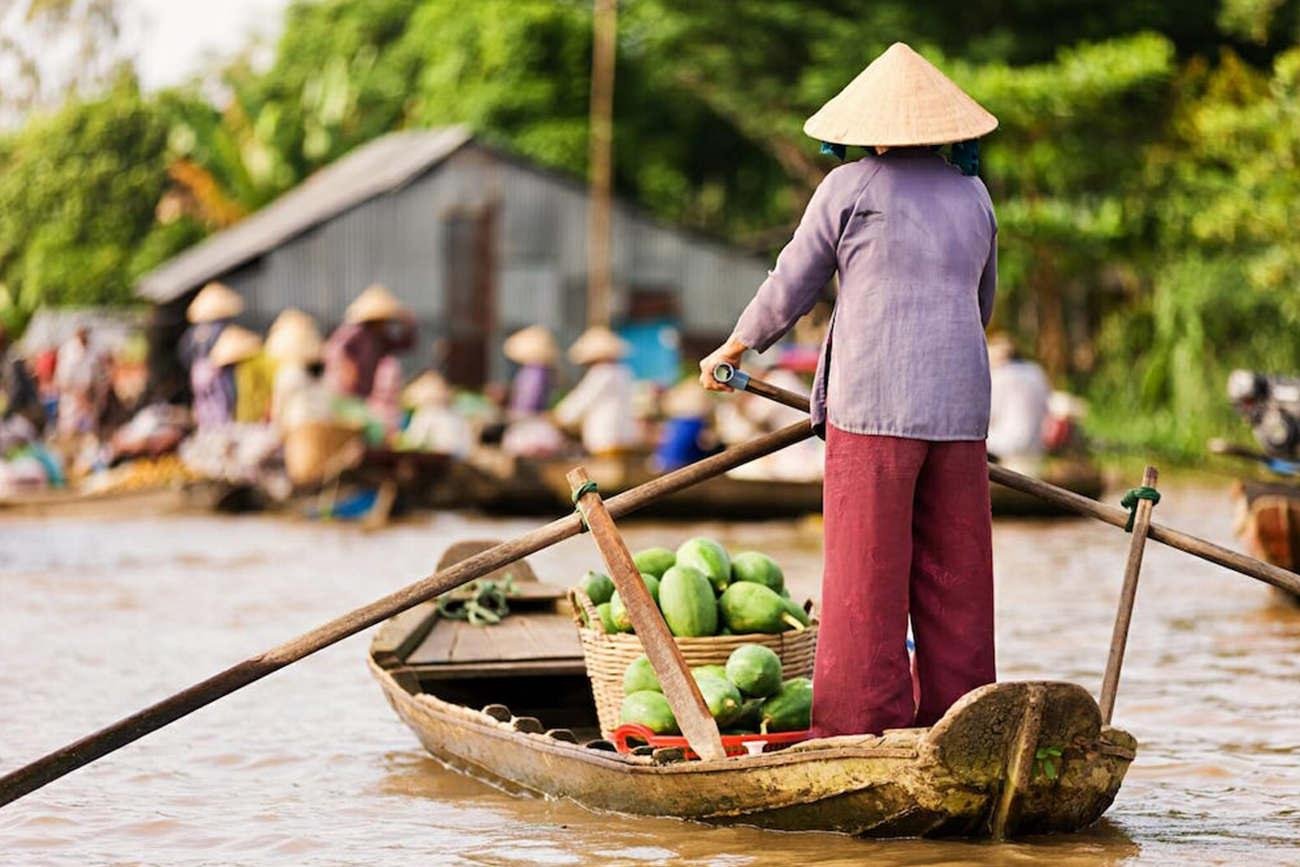
Tall bamboo poles mounted at each boat's bow display samples of the goods for sale, from pineapples to dried fish, functioning as a silent advertising system unique to Mekong trading. The practice has been documented for over a century of river commerce.
Boats bound for the market pass beneath this cable-stayed bridge spanning the Hau River, among the longest of its type in Southeast Asia at the time of its completion. It marks the halfway point of the river journey from the wharf.
A secondary departure pier closer to the market than Ninh Kieu Wharf, used by boats taking a shorter route into the trading zone. It offers a quieter alternative launch point for early departures.
Vendor boats serve hot noodle soup and coffee directly to passing tour boats, letting visitors eat breakfast on the water amid the trading. The tradition turns the morning commute into part of the market experience itself.
Narrower side canals branching off the main trading river lead past fruit orchards and small workshops, extending a river visit beyond the main market stretch. These canals see far less boat traffic than the central trading zone.
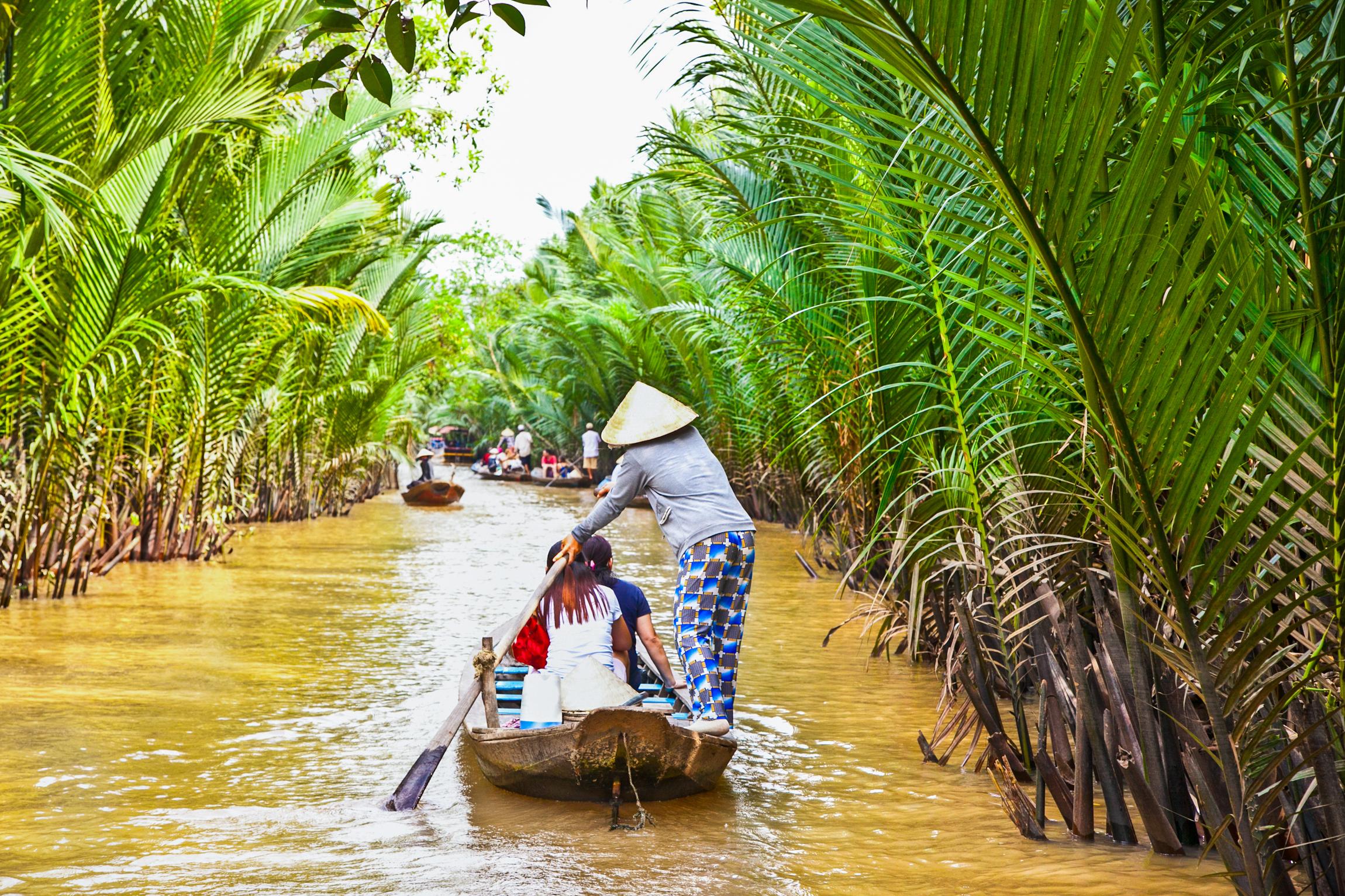
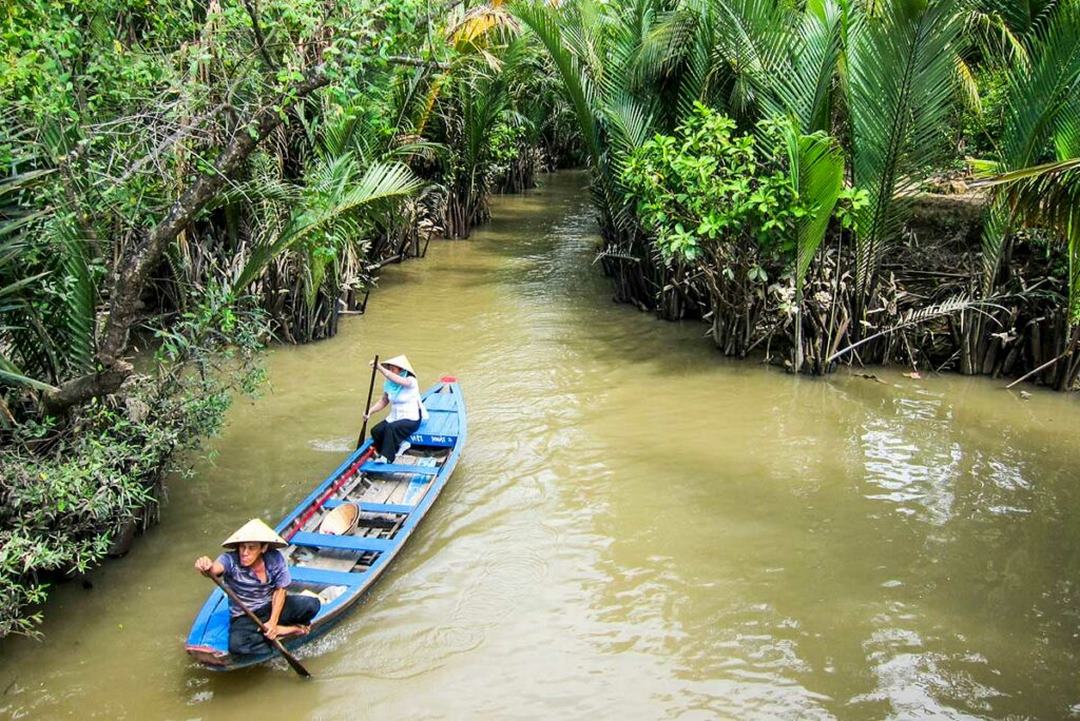
You leave your hotel in the dark. By the time you reach Ninh Kieu Wharf the sky is grey rather than black, and your private sampan is already idling against the steps, its engine a low knock. You step down, find the low wooden bench, and push off into a channel already busy with other boats headed the same three kilometres downstream. The river widens as you go. You pass the illuminated span of Can Tho Bridge, then the banks fall away into palm and stilt houses. As you near Cai Rang, the traffic thickens — dozens of hulls, then hundreds, converging where the wholesale barges anchor. Your boatman cuts the engine and lets you drift into the throng. You pull alongside a floating café and a woman passes you a Vietnamese coffee, thick and sweet, without either boat quite stopping. You watch a bamboo pole overhead: a pineapple means pineapples for sale below. You point, you barter with your hands, you catch a fruit tossed across the gap. On this mekong delta private tour you sit close enough to the water to trail your fingers in the wake of a passing barge. By nine the crowd thins as the wholesalers finish and turn for home. You turn back too, threading upstream past narrow canals lined with orchards, the light now flat and warm. When you climb the wharf steps again, the pavement feels oddly solid, and the city has finally woken.
All the details about your upcoming adventure in one place
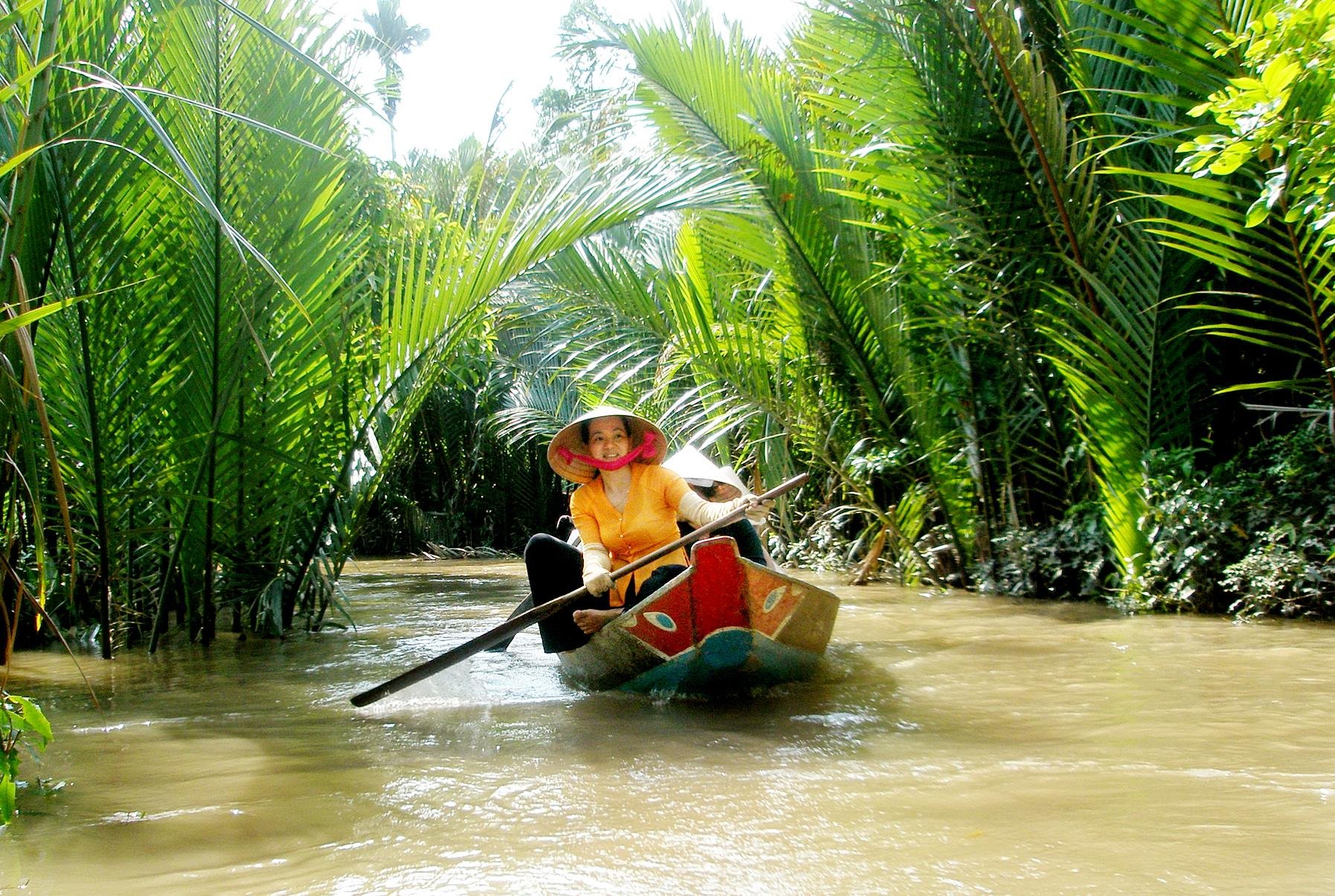
A mekong delta private tour carries you along the Tien and Hau rivers, through sampan channels lined with nipa palm and into workshops where coconut candy and rice paper are still made by hand. Guided by a dedicated driver and host, these mekong delta private tour tours reach the water villages, fruit orchards, and river islands around My Tho, Ben Tre, and Can Tho at a pace you set. The trip pairs quiet backwater rowing with wider-river cruising, so you see both the trading arteries and the small green tributaries.
The Mekong gathers water from six countries before it fans into nine mouths across southern Vietnam, and Can Tho sits at the tidal centre of that fan. The city is the largest in the delta, and its river commerce predates the roads that now bypass it. Cai Rang, three kilometres downstream from Ninh Kieu Wharf, remains the region's principal wholesale floating market, a place where boats meet boats and money changes hands across gunwales rather than counters. A mekong delta private tour follows a trade route older than the French colonial quays that line the Can Tho waterfront. Long before refrigerated trucks, farmers from the delta's inner canals rowed their harvest to a fixed confluence to sell it wholesale to distributors, who in turn ferried it to inland towns. The market never had a building because it never needed one; the river was the floor and the tide the clock. Vendors advertise their goods on a tall bamboo pole called a cay beo, hanging a sample of whatever fills the hull — a pineapple, a bundle of radishes, a single gourd — so buyers can read the market from a distance without shouting. What gives Cai Rang its significance today is not spectacle but continuity. The wholesale trade is genuine: sampans low in the water with sweet potatoes, barges stacked with watermelon, smaller craft weaving between them selling coffee and hot noodle soup from charcoal burners balanced on the deck. The architecture here is naval rather than built — flat-bottomed vessels shaped for shallow braided channels, wooden hulls painted with protective eyes at the bow, tin awnings that double as sleeping quarters for families who live aboard for weeks. A well-run mekong delta private tour tour threads a narrow sampan through this working water so a visitor sits at the level of the trade rather than above it. Can Tho earned recognition when Cai Rang was listed as national intangible cultural heritage, a designation that acknowledges the market as a living practice rather than a monument. That status matters because the delta is changing: upstream dams alter the flood pulse, salt intrudes further inland each dry season, and younger generations move to Ho Chi Minh City for factory work. The floating market persists partly through habit and partly through the visitors who now share the dawn channel. Ninh Kieu Wharf, once purely a departure point for cargo, has become the threshold where travellers step from pavement onto a moving deck. Booking mekong delta private tour tickets is, in effect, buying a seat inside a trade that has outlasted empires, railways, and the highways built to replace it.
The market never had a building because it never needed one; the river was the floor and the tide the clock.
Light, breathable clothing suits the humid river air, with a hat or cap recommended for the open-boat sun exposure during a mekong delta private tour. Closed-toe sandals with grip help when stepping between the pier and rocking boats at Ninh Kieu Wharf. A light rain layer is worth carrying outside the dry season since river weather shifts quickly.
Keep bags small and zipped, since boats used for a mekong delta private tour have limited dry storage and open decks where items can slide toward the water. Ninh Kieu Wharf has no bag scanners or checkpoints, but boat operators generally ask passengers to stow bulky luggage under seating for balance. Valuables are best carried in a waterproof pouch given the open-air river crossing.
Personal cameras and phones are permitted freely on the water and along Ninh Kieu Wharf, with no ticket or permit required for a mekong delta private tour. Tripods on small boats are discouraged since shifting weight can destabilize narrow sampans during close-quarters trading. Drone use over the market requires separate local authorization and is not casually permitted from a rented boat.
Children are welcome on a mekong delta private tour, and life jackets are typically provided by boat operators for young passengers. Close supervision near open boat edges is advised throughout the river crossing.
The wooden pier at Ninh Kieu Wharf has steps and no ramp, so boarding boats for a mekong delta private tour requires some mobility and crew assistance is generally available on request. Boats themselves have narrow gangways and low seating rather than accessible fittings. Travelers with mobility limitations should discuss boat type with their operator in advance, since larger tourist boats offer steadier footing than small sampans.
Vendors on the water sell coffee, fresh fruit, and hot noodle soup directly from their boats during a mekong delta private tour, and purchasing directly from trading boats is part of the normal experience. Bringing your own packaged snacks and a sealed water bottle onto the boat is permitted. Alcohol consumption is generally discouraged before and during early-morning boat departures for safety.
Wharf access unrestricted, boats depart from 05:00
Quietest weekday for smaller trading boats
Wholesale traders still active before midweek lull
Boat demand rises ahead of weekend
Heavier boat traffic, book pier boat early
Hours
Open 24 hours daily, boats trade busiest 05:00–09:00
Taxi · 5-10 min · Roughly 30,000-60,000 VND
A taxi from central Can Tho to Ninh Kieu Wharf takes under 10 minutes, and drivers know the pier by name for boat pickups.
Car · 10-15 min from most hotels · Included with hotel transfer or 100,000-200,000 VND
Private cars or hotel shuttles can drop directly at Ninh Kieu Wharf's riverside road, with drop-off parking along Hai Ba Trung Street.
Walk · 5-15 min · Free
Hotels along the riverfront strip in Ninh Kieu District are within easy walking distance of the wharf.
Bike · 10 min · Bike rental from 50,000 VND/day
Rental bicycles or motorbikes can reach the wharf via Hai Ba Trung Street along the riverfront.
Boat bookings for a mekong delta private tour are typically refundable if cancelled at least 24 hours before the scheduled departure from Ninh Kieu Wharf. Since entrance to the wharf itself is 0 VND (free entry, boat rental paid separately), refunds apply only to the boat-rental portion of the booking, not to any wharf access fee.
Recommended time
2-3 hours on the water
A mekong delta private tour built around Cai Rang usually covers a private boat ride from Ninh Kieu Wharf, a slow pass through the main trading channel, and a canal detour before the market thins out. Pushing off inside the 05:00-09:00 window matters more than total hours spent, since boat traffic and trading density drop sharply after 9am. Add 30-45 minutes if the itinerary includes a smaller side canal or a fruit orchard stop, and trim back toward two hours if the goal is just the floating market itself. There is no queue at the wharf since departures are private, so the only real waiting is for the boat operator to arrive at the agreed hour.
Crowd levels through the day
Weather · crowds · average price — dots go green to amber to red as each metric rises.
Cooler mornings around 22-28°C make the early boat ride more comfortable, and this is the busiest period for a mekong delta private tour with the clearest river views.
The market still trades daily but afternoon downpours are common, so morning departures avoid most rain; humidity runs higher through these months.
Peak dry-season crowds coincide with the Tet holiday travel surge, so trading boats can be denser near the wharf.
Fewer foreign visitors book a mekong delta private tour in peak summer heat, giving a quieter river experience despite occasional showers.
Arrange your boat with a hotel or operator the evening before, since pre-dawn departures leave little time to negotiate at the pier.
Smaller wooden sampans get closer to trading boats than large tourist vessels, giving a more authentic view of the bow-pole advertising system.
Vendors selling coffee and fruit from their boats rarely have change for large bills, so small denominations speed up transactions.
Each trading boat hangs a sample of its goods from a tall pole at the bow, a silent advertising method unique to the Mekong's floating markets.
River spray and humidity are constant on the open boats, so a simple dry bag protects phones and documents.
Agree on a return time with your boat operator before departing, since informal boat hires don't always include a fixed schedule.
Since wharf access is free entry with boat rental paid separately, confirm the boat price and duration with the operator before boarding.
Ninh Kieu Wharf, Ninh Kieu District, Can Tho City
Primary boat departure point, boat operators wait along the pier
Get directionsAn Binh Ward, Ninh Kieu District, Can Tho City
Alternate closer pier, shorter ride to the market
Get directionsCai Rang floating market grew from the dense waterway trade that defined the Mekong Delta under French colonial administration. After the French seized the six southern provinces in 1867, engineers dredged canals across the alluvial plain. The Xa No canal, completed in 1903, linked Can Tho to the Hau River and turned Cai Rang into a natural junction. Farmers with no roads moved fruit by sampan, and boats gathered where the currents met. A visitor booking a mekong delta private tour today floats above the same channels the colonial dredgers cut more than a century ago. By the 1930s the market had become the delta's principal wholesale hub for fruit and produce. Vendors hoisted samples on a tall bamboo pole, the cay beo, so approaching buyers could read the stock from a distance. Trade ran on a barter and cash rhythm set by the tide. The market survived the disruption of the First Indochina War and the American War, when the Hau River carried both commerce and conflict. Through those decades the wooden hulls held their place, and the Can Tho waterways tour that operators now sell traces routes that never fully closed. The turning point came with roads. Bridges and highways reached the delta's interior through the 1990s and 2000s, and the Can Tho Bridge opened in 2010. Trucks took the trade that boats once carried. Boat numbers fell sharply; several hundred vessels in the 1990s dwindled to roughly two hundred by the mid-2020s. Tourism now props up what wholesale trade abandoned, and skip-the-line Cai Rang excursions keep a fading craft afloat. A mekong delta private tour to Cai Rang is partly an act of preservation. Guides who once sold pineapple now sell passage. Visitors comparing mekong delta private tour tickets are funding the survival of a Hau River institution. The cay beo poles still rise at dawn above the Mekong Delta landmarks, thinner in number, older in crew, but standing where the canals of 1903 first drew the boats together.
France annexed the six southern provinces, opening the delta to colonial canal engineering.
The Xa No canal reached Can Tho, making Cai Rang a waterway junction for produce boats.
Cai Rang matured into the delta's main wholesale fruit market, marked by cay beo sample poles.
The market traded through the Indochina and American Wars along the Hau River.
Several hundred vessels crowded the water before road building began drawing trade inland.
The Can Tho Bridge opened, accelerating the shift of freight from boats to trucks.
Boat numbers fell to roughly two hundred, with tourism sustaining the surviving fleet.
A wide-angle view down onto the anchored trading boats from above; photographers stand along the bridge deck on Vo Tanh Street as the sun rises over the Hau River. Best reached by car or motorbike before the market thins out.
Departing and returning wooden boats line up at this wharf, giving clean shots of hulls, mooring ropes, and passengers boarding at first light. Many small group mekong delta private tour boats push off from here, so the pier itself frames the start of the journey. Stand near the dock edge for reflections on calm water.
Close-up shots of the tall bamboo poles ('cay beo') hung with pineapples, pumpkins, and cabbages that vendors use to advertise their cargo instead of signs. Best captured from a small sampan drifting alongside a trading boat, close enough to fill the frame. Ask permission before photographing vendors directly.
The main channel where hundreds of boats cluster a kilometre along the river, best shot from a low sampan seat at water level for a sense of scale and colour. This stretch anchors most mekong delta private tour tours and is busiest before crowds and heat build up.
A quieter alternative overlook to Cai Rang Bridge, offering a similar elevated angle over smaller clusters of trading boats with fewer photographers competing for space. Reached via Vo Tanh Street by car or motorbike.
A mekong delta private tour puts children on a small, low-freeboard boat with an engine noise and river breeze that toddlers either love or need a few minutes to adjust to, so plan seating and stimulation before you cast off.
Ask operators in advance for child- and toddler-sized life vests, as adult ones are common but small sizes are not always stocked; confirm sizes when booking a mekong delta private tour tour rather than at the dock.
Sit children mid-boat away from the open sides and gunwale, and hold toddlers on laps during engine starts and any sampan-to-sampan transfers near Ninh Kieu Wharf.
Children under about 5 do best with an adult holding them for the whole ride; kids from 6 up can usually sit still long enough to enjoy the floating market activity.
Bring small snacks, a soft toy, and point out painted boat eyes and passing cargo boats; the moving scenery holds attention better than screens on choppy water.
Book the sunrise mekong delta tickets slot and plan to head back before mid-morning, since heat and boat motion catch up with small children faster once the sun climbs.
Toilets are limited to riverside stops, not on small boats, so time a bathroom visit right before boarding.
Breakfast here happens before you even reach land: vendor boats sell noodle soup and coffee straight off the deck, then Ninh Kieu itself offers land-based options once your mekong delta private tour wraps up.
Small kitchen boats pull alongside your rented vessel around Cai Rang and ladle out hot hu tieu (pork-bone noodle soup) or banh canh straight into your hands; flag one down as it drifts past — busiest before 8am, thinner after.
Paddled coffee sellers serve Vietnamese drip coffee with condensed milk over ice alongside fresh-cut fruit; a common add-on to the noodle-soup stop rather than a separate visit.
A land-based coffee stop for a proper sit-down cup after the boat ride back, popular with locals rather than tour groups.
Casual coffee shop a short walk from the wharf, useful for regrouping once the boat docks.
Compact night market right next to Ninh Kieu Wharf with stalls for banh xeo, grilled skewers, and other Can Tho street snacks; better suited to an evening return than breakfast.
Multi-course dinner cruise on a moored restaurant boat with live music, geared toward evenings rather than the early trading window.
Real experiences from real travelers
Booking a mekong delta private tour meant we skipped the big group boats entirely and had our own guide the whole morning. The river was already busy by 7am with traders passing pineapples hand to hand across the water. Our guide bought us fresh coffee from a floating vendor mid-canal.
The tam giang canal ride took us far off the main channel where the water palms close overhead and it goes silent. We stopped at a brick kiln and a coconut candy workshop that clearly weren't set up just for tourists. Having a private guide who spoke both Vietnamese and clear English made the village stops feel genuine.
Our Cai Rang floating market tour began before sunrise which was tough but worth it for the light on the water. The wooden trader boats each fly a sample of their produce on a tall pole so you know what they sell. One tip: bring a hat, the delta sun gets strong by mid-morning even on the river.
What set this Mekong Delta river excursion apart was everything after the market — the rowboat through the coconut groves, honey tea at an orchard, and a home-cooked lunch under the longan trees. My guide adjusted the pace when I wanted to photograph the sampan traffic. Water was the color of milky tea and warm to the touch.
We compared group options but the mekong delta private tour gave us flexibility to linger at the fruit orchard and leave the noisy stops early. Around noon the humidity was heavy so having air-con transfers back to the city helped a lot. Our boatwoman rowed us through channels barely wider than the boat.
The Ben Tre leg felt like the highlight — narrow green canals, the smell of woodsmoke from the candy kitchens, and almost no other boats. This mekong delta private tour tour let us set our own rhythm rather than following a flag. I'd recommend the dry-season months for calmer water.
Our guide met us at the hotel and the whole mekong delta private tour tours experience ran without a hitch across the ferry crossings and canal transfers. The elephant-ear fish lunch wrapped in rice paper was the best meal of our trip. It's a long day out from Saigon so pace yourself.
Gliding into Cai Rang as the mist lifted, with vendors ladling noodle soup boat-to-boat, is something I keep thinking about. Buying mekong delta private tour tickets for a just-us boat meant we could pull up right alongside the traders. Bring small cash for the floating coffee and fruit.
The private guide tailored the route around my interest in the coconut industry, from candy-making to fibre workshops. These Mekong Delta landmarks tours felt lived-in rather than staged, and the rowboat section through the palm tunnels was the calmest hour of my Vietnam trip. Humid but shaded most of the way.
A full-day skip-the-crowds delta boat tour that got us onto the water before the tour buses arrived. The river traffic at Cai Rang thins out fast after 9am so the early start pays off. Lunch in the orchard and the honey-bee farm stop were quiet standouts.
Everything you need to know for your journey
Ninh Kieu Wharf itself is accessible 24 hours daily, though a mekong delta private tour departs for the trading area only in the early morning window.
Entry to Ninh Kieu Wharf is free (0 VND); boat rental for the river trip is paid separately to the operator.
Arrive between 05:00 and 09:00, since trading is busiest at sunrise before it thins out after 9am.
The pier has steps rather than a ramp, and boat crews generally assist boarding, so travelers with mobility limitations should discuss boat type with their operator in advance.
Bulky luggage should be stowed under seating for balance, and glass bottles, open flames, and drones without authorization are not permitted on the boats.
Yes, personal cameras and phones are permitted freely, though tripods are discouraged on small rocking boats.
Light, breathable clothing with a hat and grippy closed-toe sandals suits the humid, open-deck conditions of a mekong delta private tour.
Yes, food and drink purchased from vendor boats or brought in sealed containers is part of the normal river experience.
Ninh Kieu Wharf is a short taxi or walk from most central Can Tho hotels, with boats departing directly from the pier.
Yes, life jackets are typically provided for young passengers, and close supervision is advised near open boat edges.
Boat bookings are typically refundable if cancelled at least 24 hours in advance, since wharf entry itself carries no fee to refund.
Ninh Kieu Night Market, Ong Pagoda, Can Tho Museum, and Munirensay Temple are all within a short walk of the wharf.
An evening riverside market along Hai Ba Trung Street with food stalls and local handicrafts. It sits directly beside the wharf where boats depart each morning.
A regional museum covering Mekong Delta history, ethnic groups, and the Can Tho resistance period. Exhibits include traditional boats and everyday river-life artifacts.
A Chinese-style pagoda built by the Cantonese community in the late 19th century, known for its carved roof figures. It remains an active place of worship in central Can Tho.
A cable-stayed bridge spanning the Hau River, notable as one of the longest of its type in Southeast Asia when completed. Boats bound for the floating market pass beneath it.
A Khmer Theravada Buddhist temple with a distinctive yellow facade, serving Can Tho's Khmer community. Visitors can view the ornate interior murals.
Hotels and guesthouses lining the riverside promenade near the wharf, popular for early boat departures.
A colonial-style riverside resort on the opposite bank, reached by a short hotel ferry.
A centrally located hotel close to Ninh Kieu Wharf and the night market strip.
Budget guesthouses clustered around the riverside streets near the wharf, convenient for pre-dawn pickups.
Join thousands of happy travelers who have discovered this incredible experience
Book Your Experience Now