9 hr
Mekong Delta VIP Small-Group Day Trip from Ho Chi Minh City
- Private experience
- Personal attention
- Premium amenities
- Free cancellation
Luxury Mekong River Cruise — Curated Delta Sailings & Cabins
Slow water, wide horizons, orchards passing green, days unspooling like current.
Compare fares, pick the fit — all bookings are mobile-voucher and eligible for free cancellation where shown.
9 hr
10 hr
72 hr
Choosing a luxury Mekong river cruise mostly comes down to two decisions: cabin tier and itinerary length. This matrix compares a balcony cabin on a short Mekong Delta route against a full suite on an extended Saigon-Phnom Penh voyage.
| Balcony Cabin Short Delta Route (2-3 days) |
Top pick Suite Tier Multi-Day Saigon-Phnom Penh |
|
|---|---|---|
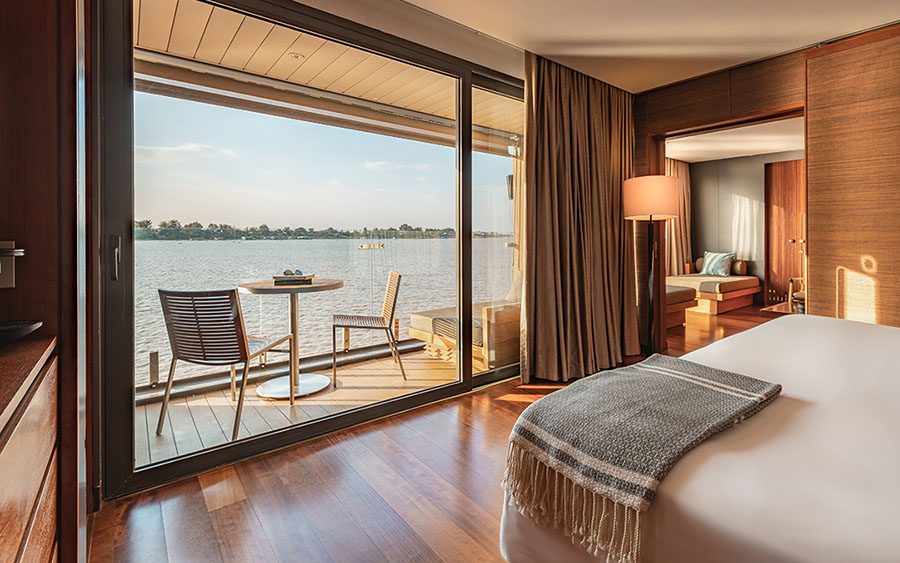
| Cabin type | Balcony stateroom, floor-to-ceiling window | Larger suite, private balcony, lounge area |
| Itinerary length | 2-3 days, 1-2 nights aboard | 4-7 nights, sometimes longer |
| Route | Cai Be – Sa Dec – Can Tho loop | Saigon – My Tho – Cai Be – Chau Doc – Phnom Penh |
| Excursions included | Floating market, village walk, cycling | Floating market, temples, Cambodian border stops |
| Typical price band | Entry-level for the delta segment | Higher, reflects added nights and suite space |
| Best for | First-timers wanting a quick delta taste | Travelers wanting Vietnam-Cambodia in one voyage |
| See tickets & prices |
Verdict: Pick the balcony cabin on a short Cai Be-Can Tho route for a compact luxury mekong river cruise, or the suite tier on a longer Saigon-Phnom Penh itinerary if you want both countries in one trip.
Worth it for comfort-seekers, skippable for budget travelers
A luxury mekong river cruise runs roughly 250-450 USD per night, and the honest question is what that per-night rate actually bundles. You get a private cabin or suite with air-conditioning, all meals aboard, and guided sampan excursions to floating markets, brick kilns, and Khmer pagodas along the delta. Compare that to a day-trip from Cai Be or Can Tho jetty: for 40-80 USD you see similar stilt houses and coconut-candy workshops, then bus back to a hotel. The premium buys continuity — waking on the water, private-guide access, and reaching backwater channels day boats never enter. This delta river cruise pays off if you value slow travel, mobility limits make bus-hopping tiring, or the itinerary crosses into Cambodia. It underdelivers if you want a quick delta sampler on a tight budget.
Bottom line: Book luxury mekong river cruise tickets if slow, all-inclusive delta travel justifies the premium; otherwise a day-trip covers the highlights for a fraction.
Hand-picked experiences loved by thousands of travelers
12 hours
Free Cancellation
Float through a legendary river market at dawn, then explore a lush Mekong island full of orchards, fish farms, and local life.
10–11 hours
Free Cancellation
Uncover wartime tunnels and drift through palm-fringed Mekong canals on one unforgettable full day.
2 days
Free Cancellation
Cruise the Mekong Delta, sleep in Chau Doc, then speed across the border into Cambodia.
Guests check in at the jetty, receive a welcome drink, and are introduced to the crew and cabins
The vessel departs and cruises past rice fields, sugarcane plots, and riverside stilt houses
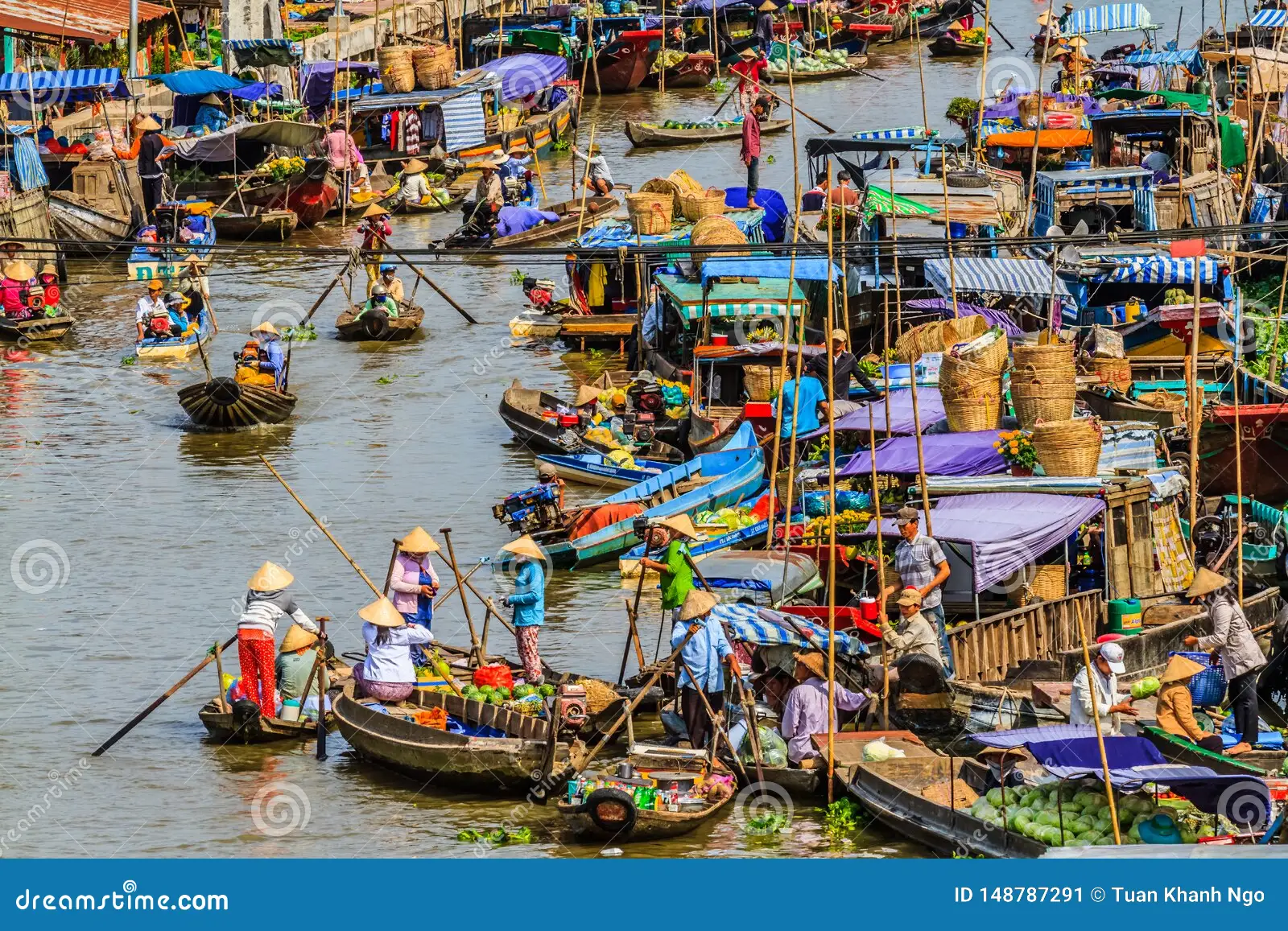
Guests transfer to a smaller boat to explore a floating market such as Cai Rang, observing trade conducted directly between boats
Shore excursions to a coconut candy workshop, rice-paper maker, or orchard for tastings
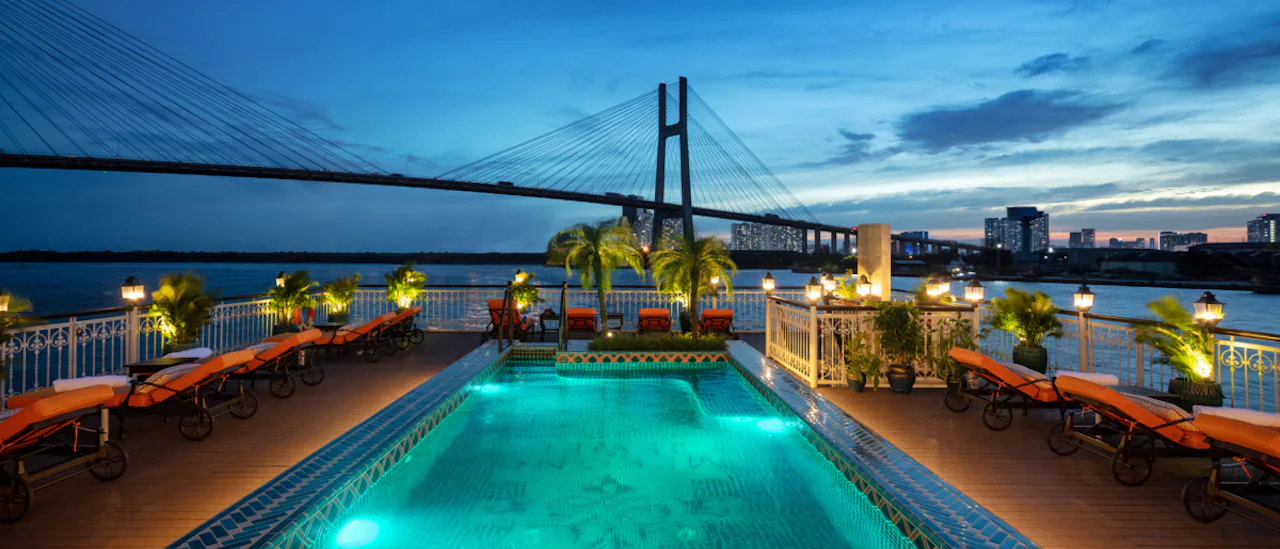
Time on the sun deck, spa treatments, or a cultural performance such as an Apsara or Don Ca Tai Tu show
Final breakfast or brunch is served before guests disembark and transfer back to their next destination
The largest wholesale floating market in the Mekong Delta, where 300-400 boats gather most mornings to trade fruit, vegetables, and fish directly on the water. Vendors advertise goods by hanging samples from tall bamboo poles called cay beo rather than calling out prices.
A 19th-century Buddhist temple in My Tho blending Vietnamese, Khmer, Chinese, and European architectural styles across a 20,000-square-meter complex. Its grounds include a 27-meter reclining Maitreya Buddha statue inaugurated in 2014 and gates decorated with inlaid porcelain mosaics.
A cable-stayed bridge over the Hau River near Can Tho that serves as a visual landmark for boats navigating toward the floating market district. It anchors the skyline for vessels departing Ninh Kieu Pier before sunrise.
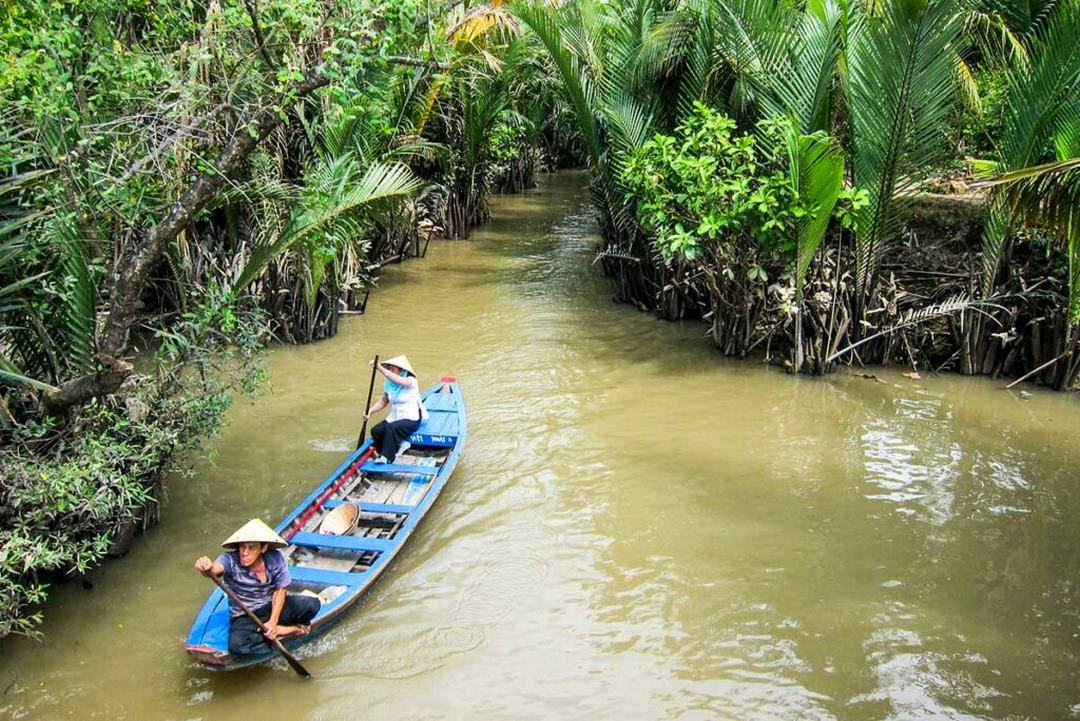
A narrower waterway connecting the Tien and Hau river branches, used by smaller cruise vessels for overnight anchorage away from the main shipping channel. Its calm waters and dense riverside vegetation offer a quieter contrast to the open Mekong.
A smaller, quieter floating market near Cai Be town, often paired with visits to nearby fruit orchards and a coconut-candy or rice-paper workshop. It offers a less crowded alternative to Cai Rang for early-morning boat traffic.
You board in the cool of the morning, somewhere between seven and ten, as the crew stows your bag and the wooden hull eases off the jetty. The engine settles to a low murmur and the town slides behind you, replaced by a green wall of water palm and the first sampans nosing out to trade. You take coffee on the open deck and watch the channel widen. By mid-morning the boat reaches a floating market, and you climb down into a smaller skiff to move among the vendors, close enough to take a slice of pomelo passed hand to hand across the gunwales. You step ashore for an hour to walk a coconut-candy workshop, then a brick kiln, the heat rolling off the ovens. Back aboard, lunch is river fish and rice, eaten slowly as the delta unspools. You nap, you read, you stand at the rail while the vessel threads a narrow arroyo where branches nearly meet overhead. This stretch of your luxury mekong river cruise is the quiet one, all bird call and dripping paddles. Toward dusk the boat moors against an orchard bank. You cycle a dyke path between fruit trees, then return for dinner as lanterns come on along the deck. Later you lean on the rail in the dark, the water black and moving, and let the day's long current carry you toward sleep.
All the details about your upcoming adventure in one place
A luxury mekong river cruise carries you through the Nine Dragons delta, where sampans drift past floating markets, coconut groves, and stilt-house villages along the Bassac River. Guests aboard these luxury mekong river cruise tours wake to sunrise over the paddy fields and glide between Cai Be and Sa Dec, with onboard naturalists sharing the ecology of the wetlands. It remains one of the most rewarding Mekong Delta river journeys for travelers seeking calm water, regional cuisine, and living riverside culture.
The Mekong drops roughly 500 metres across its final 200 kilometres of Vietnam, a gradient so gentle the river braids into nine mouths before the sea, giving the delta its Vietnamese name, Cửu Long, the Nine Dragons. That near-flatness shapes everything a luxury mekong river cruise now moves through: a landscape without hills, where water rather than road has long been the organising principle of trade, settlement and daily rhythm. The delta was consolidated under the Nguyễn lords in the eighteenth century, its canals cut and recut over generations until the whole plain became a lattice of waterways. French colonial engineers deepened and straightened many channels for rice export, and the region still produces more than half of Vietnam's rice and a large share of its fruit. The floating markets at Cái Bè and Cái Răng, where wholesalers hang samples of produce from tall bamboo poles, are the surviving commercial theatre of that history, and most refined delta sailings are timed to reach them in the early trading hours. What distinguishes the modern fleet is restraint rather than spectacle. Converted rice barges and purpose-built wooden vessels carry a dozen or so cabins, teak decks, shaded lounges and shallow drafts that let them thread the narrower arroyos toward Bến Tre and Sa Đéc. The best du thuyền sông Mekong operators keep passenger numbers low precisely because the delta rewards quiet observation: a heron lifting off a mudbank, coconut-frond dwellings on stilts, sampans loaded with pineapple and dragon fruit. The geography also explains the itineraries. Because there is no single monument to circle, a luxury mekong river cruise reads instead as a moving cross-section of riverine life — brick kilns near Vĩnh Long, coconut-candy workshops around Bến Tre, the pastel colonial shophouses of Sa Đéc that inspired Marguerite Duras. Cruises depart from several jetties, typically Cái Bè, Mỹ Tho, Bến Tre or Cần Thơ, according to operator and route, and the through-line is the water itself rather than any fixed address. That is the deeper appeal of the delta as a destination. Elsewhere a traveller arrives at a landmark; here the landmark is diffuse, dissolved into orchard, canal and tidal channel across the Mekong Delta. The river carries silt from the Tibetan Plateau and deposits it as new land each year, so the delta is quite literally still being made. To sail it slowly is to read a working floodplain at the pace it was designed to be read, by boat, in the long light between the morning markets and the evening moorings, where the current does most of the navigating.
Elsewhere a traveller arrives at a landmark; here the landmark is diffuse, dissolved into orchard, canal and tidal channel.
Light, breathable clothing is standard aboard a luxury Mekong river cruise, given the humid tropical climate; a hat and sun-protective layer are useful on open sun decks. Evenings can call for smart-casual attire for formal dinners on larger vessels like the Jahan or Jayavarman, while daytime shore excursions favor closed shoes for muddy village paths.
Cabin luggage storage aboard most Mekong Delta vessels is compact, so a single soft-sided bag per person is advised rather than hard-shell suitcases. Security checks are minimal compared to airports, but valuables should stay in-cabin safes where provided, since sampans and smaller boats used for floating-market transfers have limited secure storage.
Photography is unrestricted on open decks and during floating-market transfers, though tripods can be awkward on the narrower sampans used to reach Cai Rang. Flash photography inside working pagodas or family workshops visited en route should be avoided out of respect for residents and monks.
Children are welcome on most itineraries, though life jackets are required for transfer-boat excursions to villages and markets. Families with very young children should confirm cabin configuration and railing heights with the operator before booking.
Gangways between the jetty and vessel, and between the main ship and smaller transfer boats at the floating market, can be narrow or unstable, so mobility-impaired travelers should notify the operator in advance. Larger ships such as the Jahan or Jayavarman have more stable boarding ramps than smaller wooden Bassac-style boats.
Meals are included and served on board, typically Vietnamese cuisine with fresh regional produce from Mekong Delta orchards; outside food and drink brought onto the vessel is generally discouraged due to limited galley storage. Bottled water and welcome drinks are provided at boarding on most luxury Mekong river cruise packages.
Boarding times set by cruise itinerary, not fixed
Weekend departures often sell out first
Departure varies by operator, most vessels board 07:00–10:00
location
Car · 2-3 hours · Transfers often included in cruise packages
Private transfer from Ho Chi Minh City to My Tho or Cai Be takes roughly 2 hours via National Highway 1A, while Can Tho is a further 2-3 hours south
Public transport · 3-4 hours · Approx 10 USD per seat
Shared limousine buses run from Ho Chi Minh City's Mien Tay bus station to Can Tho and My Tho, with tickets sold at station counters
Taxi · 2-2.5 hours · Approx 80 USD flat rate
Metered taxis from Ho Chi Minh City can reach My Tho or Cai Be jetties directly, useful for flexible timing before boarding
Bike · N/A · Included in most packages
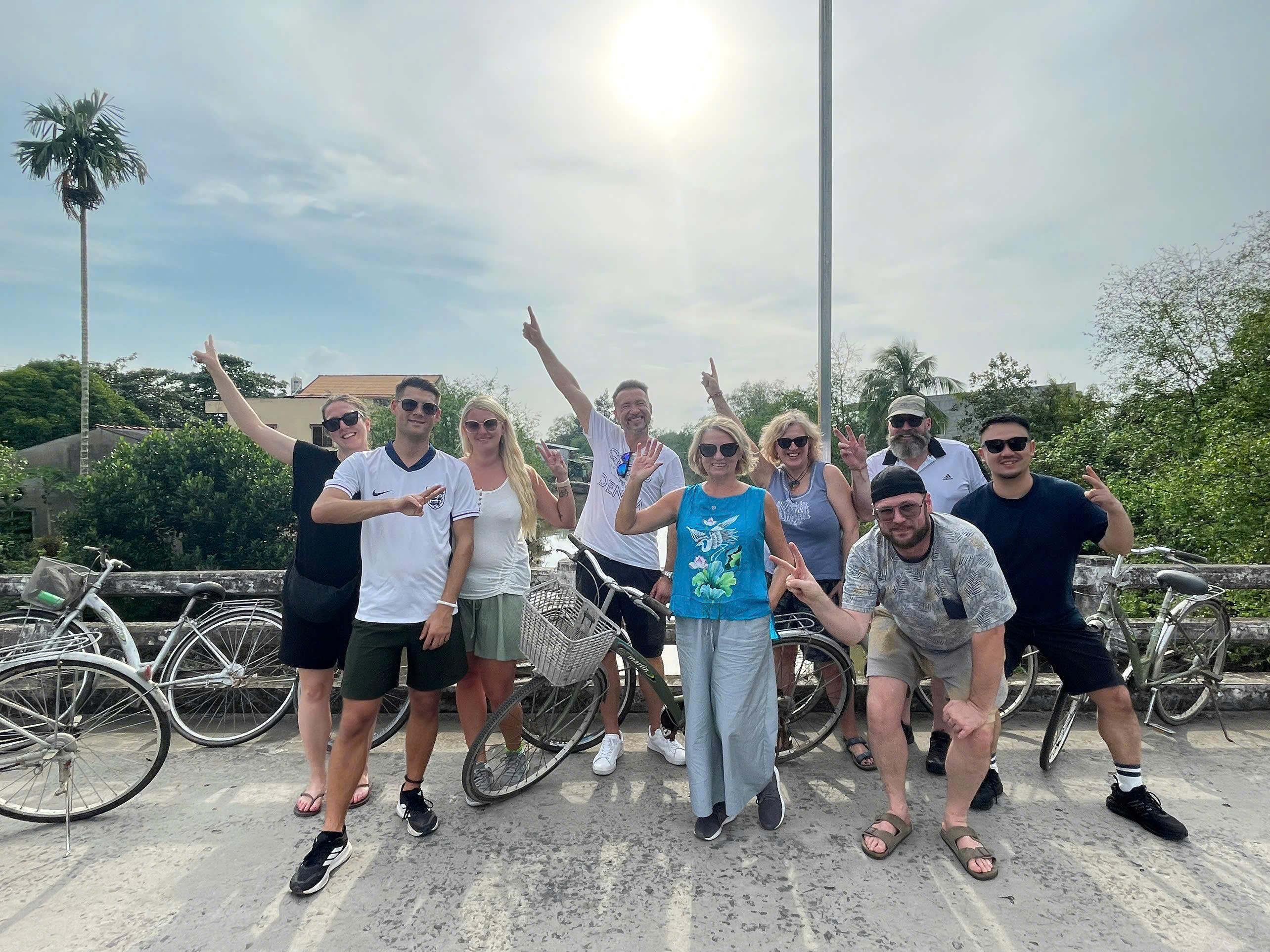
Not practical for reaching the jetty itself, but bicycles are often provided on board for orchard and village stops during shore excursions
Most luxury Mekong river cruise operators allow free cancellation up to 7–14 days before departure with a full refund, and offer partial refunds (50%) for cancellations within 3–7 days. Since entrance fee is 0 USD (cruises are booked packages rather than ticketed sites), refund terms apply to the cabin or itinerary price rather than any gate fee.
Recommended time
2-3 days
A 2-day, 1-night sailing covers the basics: one floating market run at dawn, a village or workshop stop, and a single evening onboard, while a 3-day luxury mekong river cruise adds Cai Be or Can Tho so the early markets and canal stops get more breathing room. Longer 7-8 day itineraries stretch into Cambodia, trading market intensity for slower riverside days and fewer scheduled stops per day. Add a night if you want Cai Rang at its liveliest rather than a rushed pass-through, and subtract a day if you only care about seeing one floating market. There's no queue in the ticketed sense, but market boats cluster hardest between 6:00 and 8:00, so arriving after sunrise means jockeying for position among vendor boats.
Crowd levels through the day
Weather · crowds · average price — dots go green to amber to red as each metric rises.
Cooler, less humid weather with calmer river conditions makes this the most comfortable stretch for a luxury Mekong river cruise. Fruit harvests peak in these months, adding variety to orchard stops.
Warmer and more humid, with afternoon rain showers, though mornings on the river are usually clear. River levels rise, which some travelers find scenically dramatic along the Mang Thit and Hau rivers.
Floating markets are especially colorful as vendors sell Tet flowers and ornamental kumquat trees, adding festive atmosphere to any Mekong River tour.
Vietnamese national holidays and Tet itself see high domestic travel demand and some operators suspend departures, so book well ahead or avoid these dates entirely.
Weekend sailings on popular routes like Cai Be to Can Tho fill first, especially around Tet, so reserve several weeks ahead.
Cabin storage on smaller wooden vessels is limited, so a duffel or soft bag stows more easily than a hard-shell suitcase.
Departure points vary between Cai Be, My Tho, Ben Tre, and Can Tho depending on operator, so double-check the boarding location on your voucher.
Cash in small Vietnamese dong denominations is useful for tipping guides and buying fruit or snacks directly from market vendors.
Not every route passes Cai Rang; some visit Cai Be floating market instead, so confirm which market is included if that's a priority.
Refund terms differ by operator, so review the specific cutoff dates before paying a deposit.
Cai Be, Tien Giang Province, Mekong Delta
Common boarding point for northern-route cruises
Get directionsNinh Kieu, Can Tho City
Main departure point for Can Tho-based cruises and floating market transfers
Get directionsCai Khe, Ninh Kieu, Can Tho
Private pier used by some luxury operators for guest transfers
Get directionsThe Mekong Delta owes its shape to sediment, not architecture. For centuries the river carried silt down from the Tibetan Plateau, laying the flat alluvial plain that farmers and boatmen would later contest. By the seventeenth century, Khmer settlements and migrating Vietnamese cultivators shared the waterways. Trade moved on sampans long before any modern luxury mekong river cruise traced the same channels. French colonial ambition reshaped the delta between 1867 and 1930. Engineers dredged canals to drain the marshes and open rice frontiers. The Xa No Canal, completed in 1903, linked Can Tho to the Gulf of Thailand and turned the region into Indochina's rice bowl. Saigon exporters shipped paddy through Cai Be and My Tho, and steam launches replaced sail. The waterborne commerce of that era seeded the floating markets that anchor today's Mekong Delta cruise tour. Floating markets grew from this logistics network. Cai Be market, active by the early twentieth century, gathered wholesalers who advertised produce on tall poles. Cai Rang near Can Tho became the largest, its dawn trading recorded in colonial accounts. These markets survived the Indochina wars, decollectivization in 1986, and the bridge-building that later diverted road traffic. A luxury mekong river cruise now follows the very arteries once cut for rice export. Modern river tourism arrived after Vietnam's Doi Moi reforms opened the economy in 1986. Operators repurposed converted rice barges and colonial-style vessels through the 1990s and 2000s. The Cai Be jetty, Ben Tre, and Can Tho evolved into departure points for luxury mekong river cruise tours. Bassac-style wooden ships, launched from 2005 onward, revived the teak-and-brass aesthetic of Indochina steamers. What began as sediment and salt-trade endures as heritage waterway, and demand for a luxury mekong river cruise tour and luxury mekong river cruise tickets reflects renewed interest in these UNESCO-recognized delta landscapes and their persistent floating commerce.
Khmer and migrating Vietnamese settlers shared the delta's tidal waterways for river trade.
French forces annexed the six southern provinces, beginning colonial control of the delta.
The Xa No Canal linked Can Tho to the coast, expanding rice-export commerce.
Cai Be and Cai Rang floating markets formed around wholesale produce trading.
Doi Moi economic reforms reopened the delta to private commerce and tourism.
Bassac-style wooden cruise ships revived the Indochina steamer aesthetic on delta routes.
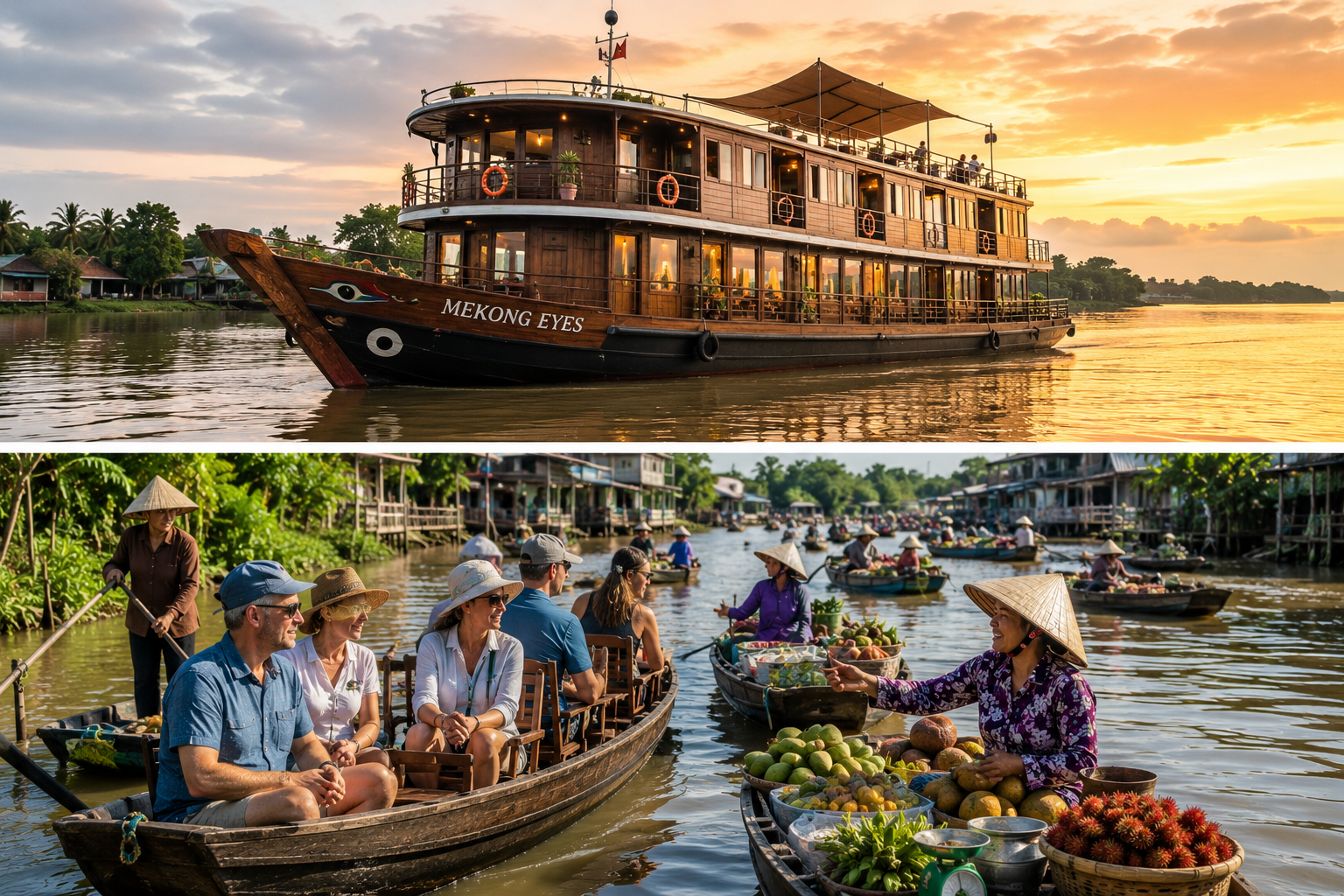
Dozens of wooden boats converge before dawn on the Can Tho River near Cai Rang Bridge, poles hung with fruit samples against a golden sky; shoot low from the bow of a small sampan as vendors drift past. This scene is the signature stop on most luxury mekong river cruise itineraries through the Mekong Delta.
Fewer boats than Cai Rang but a striking backdrop of the old Catholic cathedral rising behind fruit-laden wooden vessels on the Tien River. Stand mid-river on the tour boat for a wide frame that catches both church spire and market traffic.
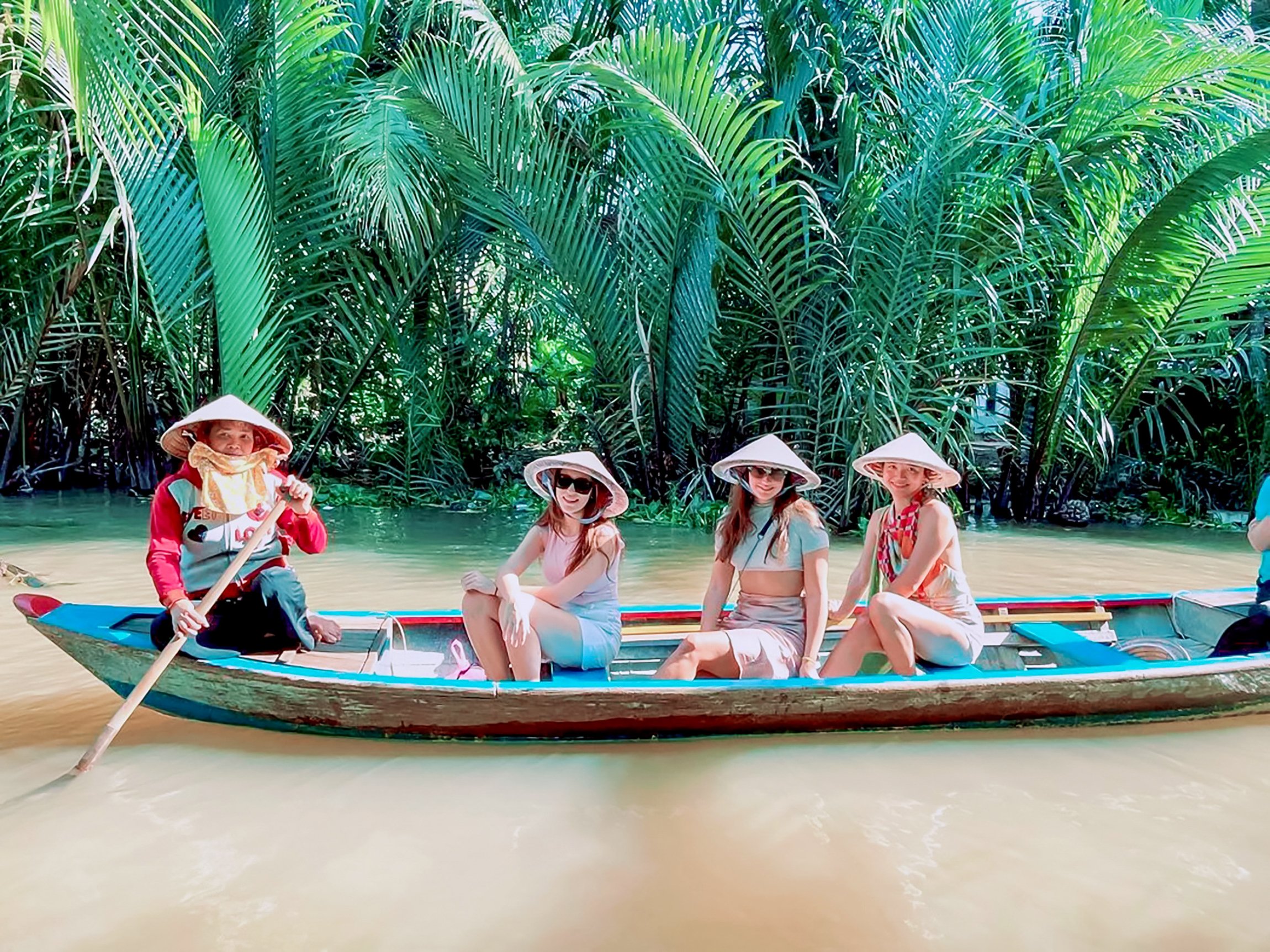
Narrow, palm-shaded canals branching off Cai Be invite close-up sampan shots of stilt houses and overhanging greenery; the small hand-paddled boats fit only single file, so frame the arching foliage as a natural tunnel. These detours pair well with luxury mekong river cruise tours that build in a canal-side stop.
The departure and return point at Can Tho gives a wide shot of the riverfront skyline and moored cruise vessels, useful for establishing shots before or after the floating-market run.
The open-air upper deck of Mekong cruise boats like the Bassac faces the Hau or Tien River and clears for unobstructed shots of the sun dropping behind riverbanks and passing sampans, a highlight noted across luxury mekong river cruise tickets and reviews.
Boats anchored overnight near Tra On wake to still water and mist; the sundeck at first light captures reflections and passing fishing boats before the day's heat sets in.
A luxury mekong river cruise puts families in connecting or twin-bed cabins with private bathrooms, so young kids stay close by while parents get real cabin space rather than a shared bunk room. The rhythm is slow and boat-based, which suits children who tire of long coach transfers but needs some adjusting for nap times and small canal boats.
Larger operators offer connecting cabins or family suites with twin beds pushed together; smaller sampans typically have only 2-4 cabins total, so book the whole boat as a private charter if you want your family alone rather than sharing with strangers.
Canal excursions switch you from the main cruise vessel to narrow sampans or rowboats with low freeboard and no railings; toddlers and non-swimmers need a snug life vest and an adult holding on, and this is the trickiest transition point of the day.
Most operators set a minimum age around 5, since infants and toddlers struggle with the life-vest requirement on open-water transfers and the long stretches of sitting during canal rides.
Break a 2-3 day itinerary into shorter mornings on the water and quieter afternoons at the hotel or lodge, since young children flag fast in delta heat and humidity; skip the pre-dawn floating-market departure if naps matter more than photos.
Onboard wifi is common on mid-range and upmarket boats, useful for keeping older kids occupied during longer river stretches between village stops.
Dining on a luxury Mekong river cruise is almost entirely set-menu and included: onboard chefs handle breakfast, lunch and dinner, while a handful of named riverside restaurants and floating-market stalls at Cai Be and Cai Rang cover the shore excursions — there's little reason to seek out independent options nearby.
Set Vietnamese menu built around Mekong Delta staples like elephant ear fish and clay-pot pork, served in a restored colonial house with garden seating; nearly every luxury mekong river cruise itinerary schedules lunch here, so tables fill fast around midday.
Vietnamese-Western fusion set menus with a welcome dinner on the first night featuring Đờn ca tài tử folk music; breakfast is served on the Claypot Restaurant terrace, a relaxed option before disembarking for shore visits.
Local Southern Vietnamese dishes using fresh-caught river fish and prawns, with vegetarian and special-diet options on request; one seating means it can feel snug on fuller sailings, so it suits guests happy with a fixed schedule rather than a la carte pacing.
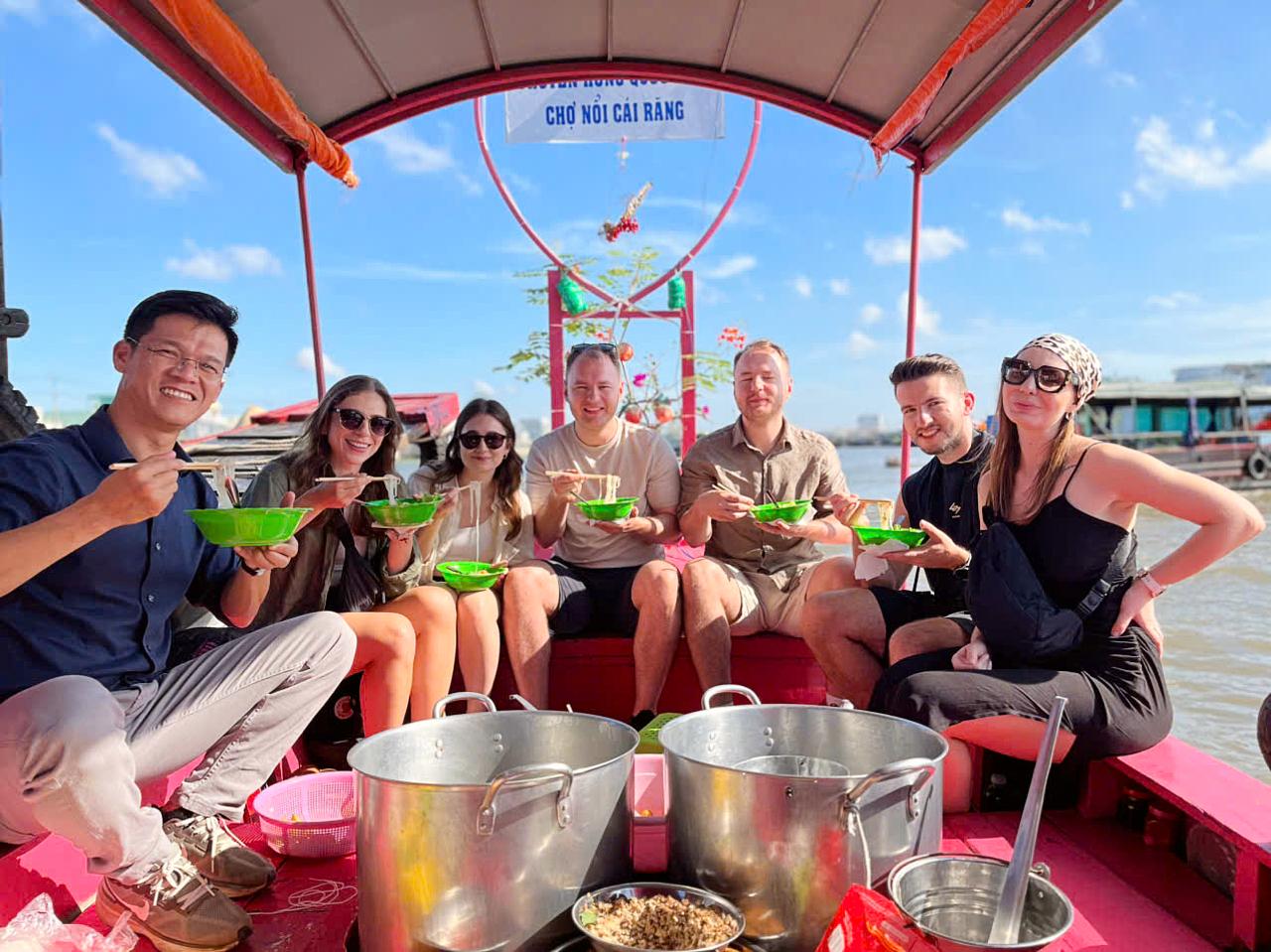
Vendor boats sell crab vermicelli soup, sugar-cane juice and fresh fruit straight from the water, best experienced on an early tender from the ship before the market thins out; a quick, informal contrast to the set-menu meals back onboard.
Real experiences from real travelers
Our luxury mekong river cruise from Cai Be to Chau Doc struck the right pace, drifting past stilt houses while the mist burned off around seven. The cabin doors opened straight onto the water, and by afternoon the heat had us grateful for the shaded lounge. Bring a light layer for the early sampan transfers.
What sold me was how quiet the river got upstream, just birds and the low engine as we passed rice barges. This Mekong Delta river tour balanced the floating market chaos with long unhurried stretches on the sun deck. The crew knew every bend by name.
The Cai Be to Sa Dec leg on our mekong river cruise tour was calm and green, water buffalo along the banks at dusk. Humidity was heavy by midday so I stayed on the covered deck. Cabins were spotless and the tender skiffs got us close to the canals.
Watching the delta turn orange from the top deck was the highlight, silt-brown water going copper as the sun dropped. The luxury mekong river cruise tickets felt worth it once we reached the smaller channels tourists rarely see. Coconut-candy stop was a nice touch.
We booked the luxury mekong river cruise expecting crowds and instead got glassy dawn water and empty decks before breakfast. The onboard guide pointed out fruit orchards and Khmer pagodas as we passed. Pack insect repellent for the shore walks near Chau Doc.
The floating market run at first light was the part I keep describing to friends, vendors reaching up with pineapples from wooden boats. Our Mekong Delta landmarks came alive from water level in a way no bus tour manages. Air conditioning in the cabin was a relief after.
Late November meant lush paddies and manageable heat along the river. The luxury mekong river cruise tours we compared all looked similar on paper, but the small guest count here made the canal excursions feel private. One evening got buggy on deck, otherwise smooth.
Drifting past Sa Dec's riverside houses at golden hour, tender boats waiting to take us into the narrow canals, felt like stepping back a century. This du thuyền sông Mekong journey handled the border stretch toward Cambodia without any fuss. Food leaned local and fresh, which we loved.
The stretch above Sa Dec is where the river cruise earned it, wide brown water and almost no other boats at sunrise. Guests were few and the crew learned our names by day two. Bring a hat, the sun deck gets fierce by ten.
July on the delta was hot and bright but the covered lounge and cool cabins made it easy. Our skip-the-line Mekong cruise embarkation meant no waiting at the dock, just straight aboard and off. The floating market and coconut workshop were the standouts for us.
Everything you need to know for your journey
Departure times vary by operator since cruises run on scheduled itineraries rather than fixed daily hours, though most vessels board between 07:00 and 10:00.
There is no single gate fee for a luxury Mekong river cruise; it is a booked package rather than a ticketed site, so the cost is included in the cabin or itinerary price.
Departures typically leave from Cai Be Jetty, My Tho, Ben Tre, or Can Tho in the Mekong Delta, depending on which operator and route you book.
Larger vessels such as the Jahan or Jayavarman have more stable boarding ramps, though smaller sampans used for floating-market transfers can be harder to access, so notify the operator of any mobility needs in advance.
Bring insect repellent, sunscreen, a light rain jacket, and comfortable closed-toe shoes, since shore excursions cross muddy village paths.
Outside food and drink is generally discouraged on board due to limited galley storage, though meals and welcome drinks are included in most luxury Mekong river cruise packages.
Photography is allowed on open decks and during market transfers, though flash should be avoided inside pagodas and workshops out of respect for residents.
The dry season from December to April offers the calmest river conditions and coolest temperatures for a Mekong River tour, while the pre-Tet weeks add colorful market scenes.
Yes, children are welcome on most luxury Mekong river cruise tours, though life jackets are required for transfer-boat excursions to villages and markets.
Most operators allow free cancellation 7-14 days before departure with partial refunds closer to the sailing date, so check your specific operator's terms before booking.
Many itineraries combine a Mekong Delta cruise with a stop at Vinh Trang Pagoda in My Tho or a visit to Cai Rang Floating Market near Can Tho.
A valid passport is required for boarding; no special cruise visa exists, though travelers should confirm Vietnam's standard entry visa requirements before arrival.
A 19th-century Buddhist temple blending Vietnamese, Khmer, Chinese, and European architectural styles, first built in 1849. Its grounds hold a 27-meter reclining Maitreya Buddha statue and porcelain-mosaic gates.
One of the largest wholesale floating markets in the Mekong Delta, where hundreds of boats trade fruit and produce each morning. Vendors hang samples from tall poles called cay beo to advertise their goods.
A cable-stayed bridge spanning the Hau River, notable as one of the longest of its kind in Southeast Asia when completed. It offers a landmark reference point for boats navigating toward Cai Rang.
A riverside promenade in central Can Tho popular for evening strolls, with views over the Hau River and access to local food stalls.
A riverside resort in Can Tho used by some operators as a private departure and arrival point for cruise transfers.
A cluster of mid-range hotels convenient for pre-cruise overnight stays near the northern departure points.
The main riverside hotel district in Can Tho, offering a range of boutique and mid-range options near Ninh Kieu Pier.
Join thousands of happy travelers who have discovered this incredible experience
Book Your Experience Now