48 hr
2-Day Mekong Delta & Cai Rang Floating Market Expedition
- Expert local guide
- Small group
- Skip-the-line access
- Free cancellation
Mekong Delta 2 Day Tour — River Villages, Floating Markets & Overnight Stay
Two mornings on brown water, one long green horizon.
Compare fares, pick the fit — all bookings are mobile-voucher and eligible for free cancellation where shown.
48 hr
72 hr
48 hr
Every mekong delta 2 day tour splits into a handful of accommodation tiers for the overnight stop in Can Tho, and picking between them shapes your comfort, budget, and how much local contact you get. Whether you search for a Can Tho Mekong Delta tour, a private mekong delta 2 day tour tour, or skip-the-line mekong delta 2 day tour tickets bundled with pickup, the tiers below cover the real trade-offs.
| Homestay (Shared local house) |
Top pick 3-Star Hotel (A/C, shared twin room) |
4-Star Hotel / Private (Private room, small group) | |
|---|---|---|---|
| Accommodation type | Family homestay, garden or riverside setting | 3-star hotel, e.g. Phuong Nga or Hau Giang | 4-star hotel, e.g. Wink or Holidays One, or private villa |
| Room sharing | Shared common areas, basic bedding | Twin share, 2 persons/room | Private room, single or twin |
| Group size | Small group, up to 16 seats | Small group, up to 16 seats | Small group or private, under 10 |
| Guide type | Shared English-speaking guide | Shared English-speaking guide | Dedicated or small-group guide |
| Typical inclusions | 2 lunches, 1 breakfast, boat trips | 1 breakfast, 2 lunches, hotel transfers | Breakfast, lunches, evening free time in Can Tho |
| Best for | Cultural immersion, tighter budget | First-timers wanting comfort and value | Extra privacy, quieter rooms |
| See tickets & prices |
Verdict: Choose the homestay for village atmosphere on a lean budget, the 3-star hotel tier for the most balanced mekong delta 2 day tour experience, and the 4-star or private option if personal space matters more than price.
If catching Cai Rang floating market at its peak matters to you, book the mekong delta 2 day tour; a Mekong Delta day trip from Saigon skips it entirely because the boats have mostly packed up by the time a day tour arrives.
|
Top pick Mekong Delta 2-Day Tour |
1-Day Mekong Delta Tour from HCMC | |
|---|---|---|
| What you see | Can Tho, Cai Rang market, canals, orchards, homestay | My Tho/Ben Tre canals, coconut workshops, sampan ride |
| Cai Rang floating market timing | Arrives 5:00-7:30am, peak trading hours | Market closed by pickup time, often skipped |
| Overnight required | ✓ — 1 night in Can Tho | — |
| Typical price range | $145-$175 (budget from $48) | $25-$40 per person |
| Pace/rushed factor | Relaxed, two half-days plus overnight | Rushed, single 9-12 hour loop |
| Best for | Travelers who want the real market and river life | Time-limited visitors wanting a quick taste |
| See tickets & prices |
Verdict: Choose the 2-day tour for the actual floating-market experience and a slower Mekong Delta landmarks itinerary; choose the 1-day tour only if you can't spare a night away from Ho Chi Minh City.
Hand-picked experiences loved by thousands of travelers
8 hours
Free Cancellation
Experience the heart of the Mekong on this private, immersive day trip through lush orchards, winding canals, and cultural heritage sites.
3 days
Free Cancellation
Cross from Vietnam to Cambodia on a 3-day journey through floating markets, river villages, and scenic canals.
2 days
Free Cancellation
Traverse the Mekong Delta from Ho Chi Minh City to Phnom Penh on an immersive two-day river and land journey.
Early morning pickup and drive south to My Tho, gateway to the delta
Visit the pagoda then cruise the Tien River past Long, Lan, Quy and Phung islets
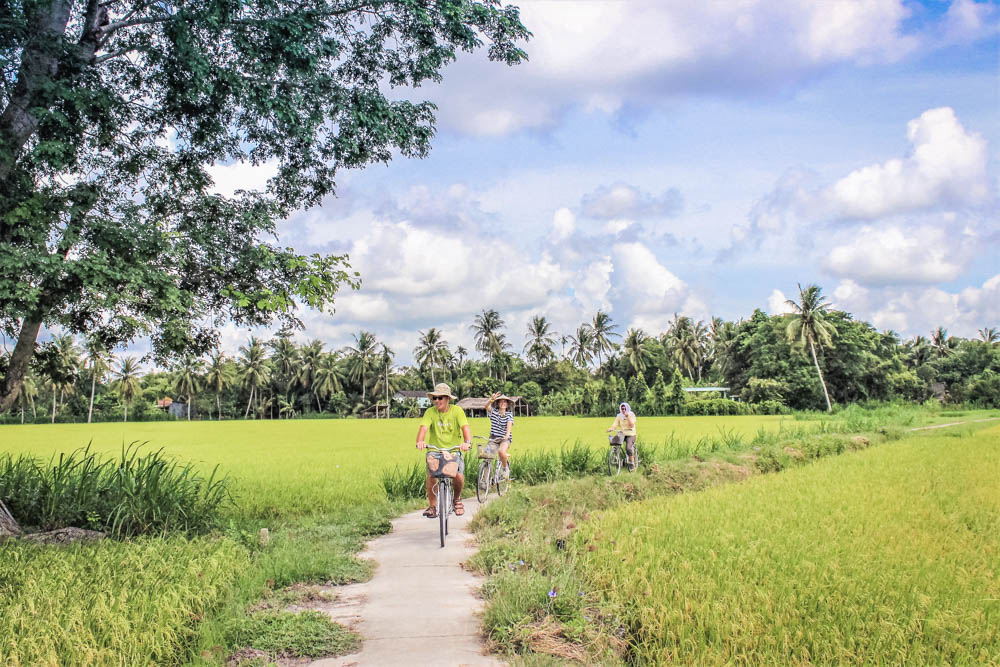
Rowboat through mangrove canals, coconut candy making, horse-cart ride through the village
Check into a riverside hotel, free evening at Ninh Kieu Wharf
Early motorboat ride to see vendors trading fruit and goods from boats, floating noodle soup breakfast
Visit a rice-noodle-making family workshop, cruise Phong Dien canal, then drive back to Ho Chi Minh City
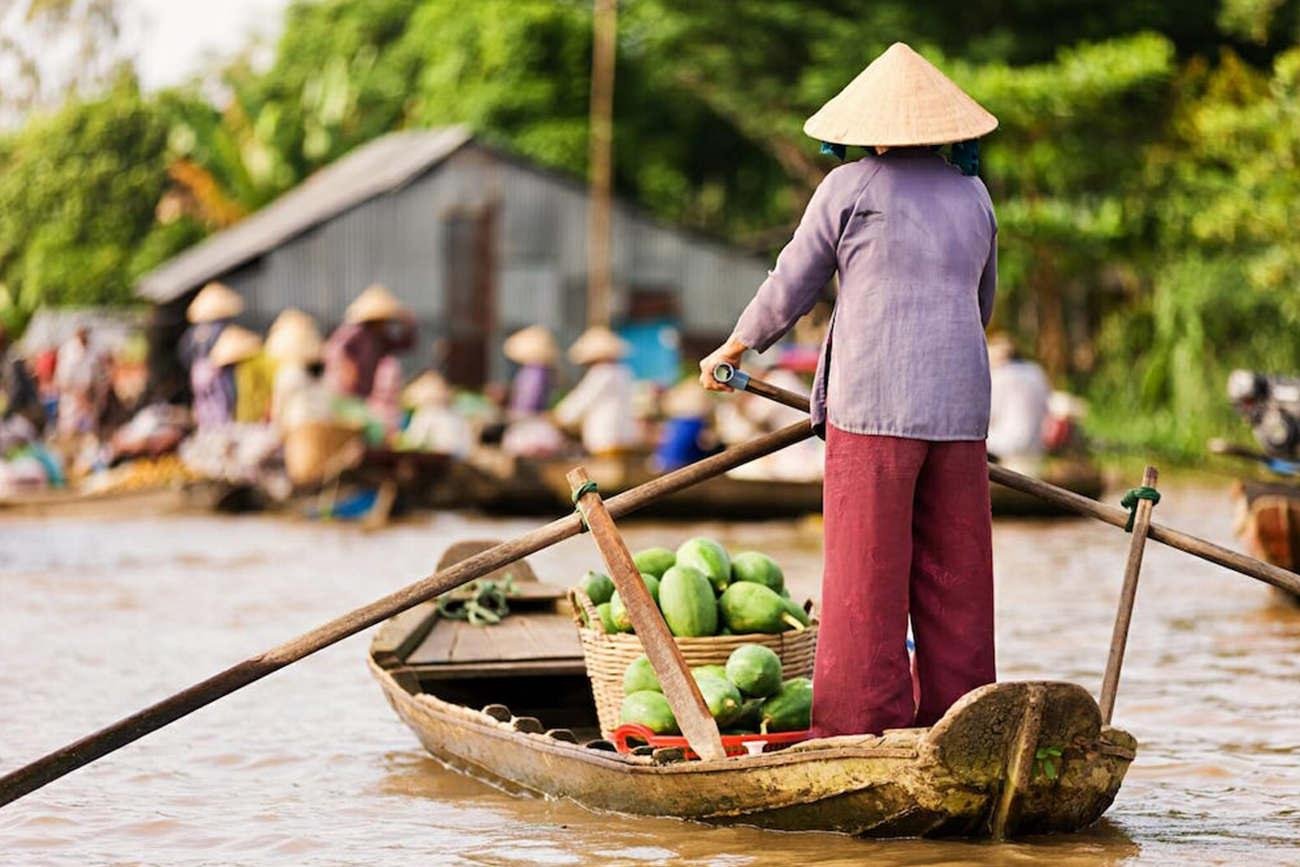
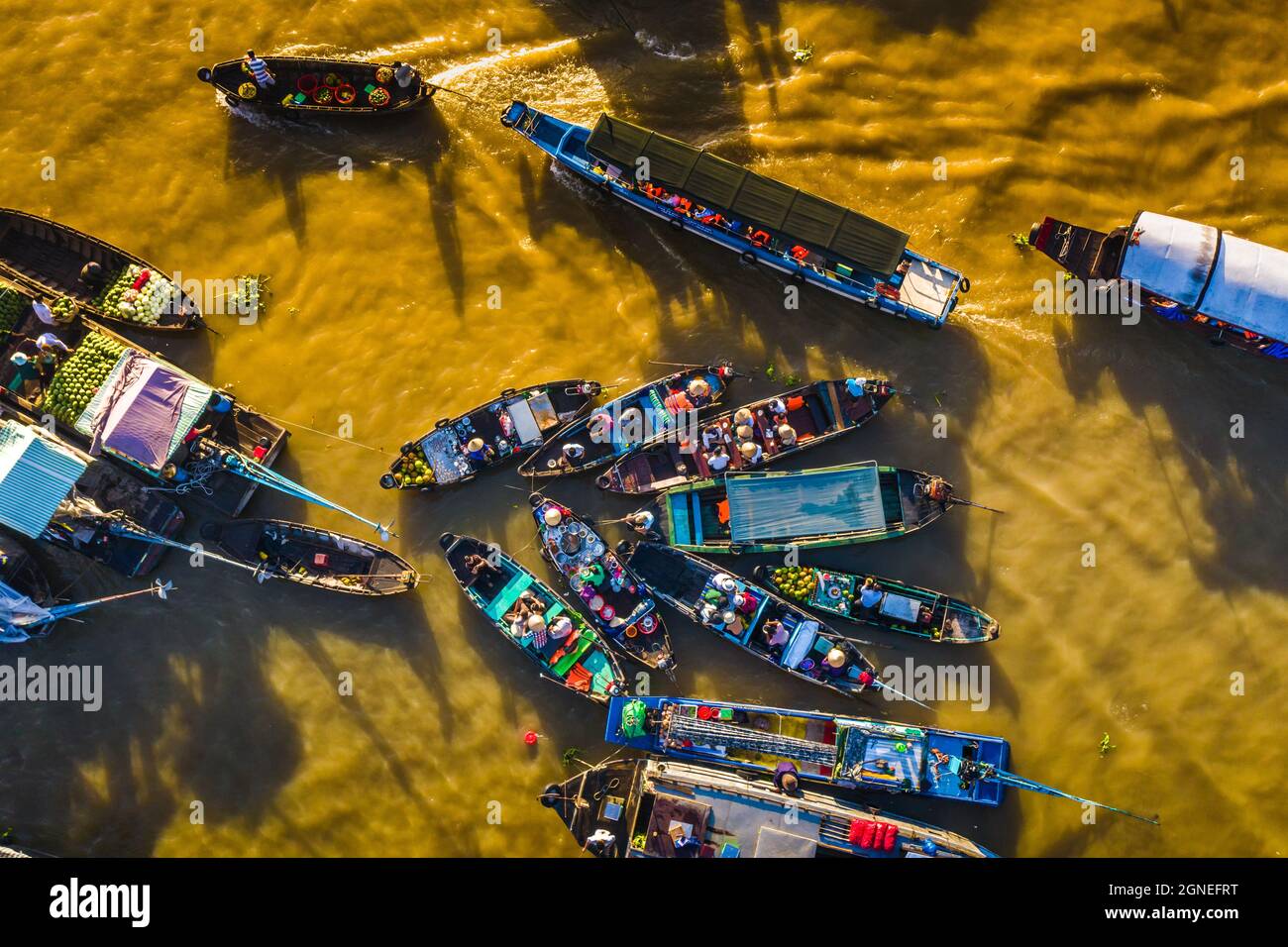
The largest floating market in the Mekong Delta, where vendors hang samples of produce from tall poles called 'bung rao' so buyers can spot goods from a distance. Trade is busiest before 07:00, with hundreds of boats selling fruit, vegetables, and rice noodle soup directly from the water.
A 19th-century pagoda in My Tho blending Vietnamese, French, and Khmer architectural elements, including a distinctive mix of Gothic-style columns and Asian rooflines. It is regarded as one of the largest pagodas in southern Vietnam.
One of four sacred islets on the Tien River near My Tho, home to orchards, a crocodile farm, and narrow rowboat canals shaded by water coconut palms. Visitors typically transfer from motorboat to hand-rowed sampan to reach its interior canals.
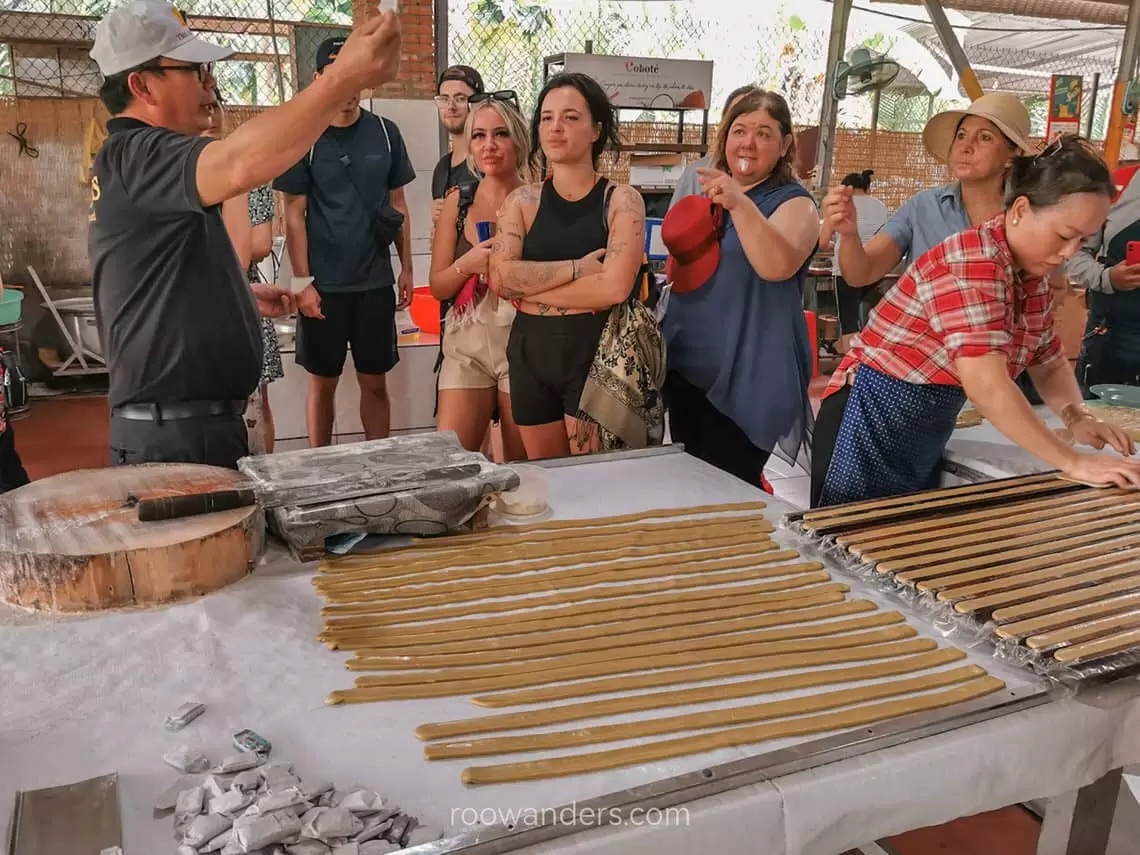
A family-run workshop in Ben Tre province demonstrating traditional hand-making of coconut candy, using coconut milk and malt sugar cooked over open flame. Ben Tre alone produces a large share of Vietnam's commercial coconuts, giving the province its nickname as the coconut kingdom.
A riverside promenade on the Hau River in Can Tho, serving as the departure point for early morning boats to Cai Rang Floating Market and home to an evening night market. It anchors the overnight stop on most two-day delta itineraries.
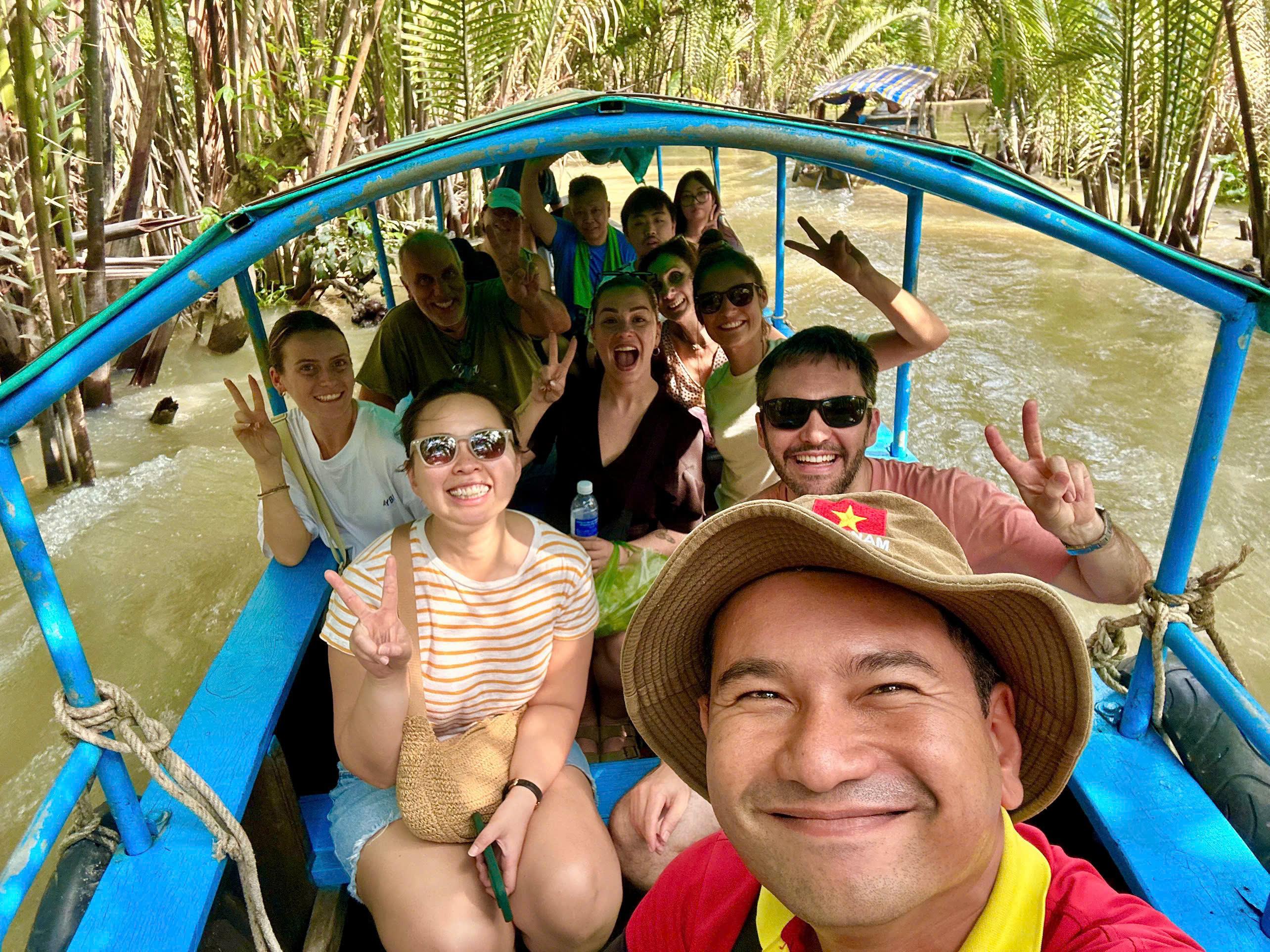
A narrower, quieter waterway outside Can Tho lined with nipa palms and mangroves, often visited after the floating market for a slower-paced cruise. It offers a contrast to the wide, boat-crowded Hau River nearby.
You leave Ho Chi Minh City in the cool early window, ideally between 07:00 and 08:00, when the highway south is still loose and the heat has not yet settled over the paddies. Within a couple of hours the concrete gives way to canals, and you board your first boat. You lean back as the sampan noses into a side channel, coconut palms closing overhead, and you trail a hand in the tea-brown water. By afternoon you step ashore at a family workshop. You watch coconut candy pulled and cut, taste a warm strip straight from the board, and press puffed rice between your fingers. You climb onto a bicycle or a horse-cart along a dyke, then settle at a riverside table for elephant-ear fish rolled into rice paper with herbs. The overnight stay is what a mekong delta 2 day tour buys you: a homestay or riverside lodge where the evening arrives with frogs, distant karaoke, and a sky uncluttered by city glare. You sleep early because the second morning starts before dawn. You reach Cái Răng while the market is still dense with boats. You cup a bowl of noodle soup passed hand to hand across gunwales, buy a pineapple peeled into a spiral, and watch wholesalers signal their wares on tall poles. Then you turn back upriver, sun climbing, the delta already at full work behind you as the site slips out of view.
All the details about your upcoming adventure in one place
A mekong delta 2 day tour carries you from Ho Chi Minh City into the green waterways around Ben Tre, Can Tho, and Cai Rang, where sampan boats glide past coconut groves and rice paddies. Many Cai Rang floating market tours pair a slow river cruise with visits to fruit orchards and family-run coconut candy workshops. Booking mekong delta 2 day tour tickets in advance secures your sampan seat and overnight lodging along the delta.
The Mekong travels roughly 4,350 kilometres from the Tibetan Plateau before it splits into nine branches and empties into the South China Sea, and it is those final branches — the Nine Dragons, or Cửu Long — that give southern Vietnam its rice, its fish, and its rhythm. A mekong delta 2 day tour follows a landscape that people have shaped for centuries, where roads matter less than water and the day is measured by the tide rather than the clock. The delta covers around 40,000 square kilometres across thirteen provinces, and for generations its commerce moved almost entirely by boat. Floating markets grew out of that necessity. Long before bridges spanned the wider channels, farmers rowed their sampans to fixed meeting points where sellers advertised produce by tying a sample — a pineapple, a bundle of greens, a single squash — to a tall bamboo pole above the deck. Cái Răng, near Cần Thơ, remains the largest of these markets and still opens before dawn, its wholesale trade thinning as the morning warms. Why the region still matters is partly agricultural arithmetic. The delta produces more than half of Vietnam's rice and a large share of its fruit and farmed shrimp, feeding both the country and its exports. It is also a place under pressure, as upstream dams, salt intrusion, and shifting river sediment reshape the water that defines it. To move through it now is to see a working landscape mid-negotiation with its own future. The architecture of the delta is low and practical rather than monumental. Stilt houses lean over the banks; narrow canals thread between coconut groves and orchards heavy with mango, longan, and rambutan. Small family workshops still produce coconut candy, rice paper, and puffed-rice sweets by hand, and Khmer pagodas and old Chinese assembly halls mark the layered history of a region settled by Vietnamese, Khmer, Cham, and Chinese communities in turn. A well-planned mekong delta 2 day tour tour reaches past the first canal into this quieter interior, where the traffic of the trade routes gives way to birdsong and the slap of paddles. The river's culture is inseparable from its cuisine and faith. Elephant-ear fish, sour soups thick with tamarind, and coconut-scented rice appear at riverside tables, while Cao Đài and Hòa Hảo temples reflect belief systems born in this southern soil during the twentieth century. Compared with the compressed circuits sold as day trips, the two-day format lets the delta unfold at its own pace across skip-the-line Cai Rang floating market visits and slow, unhurried stretches of canal. The Mekong rewards patience, and here, across two mornings, the delta finally has the room to reveal how a whole civilisation learned to live on moving water.
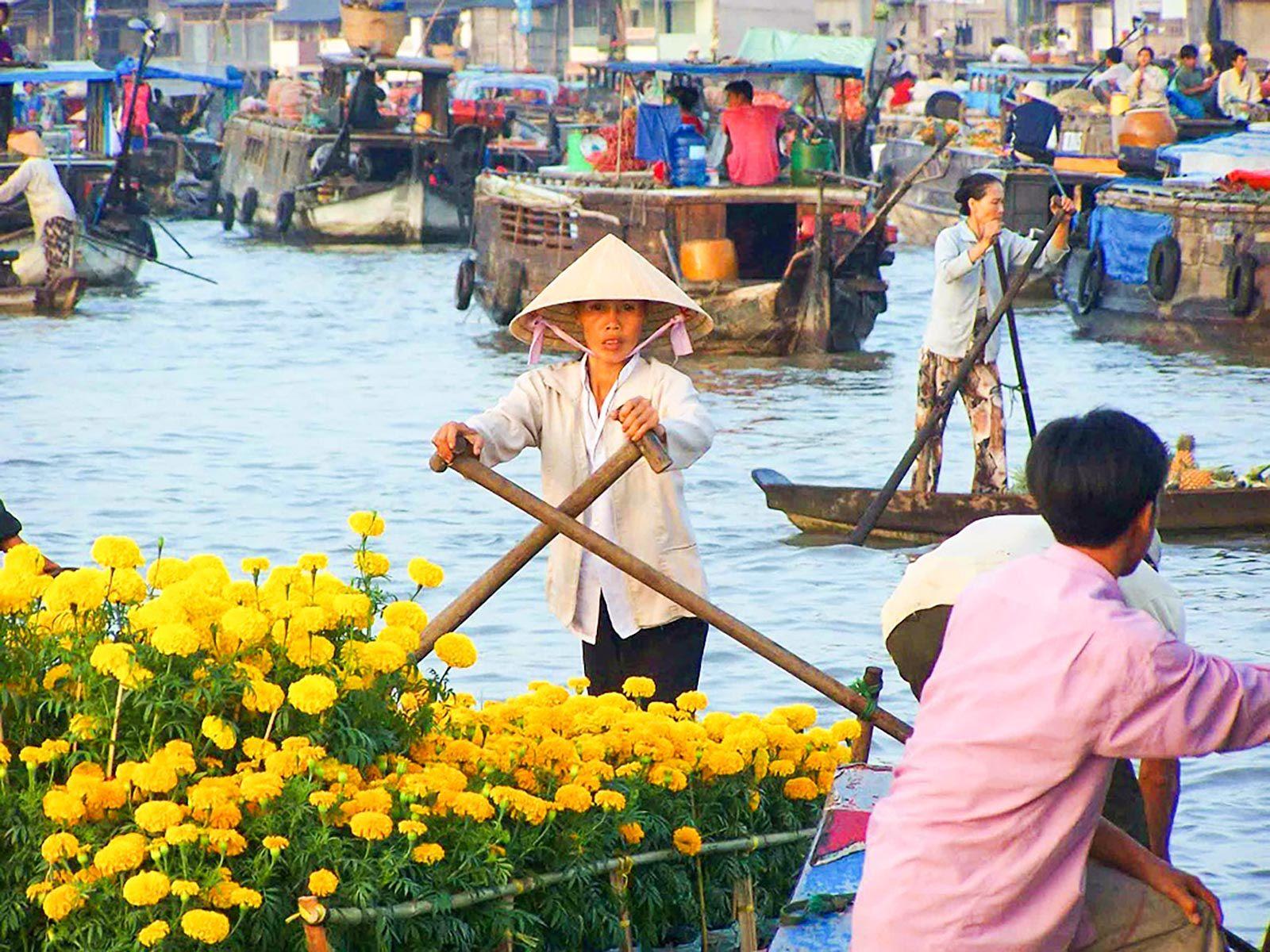
Here roads matter less than water, and the day is measured by the tide rather than the clock.
Wear lightweight, breathable clothing and closed-toe or strap-back sandals suited to boarding sampans and motorboats. A light long-sleeved layer helps against sun exposure on open-air river cruises, and modest shoulder-and-knee coverage is expected when entering Vinh Trang Pagoda.
Small boats used on canal cruises and at Cai Rang Floating Market have limited space, so pack a single day bag rather than a full suitcase for the two-day route. There are no metal detectors or bag scanners at delta piers, but guides ask that bags stay zipped and secured while transferring between motorboats and hand-rowed sampans.
Photography is permitted on all river cruises, at floating markets, and in orchard and workshop stops along the mekong delta 2 day tour route. Inside Vinh Trang Pagoda's prayer halls, avoid flash and ask before photographing monks or worshippers directly.
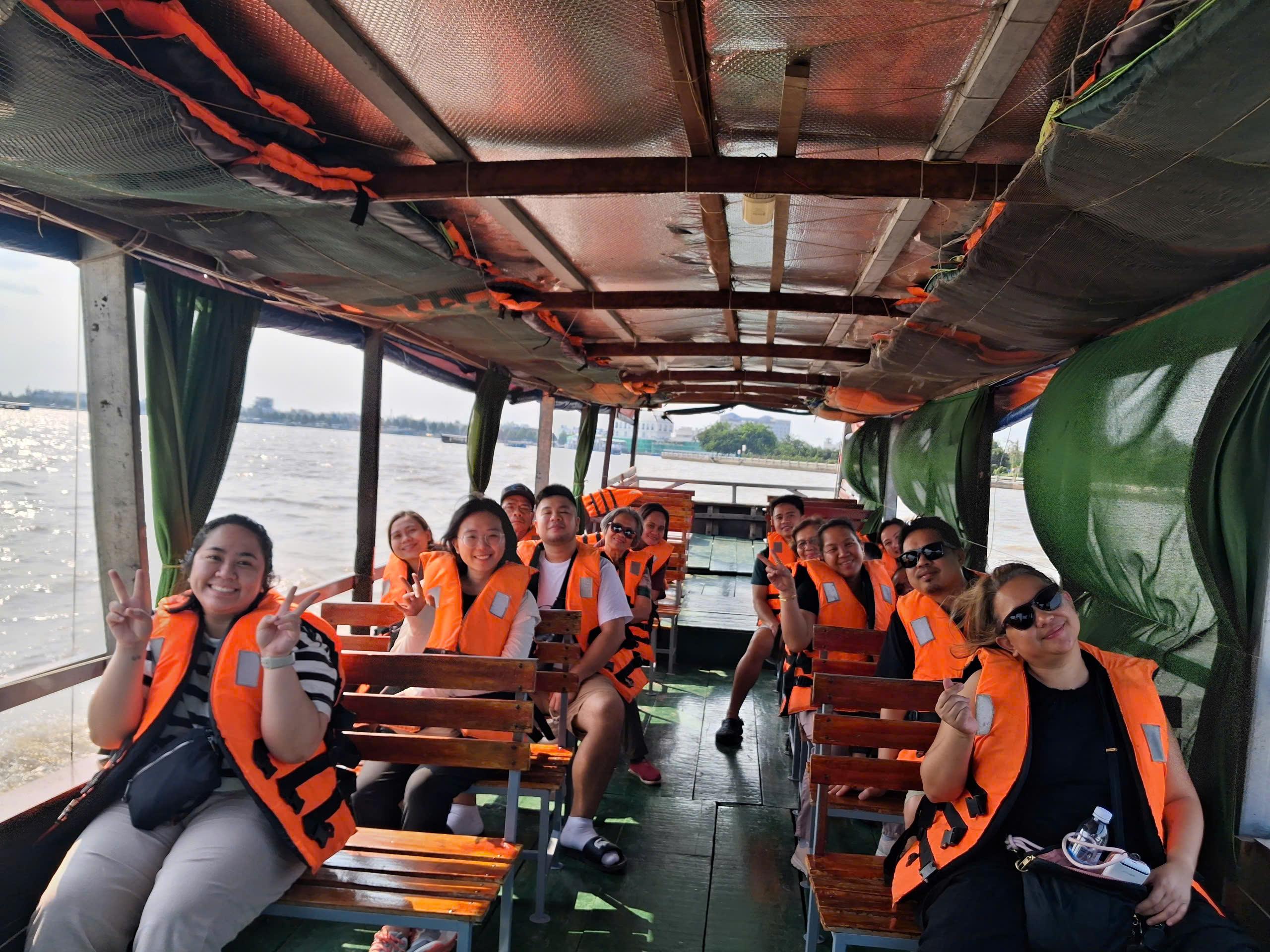
Children can join canal cruises and homestay lunches, but life jackets are required on all boat transfers and supervision is essential near open water. Horse-cart rides and coconut-candy workshops are generally well suited to school-age kids.
Sampans, rowboats, and floating market boats require stepping down into low, sometimes unstable vessels, which makes this itinerary difficult for wheelchair users or those with limited mobility. Larger motorboats used for canal transfers and the Cai Rang Floating Market run are more stable but still lack ramps or lifts.
Bottled water and packaged snacks may be brought aboard boats and buses, but home-cooked lunches and floating-market breakfasts included in most itineraries are eaten at set stops rather than freely at any time. Alcohol such as locally distilled snake wine is offered at some workshop stops but is optional and at the visitor's own expense.
Region open access, sites keep own hours
Cai Rang market busiest before 07:00
Quiet weekday, fewer tour groups
Weekend crowds begin building
Heaviest domestic visitor traffic
Best arrival window: 07:00–08:00, early departure from Ho Chi Minh City
location
Car · 1.5–3.5h · Included in most tour packages
Private car or minivan from Ho Chi Minh City to My Tho takes about 1.5 hours via National Highway 1A, continuing another 2 hours to Can Tho.
Public transport · 2–4h · Approx 120,000–180,000 VND per leg
Futa or Phuong Trang buses run from Mien Tay Bus Station in Ho Chi Minh City to My Tho and Can Tho on frequent daily departures.
Boat · 15–90 min per leg · Included in tour price
Local motorboats and hand-rowed sampans connect canal stops, islands, and the Cai Rang Floating Market once you are in the delta.
Most mekong delta 2 day tour operators allow free cancellation up to 24 hours before the scheduled pickup, with a full refund issued if you cancel within that window. Since entrance fee is 0 USD (no single gate ticket), refund disputes concern the tour operator's transport and boat charges rather than a site admission fee.
Recommended time
Full 2 days, 1 night
A mekong delta 2 day tour runs on two distinct rhythms: day one is a relaxed string of stops, day two is compressed and pre-dawn. Budget the full two days rather than trying to compress this into a long day trip — the Cai Rang floating market only trades in the early hours, so skipping the overnight in Can Tho means missing it entirely. Add time if My Tho or Ben Tre canals are busy with other mekong delta tours on the same schedule; there's little queuing anywhere since sites are open-air, but boat departure points can back up briefly around peak morning windows.
Crowd levels through the day
Weather · crowds · average price — dots go green to amber to red as each metric rises.
Cooler, drier months with daytime temperatures around 25–28°C, the most comfortable season for canal cruises.
Hot and dry before the rains, orchards are fruiting and Cai Rang Floating Market stays busy through midweek.
Rainy season with short afternoon downpours, mornings on the river remain clear and humidity is high.
Flood season, some low-lying canals rise, offering a distinct view of stilt houses and flooded rice fields.
Guides on some mekong delta 2 day tour itineraries offer a 5 AM or 7 AM option; the 5 AM start reaches Cai Rang Floating Market while trading is still at its busiest.
Vendors at the floating market and local workshops rarely handle large notes, so bring small-denomination Vietnamese dong for fruit, coffee, or snacks.
Sampans and rowboats have limited stowage, so an overnight bag rather than a full suitcase makes canal transfers easier.
Rural overnight stops vary between hotel rooms and simple homestays, so check with your operator which type is included.
Free evening time at Ninh Kieu Wharf is often best spent exploring by rented bicycle before the early market departure.
Rice noodle soup on the water and dried elephant-ear fish are regional dishes worth trying at included lunch stops.
District 1 or Pham Ngu Lao backpacker area, Ho Chi Minh City
Most operators collect directly from your listed hotel
Get directionsNinh Kieu Wharf, Can Tho
Departure point for the Cai Rang Floating Market boat
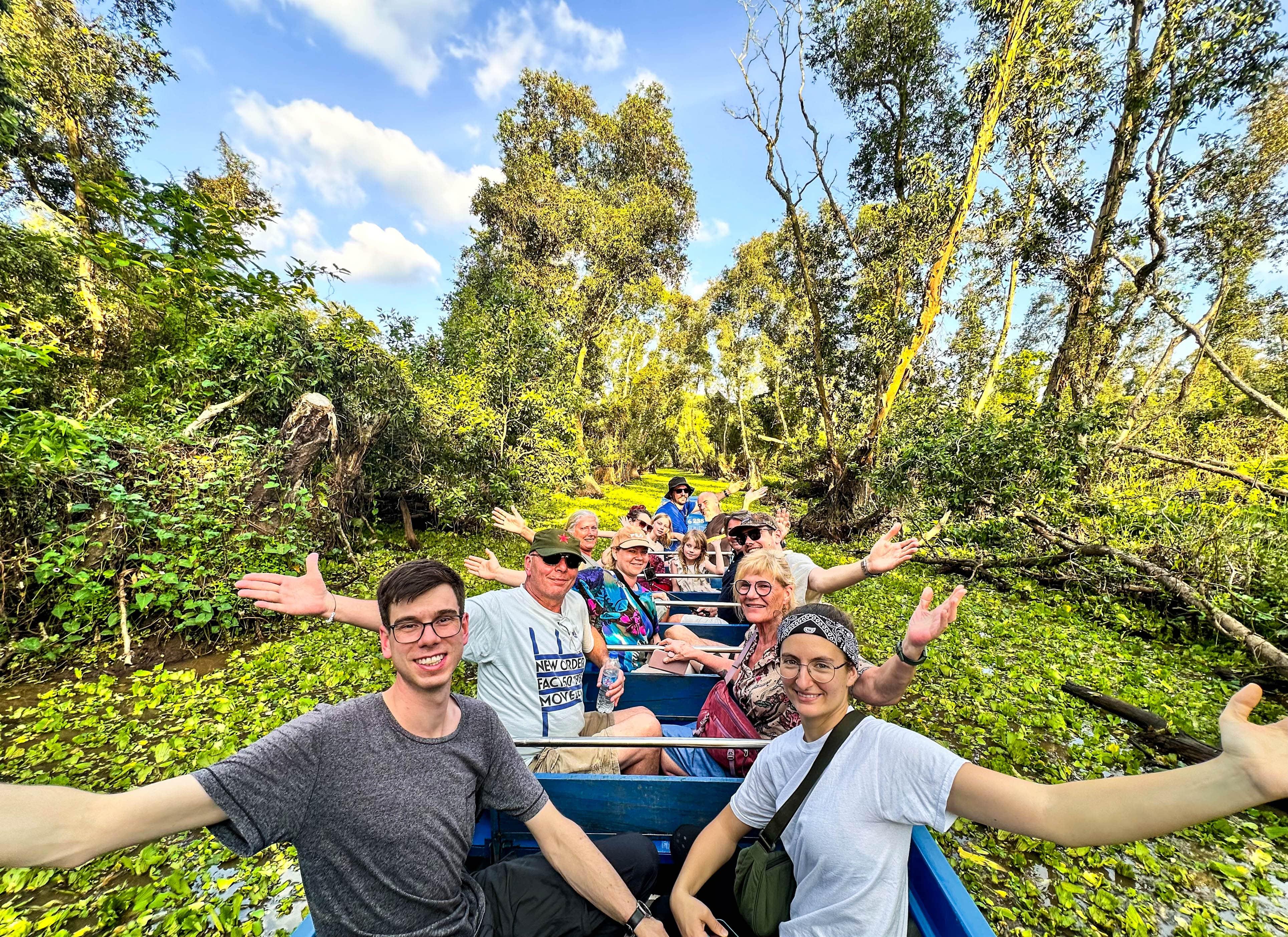
Get directionsSit low at the bow of a hired sampan between 5:00 and 7:00am as it drifts among wholesale boats on the Hau River; wait for a trader's boat to cross the rising sun for the classic silhouette, then shoot straight down onto pyramids of pineapple and dragonfruit stacked on a passing hull. This is the frame most people picture when they book a mekong delta 2 day tour.
Stand on Cai Rang Bridge (or nearby Ba Lang Bridge) on Vo Tanh Street for a wide, elevated angle looking down the half-kilometer stretch of anchored trading boats. It is the one shore-based vantage that reads the market's full scale rather than a single-boat close-up, useful if choppy water rules out handholding a long lens.
Transfer from the motorboat into a narrow hand-rowed sampan on a shaded canal such as Cai Tac, where overlapping coconut palms form a tunnel over the water. Frame the boatman's silhouette against the green canopy, or shoot low from the waterline to catch the reflections between the palm trunks.
Walk the paved embankment along the Hau River near the Ho Chi Minh statue as the sky turns orange over moored fishing boats and the Can Tho Bridge in the distance. Shoot from the waterline steps for reflections, or from the pedestrian love bridge for a wider composition with boats and city lights coming on behind.
Slip off the main Cai Rang channel into the quieter An Binh side-market, reached by the same early boat, where fewer tour boats mean cleaner shots of single vendor sampans loaded with produce, poled by hand through tight water lanes.
A mekong delta 2 day tour means one night away from a proper crib or private bathroom, so families tend to plan the overnight stop more carefully than the daytime boat stops. Kids generally do fine, but heat, sampans, and shared homestay facilities all need a bit of forethought.
Homestay stays are charming but usually mean shared bathrooms and thin walls; families with toddlers or light sleepers often do better booking a hotel-tier room in Can Tho or Ben Tre for the overnight leg, then joining the group for daytime boat stops.
Kids around 5 and up cope best, since long travel days, biking sections, and balancing on narrow sampans are tiring for toddlers and can feel unstable for anyone under about 4.
Can Tho's canals and orchards bring out mosquitoes especially near dusk, so pack repellent and light long sleeves for kids rather than relying on what a homestay provides, since supply varies by house.
Split the driving and boat time by scheduling a real rest block after lunch on day one, since two consecutive early starts plus river transfers can wear young children out faster than a single day trip would.
Small wooden sampans sit low and can rock when kids shift position, so keep young children seated centrally, hold hands during boarding, and confirm child-size life vests are on board before pushing off.
Rest stops between Ho Chi Minh City and the delta have basic squat or Western toilets but rarely baby-changing stations, so bring a portable changing mat if traveling with an infant.
Dining on a mekong delta 2 day tour is mostly hands-on and roadside rather than sit-down: breakfast comes from vendor boats, snacks come from craft workshops, and only Can Tho's evening market offers a proper restaurant-style spread.
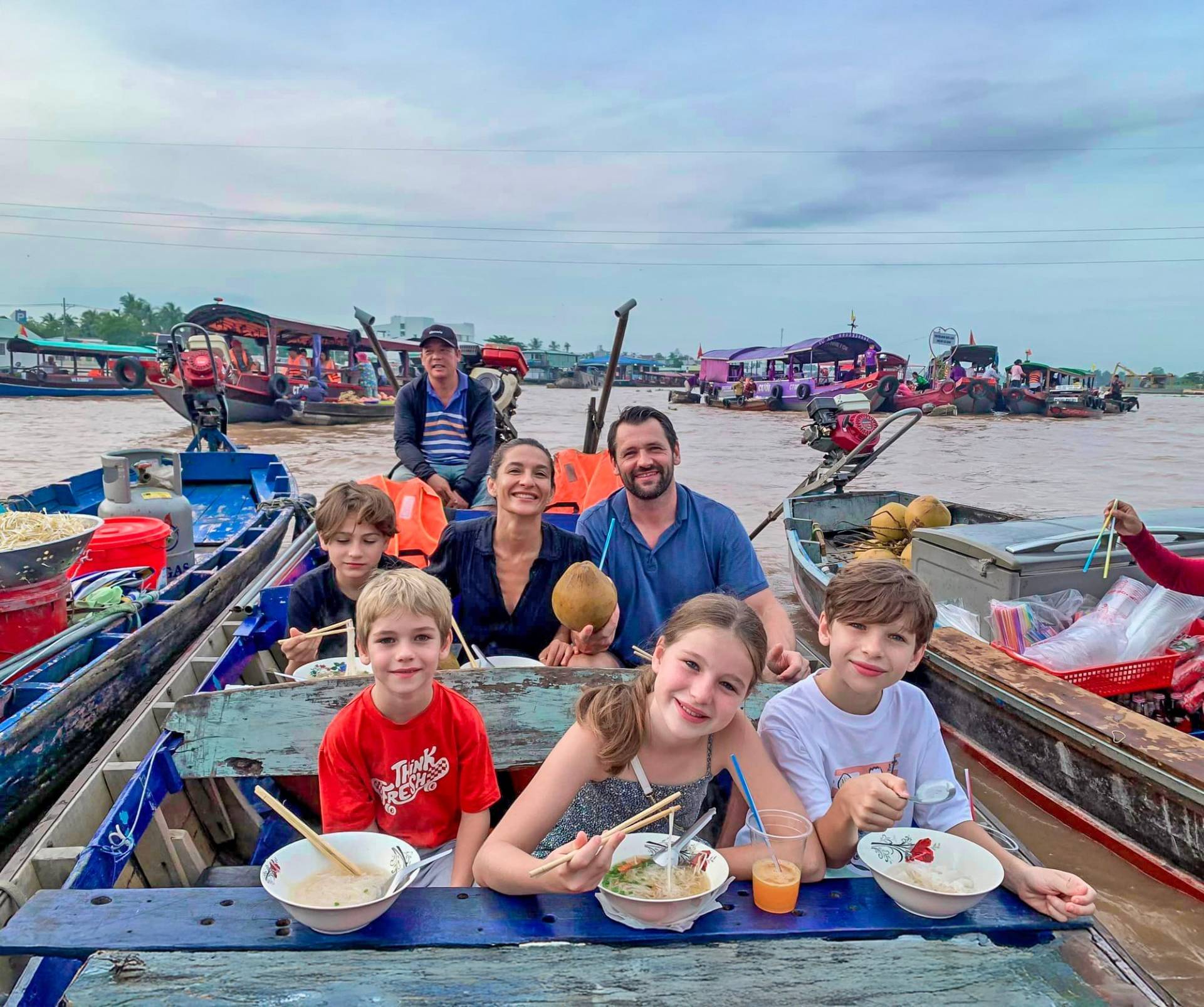
A sampan pulls alongside yours selling hu tieu or pho noodle soup ladled straight from the pot, plus bánh mì and thick Vietnamese coffee poured from another boat. Busiest right at sunrise when trading peaks; a quick, sit-in-your-seat way to eat like a local.
Riverside households cook rice-paper sheets over open coals and press fresh rice noodles, offering warm samples as you watch. Good for a light mid-morning bite rather than a full meal, and rarely crowded since groups rotate through quickly.
Artisans stir coconut milk and sugar into candy, letting visitors sample warm pieces or try shaping some themselves. Pair it with the nearby rice-wine and honey-tea tastings offered at the same stop; it's a snack, not lunch.
Two parallel streets near Ninh Kieu Wharf fill with grilled skewers, sticky rice with chicken, and bánh tráng nướng once the sun sets. Best for the free evening after check-in, busiest after 7pm, and easy to graze several stalls for a full dinner.
Real experiences from real travelers
The mekong delta 2 day tour was the right call over a rushed day trip, since the second morning at Cai Rang before the crowds made everything slower and quieter. Rowing through the narrow water-palm channels around midday, the shade actually cooled things down. Our guide translated the vendor chatter at the market and it felt lived-in, not staged.
Booking the mekong delta tour with a homestay let us cycle the paddy paths at dawn when the light was low and gold. The coconut-candy workshop smelled of caramel and woodsmoke, and the elephant-ear fish at dinner was better than anything in Saigon. Bring mosquito repellent for the veranda evenings.
The bus from Ho Chi Minh City to the delta ate up more of the first afternoon than I expected, though the sampan ride once we arrived made up for it. This mekong delta 2 day tour covers Ben Tre, Can Tho and a floating market, so pace yourself. The homestay beds were basic but clean.
Standing on the boat deck at sunrise while pomelo vendors hooked their produce onto tall bamboo poles is the memory that stuck. Our mekong delta 2 day tour tour guide knew every shortcut through the Can Tho canals. Humid even at 6am, so pack light cotton.
What sold me on the mekong river tour was time — you actually stay in the delta instead of racing back. The rowboat through the coconut groves near Ben Tre was so still you could hear kingfishers. Our host cooked spring rolls with us in the evening.
Do the two days. We compared notes with people who did the skip-the-line delta tour version in one day and they saw half of what we did. The mekong delta 2 day tour tickets included the homestay, all meals and the bike hire, which made the price easy to swallow.
We caught the tail of the wet season and the paddies were flooded mirror-bright, which honestly looked better. The mekong delta 2 day tour handled the weather well with ponchos and a covered sampan. Roads got muddy near the homestay, so wear proper shoes.
The best part of the mekong delta 2 day tours was the second afternoon rowing the small tributaries where the water palms close overhead like a tunnel. Warm, green light and total quiet. The Cai Rang floating market earlier that morning was chaotic in the best way.
Sleeping in the delta changes the trip — waking to roosters and mist over the canal beat any hotel. Our guide on the can tho floating market tour pointed out which boats sold soup versus fruit by the pole they raised. Elephant-ear fish rolled in rice paper was the meal of the trip.
Cycling the raised paths between rice fields near Ben Tre at golden hour was the highlight for me. The mekong delta landmarks packed into two days felt full without being exhausting. Just know the coconut-candy stop is touristy, even if the samples are good.
Everything you need to know for your journey
The Mekong Delta region has no single gate hours, sites and river operators run daily from 00:00 to 23:59, though individual boat trips and workshops follow their own daytime schedules.
There is no single entrance fee for the region since it covers multiple independent sites, each with its own small ticket where applicable, so the overall regional entrance fee is 0 USD.
The recommended arrival window for departure is 07:00–08:00, which avoids peak heat and river traffic congestion on the drive to My Tho.
Wheelchair access is limited because sampans, rowboats, and floating market boats require stepping into low, sometimes unstable vessels; larger motorboats are more stable but still lack ramps.
Boats have limited storage space, so a single day bag rather than a full suitcase is recommended, and bags should stay zipped while transferring between motorboats and sampans.
Yes, photography is allowed throughout the cruises, markets, and workshop stops, though flash should be avoided inside Vinh Trang Pagoda's prayer halls.
Booking a few days ahead during high season (December–April) is advisable, since a mekong delta 2 day tour tour fills up quickly around Cai Rang Floating Market's busiest early morning slots.
Modest clothing covering shoulders and knees is expected when entering Vinh Trang Pagoda, and comfortable closed-toe sandals are best for boat boarding.
Bottled water and packaged snacks are fine to bring aboard, while included lunches and floating-market breakfasts are served at scheduled stops rather than at will.
Most tours include private car or bus pickup from Ho Chi Minh City hotels, with the drive to My Tho taking about 1.5 hours and on to Can Tho a further two hours.
Yes, children can join the canal cruises and homestay lunches, though life jackets are required on all boat transfers and adult supervision is needed near open water.
Most operators allow free cancellation up to 24 hours before pickup for a full refund, since there is no separate site entrance fee to reconcile.
Vinh Trang Pagoda, Ninh Kieu Wharf, and Phong Dien Canal all sit along the standard route and pair naturally with a two-day Mekong Delta landmarks tour.
A 19th-century pagoda blending Vietnamese, French, and Khmer architectural styles, one of the largest in the delta.
Riverside promenade and night market on the Hau River, a common evening free-time stop.
A quieter waterway lined with nipa palms and mangroves, used for a slower paddle after the floating market.
One of the four islets on the Tien River, known for orchards and a crocodile farm.
Regional museum covering delta history, agriculture, and ethnic Khmer culture.
Cluster of hotels along the Hau River used for the overnight stop on most two-day itineraries.
Family-run guesthouses among coconut groves, used by some operators for a rural overnight option.
Common pickup and drop-off area with a wide range of hotel tiers before and after the tour.
Join thousands of happy travelers who have discovered this incredible experience
Book Your Experience Now