11 hr
Cu Chi Tunnels & Mekong Delta Coconut Village Day Tour from Ho Chi Minh City
- Expert local guide
- Small group
- Skip-the-line access
- Free cancellation
Mekong Delta And Cu Chi Tunnels Tour — Ben Dinh Entry & Delta Waterways
Underground galleries by morning, brown river by noon.
Compare fares, pick the fit — all bookings are mobile-voucher and eligible for free cancellation where shown.
11 hr
11 hr
11 hr
Worth it for history-minded travelers
The Cu Chi gate fee is 125,000 VND, and a combined mekong delta and cu chi tunnels tour adds a full day plus transport time on top of that. For your money you get real access: crawling a stretch of the tunnel network, the trap displays, the packed-earth living quarters, then the shift to river life in the delta with its stilt houses and waterways. That contrast is the payoff. History-minded travelers and anyone curious about the guerrilla war get strong value from this Ho Chi Minh City tour, since the tunnels only land when you feel the tight, low crawl yourself. Book skip-the-line tunnel tickets and arrive between 07:00 and 08:30 to beat the groups that roll in around 10:00. Travelers tight on time, or those uninterested in war history, will find the long combined day heavier than the return justifies.
Bottom line: If the guerrilla-war history pulls you, the mekong delta and cu chi tunnels tour tickets earn their price; if not, skip the long day.
Most combo itineraries booked as a mekong delta and cu chi tunnels tour default to Ben Dinh — it's closer to Ho Chi Minh City and easier to pair with a full Mekong Delta day, while Ben Duoc trades that convenience for narrower, more original tunnels and a quieter site.
|
Top pick Ben Dinh (this tour's site) |
Ben Duoc Tunnels | |
|---|---|---|
| Distance from Ho Chi Minh City | ~50 km, 60–90 min drive | ~70 km, about 2 hours |
| Tunnel authenticity/width | Widened to ~120 cm for tourists | Closer to original 60–80 cm |
| Crowd levels | Higher — main coach-tour site | Lower, 3–4x fewer visitors |
| Facilities on site | Restaurants, large souvenir shops, exhibits | Memorial temple, fewer amenities |
| Best for | First-timers, families, time-limited visitors | History enthusiasts, photographers, quiet visits |
| See tickets & prices |
Verdict: If your priority is fitting Cu Chi into a single Mekong Delta day trip, Ben Dinh's shorter drive makes it the practical choice; if authenticity and lighter crowds matter more than time, Ben Duoc is worth the extra hour on the road.
Hand-picked experiences loved by thousands of travelers
12 hours
Free Cancellation
Uncover wartime history underground, then drift along the Mekong past coconut groves on this immersive 12-hour small-group journey.
10.5–12 hours
Free Cancellation
Discover wartime tunnels and river-delta charm in one epic 10–12 hour journey from Saigon.
6–10 hours
Free Cancellation
Dive into Vietnam's wartime past and rural soul on one unforgettable day trip from Saigon.
Early morning pickup around 07:00–07:30 from District 1 hotels for the drive northwest to Cu Chi.
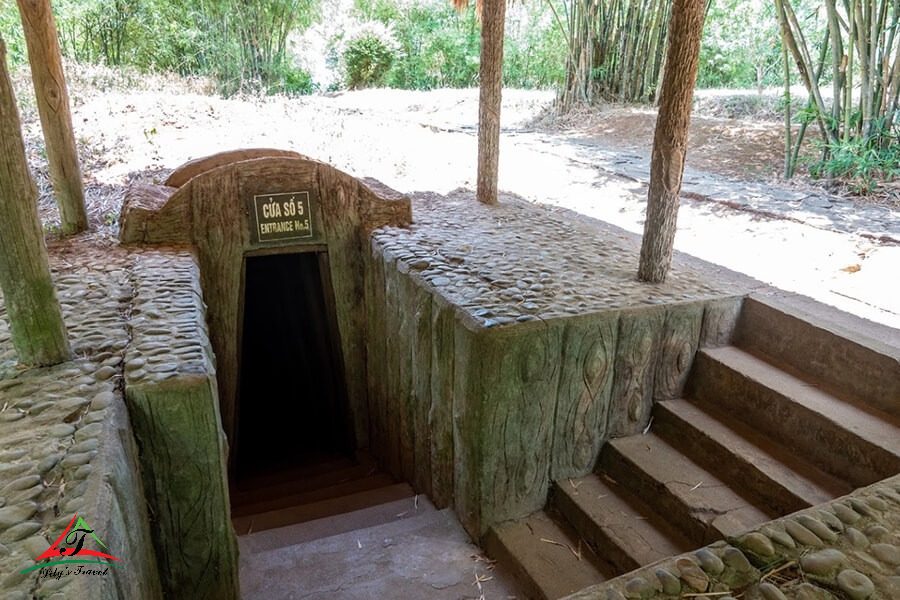
Explore the Ben Dinh tunnel network, view the tank wreck and booby-trap replicas, and optionally crawl a widened tunnel section.
Bus transfer south to My Tho, passing rice paddies along the way, often paired with a roadside lunch stop.
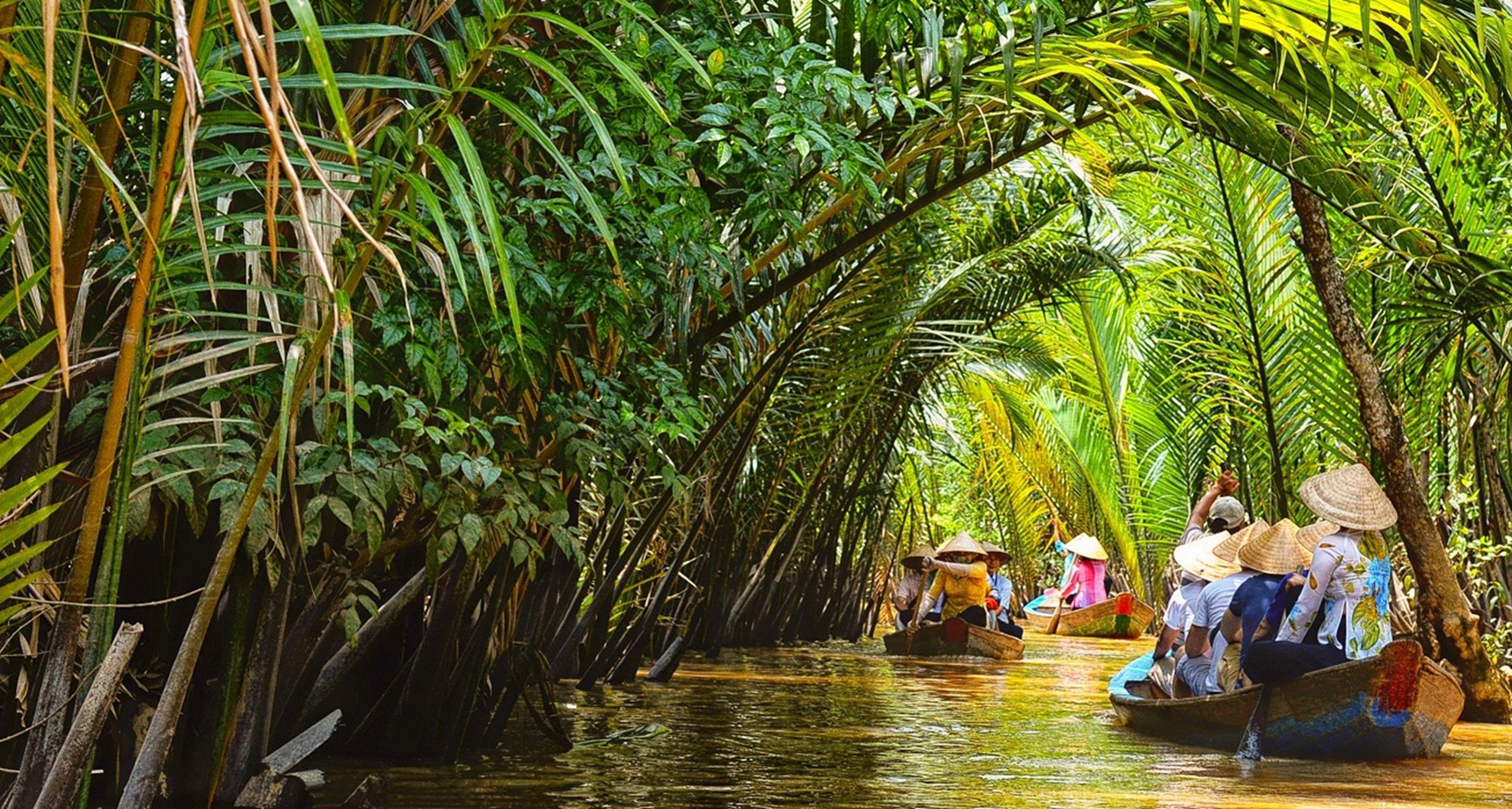
Board a motorized boat on the Tien River past stilt houses and fish farms toward the delta islands.
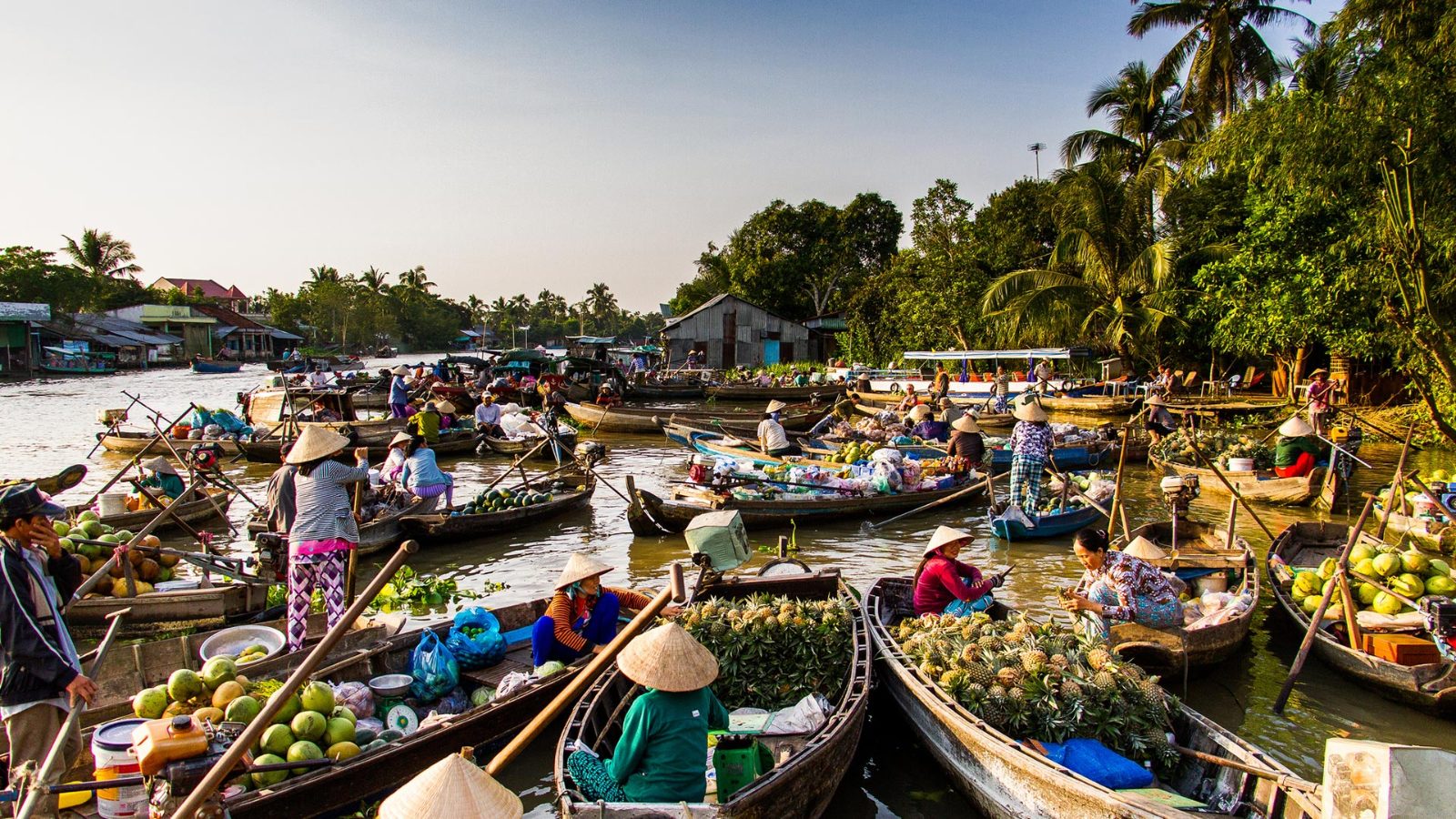
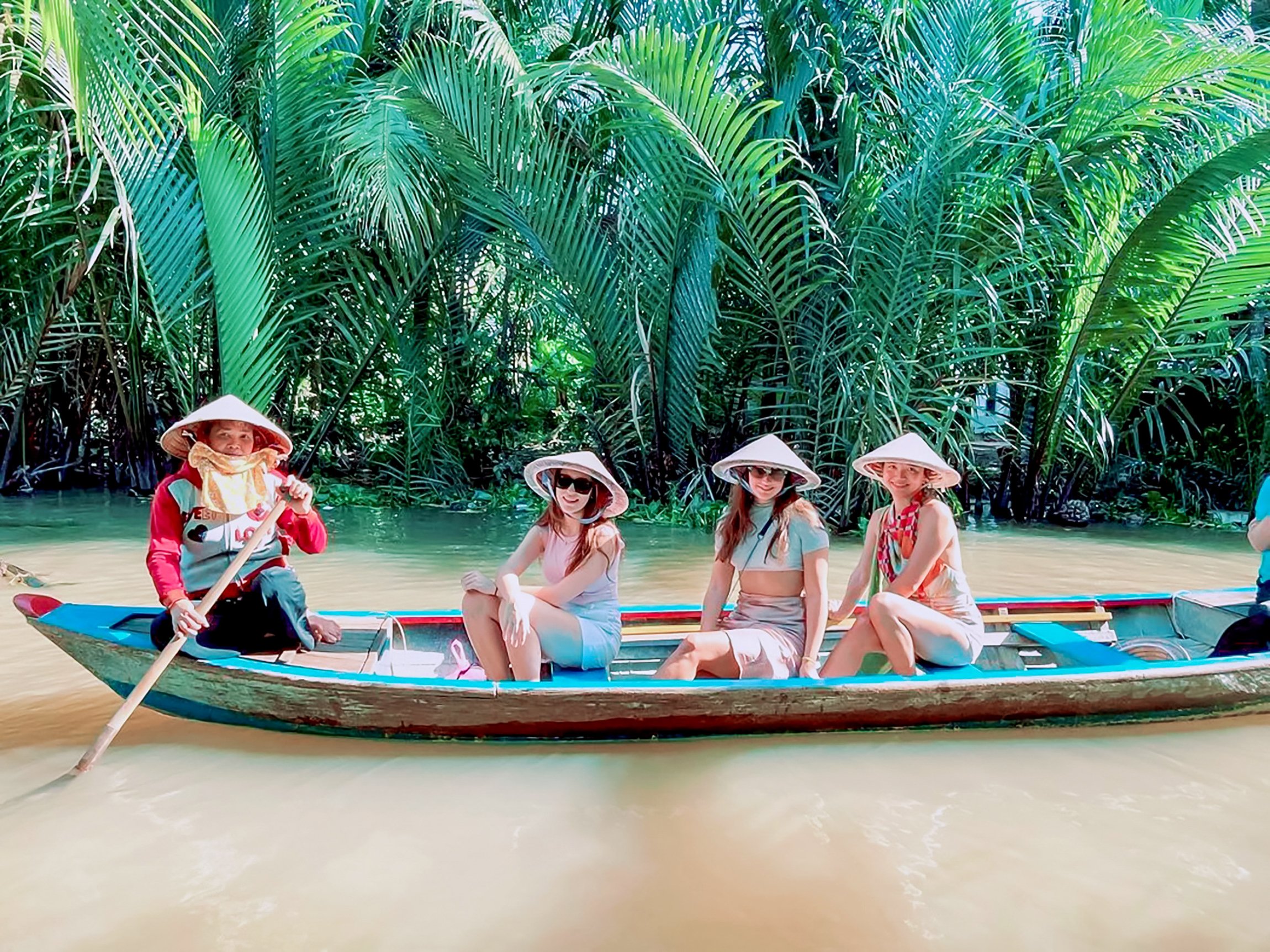
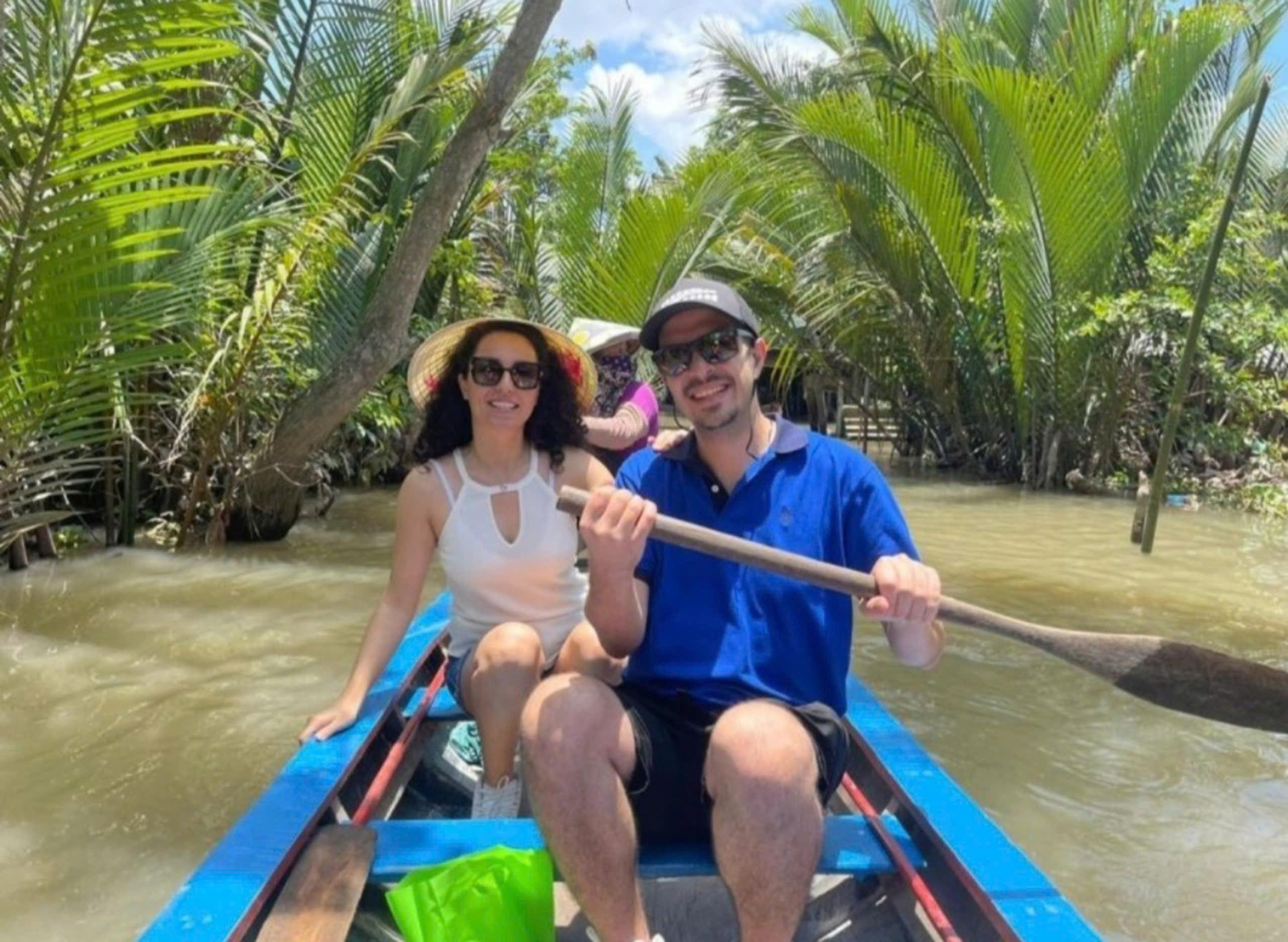
Walk village paths, taste tropical fruit and honey tea, then take a hand-rowed sampan through narrow coconut canals.
Evening drive back to the city, typically arriving between 18:00 and 19:00.
The main tourist-accessible section of the tunnels, widened and reinforced from the original narrow passages so visitors can crawl through a stretch without specialized gear. The full wartime network once stretched roughly 250 kilometers underground.
A rusting American-made tank sits abandoned on the grounds near the entrance trail, disabled by a landmine during the war and left in place ever since. It marks one of the most-photographed above-ground spots on the site.
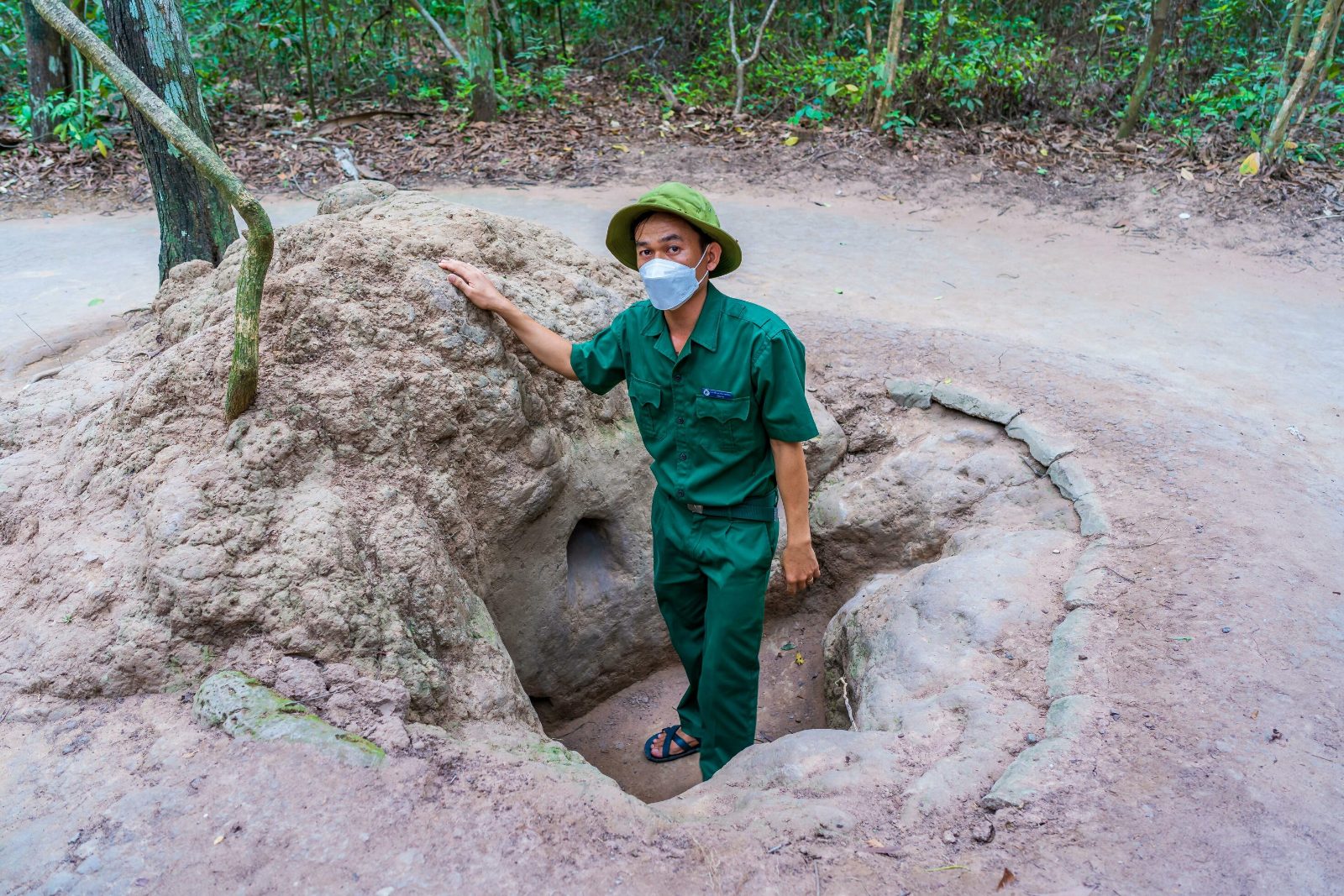
A cluster of camouflaged trap doors along the walking trail shows how guerrilla fighters vanished into the ground undetected, with a leaf-covered wooden hatch barely visible against the forest floor. Guides demonstrate opening one on request.
A recreated bunker complex shows how meals, meetings, and medical care once took place entirely below ground, ventilated through hidden chimney vents disguised as termite mounds. The layout illustrates daily life during years of underground habitation.
One of four river islands on the Tien River near My Tho, reached by motorized boat and known for orchard gardens, a honey bee farm, and traditional Southern folk music performed by local residents. Its narrow canals are explored by hand-rowed sampan.
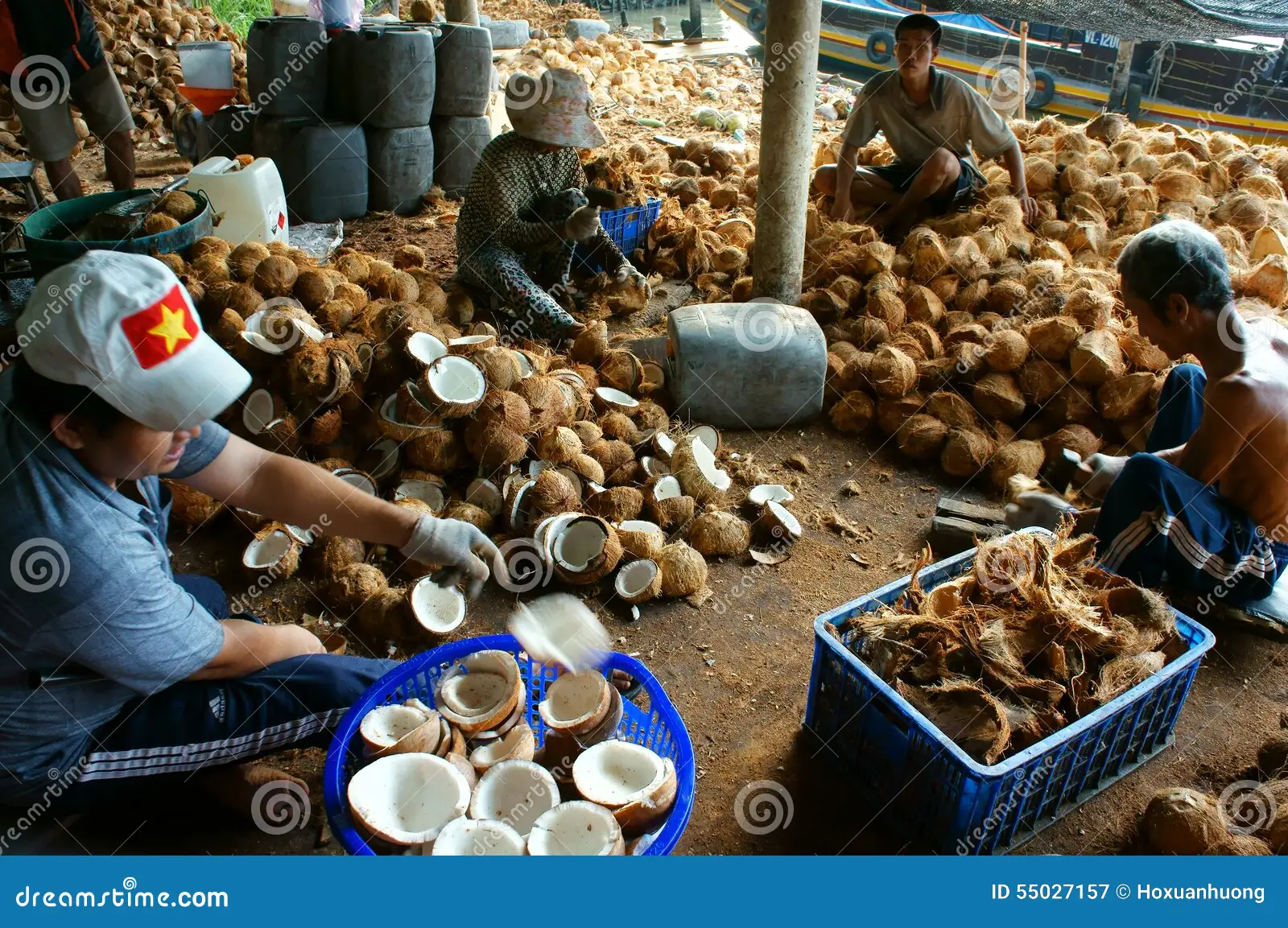
A small family-run workshop in Ben Tre province where coconut milk is hand-stirred over open flame and cut into wrapped candies, a technique passed down through generations in the region. Visitors can watch the entire process from raw coconut to finished sweet.
You set out early and reach the Ben Dinh gate as it opens at 07:00, well ahead of the coaches that mass around 10:00, so the first trench is quiet enough to hear the cicadas. A guide leads you past a camouflaged trapdoor, then you fold yourself down into it, hips first, until your shoulders brush both walls. You crab-walk a widened forty-metre stretch, feeling the temperature drop and the daylight shrink to a coin behind you, before climbing out blinking into red dust and rubber trees. You pause at a ventilation mound, press a hand to a clay wall still cool from the night, and watch smoke drift from a demonstration kitchen. Then you board and ride south. The upland thins, bridges lengthen, and by midday you step onto a sampan on a mekong delta and cu chi tunnels tour that trades tunnels for tidewater. You glide under coconut palms, taste honey tea, and let a rower steer you through a narrow channel where the current does the work. Later you walk a raised orchard bank, thumb a warm rambutan from its shell, and turn back toward the river as the light goes flat and gold across the water.
All the details about your upcoming adventure in one place
A mekong delta and cu chi tunnels tour pairs the underground network of Ben Dinh with the waterways of My Tho, giving you both a war-era landmark and the rhythm of river life in one day. Local guides lead you through the tunnel complex before a sampan ride threads coconut-lined canals, past fruit orchards and cottage workshops. These địa đạo Củ Chi excursions and Saigon countryside tours suit travelers who want history and delta scenery without booking two separate outings.
The tunnels beneath Cu Chi run for roughly 250 kilometres, dug by hand through laterite clay that hardens like brick once exposed to air. That single trait of the soil made an underground city possible: kitchens, field hospitals, wells, meeting halls, and sleeping chambers stacked across three levels, some galleries dropping ten metres below the paddy fields. A mekong delta and cu chi tunnels tour reaches this network at Ben Dinh, in Nhuan Duc commune, where a preserved section has been widened for visitors while the original bores nearby remain barely shoulder-width. The network took shape from the late 1940s and expanded through the following decades until it stretched toward the edge of Saigon. What survives today is significance more than spectacle. The ground above looks like ordinary farmland — rubber saplings, cassava rows, red dust — and the discretion is the point; concealed trapdoors, ventilation shafts disguised as termite mounds, and cooking smoke channelled far from its source were all engineered to read as nothing at all. What makes the site coherent is how the two halves of the day speak to each other. Above Cu Chi lies dry upland at the northern rim of Ho Chi Minh City; two hours south the Mekong fans into its nine-armed delta, where the Saigon River gives way to coconut channels, floating markets, and stilted villages laced by sampan. The descriptive Saigon delta and tunnels day tour joins these landscapes deliberately, pairing the compressed dark of the galleries with the open glare of the water. Among Ho Chi Minh City landmarks, few move a traveller so far across terrain in a single circuit. The architecture rewards attention. Air wells were angled to draw a through-breeze; sump traps caught monsoon flooding; sloped entry chambers baffled gas and blast. In the delta the engineering is agricultural rather than defensive — dyke systems, tidal irrigation, and orchards of rambutan and longan worked from narrow raised banks. A tour địa đạo củ chi và đồng bằng sông cửu long carries the visitor between these two intelligences of the land, one hidden and one spread wide under the sun. Because the ground is porous laterite, the galleries have held their shape for decades with little reinforcement, which is why a mekong delta and cu chi tunnels tour can still lower guests into original passageways rather than replicas. The best skip-the-line cu chi tunnels itineraries thread the exhibition trenches before turning toward the river, so the day reads as one long descent and return — from the clay dark of Cu Chi to the tidal brown of the Mekong, held together by a single road south.
The ground above looks like ordinary farmland, and the discretion is the point.
Wear closed-toe shoes and clothing you don't mind getting stained, since the red laterite clay inside the Cu Chi Tunnels marks light fabrics permanently. Lightweight, breathable layers work best given the heat, and a light rain jacket is useful for the Mekong River boat legs during the wet season.
Bags are visually checked at the Ben Dinh gate before entering the tunnel network, and larger backpacks may need to be carried rather than worn while crawling through the narrower sections. On the Mekong River boat and sampan rides, keep bags zipped and close to your body since seating is tight on the small wooden vessels.
Photography and video are permitted throughout the Cu Chi Tunnels grounds, including at the tank wreck, bunker replicas, and trap displays, though flash is discouraged inside the darker tunnel crawlways. On the Mekong Delta river sections, guides are generally happy to pause sampans briefly for photos of stilt houses and coconut groves.
Children can skip the tunnel crawl and still see the above-ground exhibits and tank wreck at Cu Chi, while the Mekong River sampan ride and fruit-tasting stop are generally easy for kids. Life jackets are provided on boats, and parents should supervise closely near the open canals.
The Cu Chi Tunnels site has dirt and gravel paths with tree roots, and the demonstration tunnels themselves involve crouching or crawling, making the underground portions unsuitable for wheelchair users or anyone with limited mobility. The above-ground trail, tank display, and memorial hall are reachable on foot without entering the tunnels, and the Mekong Delta boat piers use stepped gangplanks rather than ramps.
Bottled water is sold at kiosks near the Cu Chi Tunnels entrance and can be carried inside the grounds, but eating is generally limited to the designated rest area near the tank display. On the Mekong Delta river stops, tasting fruit, honey tea, and coconut candy offered during village visits is standard and included in most itineraries.
Quietest before 09:00
Mid-week, lighter group traffic
Tour buses increase from midday
Busiest day, arrive early
Hours today
07:00 – 17:00, gate closes at 16:00 for last entry
Address
Ben Dinh, Nhuan Duc, Cu Chi District, Ho Chi Minh City, Vietnam
Mobility access
Uneven dirt paths, narrow tunnel crawlways, not wheelchair-friendly
Climate
Hot, humid, minimal shade — dry season Dec–Apr, rainy season May–Nov
Bag policy
Small day bags allowed, bulky luggage best left with your tour bus or hotel
Car · 2–3.5 hours total · 400,000–600,000 VND one-way per leg
A private car or Grab from central Ho Chi Minh City takes roughly 60–90 minutes to Cu Chi via the Ho Chi Minh City–Trung Luong or National Route 22 corridor, followed by another 1.5–2 hours southwest to My Tho for the Mekong Delta portion.
Public transport · 4–5 hours combined, self-arranged · Around 7,000–15,000 VND per bus leg
Bus 13 from Pham Ngu Lao station to Cu Chi bus terminal, then bus 79 to the Cu Chi Tunnels gate, covers the first leg in about two hours; reaching My Tho independently requires a separate long-distance coach.
Taxi · 60–90 minutes per leg · 400,000–600,000 VND per leg
Grab or Vinasun taxis can be booked for either leg separately but are rarely used for the full combined route due to distance and cost.
Tour bus · 10–11 hours round trip · Included in tour price, typically $30–90 USD
Most visitors join an organized Mekong Delta and Cu Chi Tunnels tour with round-trip air-conditioned transport included, departing around 07:00–07:30 and returning by early evening.
Most Mekong Delta and Cu Chi Tunnels tour bookings can be cancelled free of charge up to 24-48 hours before pickup, with a full refund minus any processing fee. The 125,000 VND Cu Chi Tunnels gate fee is only forfeited if you cancel after the tour operator has already purchased tickets on arrival.
Weather · crowds · average price — dots go green to amber to red as each metric rises.
Dry season with the lowest rainfall and daytime highs around 28–34°C, making this the most comfortable window for both the tunnel walk and the river cruise. It is also the busiest period, so a Mekong Delta and Cu Chi Tunnels tour booked in these months benefits most from an early morning start.
Rainy season begins with short, intense afternoon downpours, but mornings usually stay clear enough for the tunnel visit and river ride. Humidity is high, so plan the Cu Chi portion before midday.
Peak wet season with the heaviest rainfall and frequent afternoon storms, which can shorten time on the open sampans in the Mekong Delta. Crowds thin out considerably, and tunnel demonstrations continue rain or shine under cover.
Rain tapers off gradually with warm, humid days averaging around 27–30°C. River water levels are higher, giving a fuller view of the flooded canals during the delta cruise.
Aim to arrive at Cu Chi between 07:00 and 08:30, since this beats the large tour groups that typically arrive around 10:00 and gives cooler conditions for walking the trail.
Ticket counters and on-site vendors at Cu Chi mostly deal in cash, so bring small-denomination Vietnamese Dong rather than large bills or cards.
The red laterite soil inside the tunnels stains light fabrics permanently, so darker, older clothing works better than your nicest outfit.
Ben Dinh's tunnels are widened and reinforced for tourists, making it a gentler introduction than the more extensive Ben Duoc site 20 km further on.
The Mekong Delta boat and sampan rides involve choppier water on narrower canals, so those prone to motion sickness should plan accordingly.
The above-ground exhibits, tank wreck, and war museum give a full experience without needing to enter the narrow demonstration tunnels.
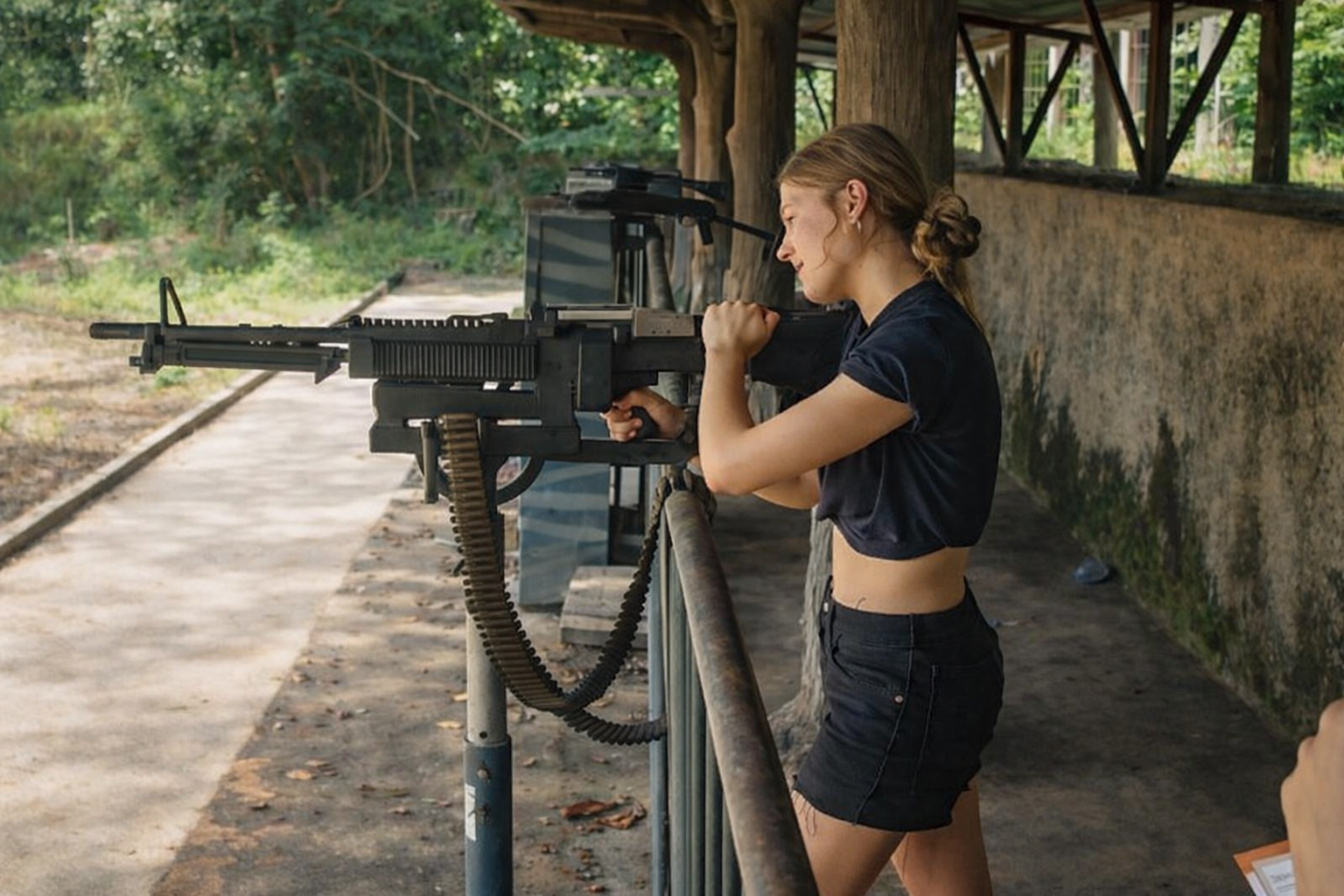
Firing historic weapons like the AK-47 costs extra per bullet with a minimum purchase, paid separately from the gate fee.
Various hotels, District 1, Ho Chi Minh City
Standard pickup point for most group tours, confirmed the night before
Get directionsBen Dinh, Nhuan Duc, Cu Chi District, Ho Chi Minh City
Main ticket counter and entry point for the tunnel site
Get directionsTien River waterfront, My Tho, Tien Giang Province
Departure point for Mekong Delta river cruises
Get directionsThe tunnels began not with the Americans but with the French. Around 1948, during the First Indochina War, Viet Minh fighters near Cu Chi dug the first shallow passages into the region's firm laterite clay. These early galleries hid documents, weapons, and people. The soil held its shape when cut. That geology made the whole enterprise possible. After 1960, the National Liberation Front expanded the network with deliberate ambition. Diggers worked by hand, moving earth in baskets and scattering it into rivers to hide the excavation. By the mid-1960s the system reached an estimated 250 kilometres, threading across Cu Chi District barely 40 kilometres from Saigon. Its proximity to the capital gave it strategic weight, and a modern mekong delta and cu chi tunnels tour still traces that corridor. The tunnels grew into three descending levels, some cut twelve metres deep. Beneath the surface lay kitchens with the Dien Bien Phu chimney, which vented smoke far from cooking fires; field hospitals; arms workshops; wells; sleeping quarters; and command rooms. Air holes were disguised as termite mounds. Trapdoors were sealed and camouflaged with leaves. Whole families lived below ground for long stretches, forming a self-contained underground community. In January 1966 the United States launched Operation Crimson Tide, later Operation Cedar Falls in 1967, to clear the area the Americans called the Iron Triangle. Bombing, defoliation, and specialist "tunnel rats" failed to destroy the system. Visitors on a Ho Chi Minh City tunnels tour today walk this contested ground. The Ben Dinh section, near Nhuan Duc in Cu Chi District, preserves widened passages, reconstructed traps, and the surviving hospital chambers. Those buying mekong delta and cu chi tunnels tour tickets encounter a landscape of Cu Chi landmarks shaped by two wars. A skip-the-line Cu Chi tunnels visit shortens the queue but not the descent into that engineered dark. The best regional mekong delta and cu chi tunnels tour tours pair the delta's waterways with this history, and each Cu Chi tunnels tour carries the same weight underground.
Viet Minh dig the first tunnels near Cu Chi during the anti-French war.
The National Liberation Front begins systematic expansion of the network.
The system reaches roughly 250 kilometres across Cu Chi District.
Operation Crimson Tide targets the tunnels in January.
Operation Cedar Falls attempts to clear the Iron Triangle.
The war ends and the tunnels pass out of military use.
Ben Dinh at Nhuan Duc preserves widened passages and reconstructed chambers.
A mekong delta and cu chi tunnels tour packs a river cruise and a war-history site into one long day, which is a lot for small legs and short attention spans. With some pacing choices, most families manage it comfortably, especially kids aged 7 and up.
Cu Chi's paths are unpaved dirt and gravel, so a stroller is workable above ground but useless once you reach the tunnel network. Bring a carrier instead for toddlers during the walking sections.
Kids around 7-8 and older engage best with the history and can handle the heat and walking; the optional crawl is genuinely easier for small bodies than for adults, so this is one spot where younger children sometimes outperform parents.
Both are opt-in, so let kids peek at the entrance and decide, and plan for one adult to sit out the firing range with younger children since the gunfire noise startles many kids nearby.
Split energy budgets: keep the Mekong boat leg for the morning when kids are fresher, save the more physically demanding tunnel walking for after a lunch break, and build in shade stops given Cu Chi's heat.
Coconut-candy workshops, floating markets, and short rowboat rides through canals hold kids' attention far better than the open water crossings, so ask your guide to prioritize those stops.
Covered walkways and the documentary hut at Cu Chi offer shelter, and the Mekong Delta and Cu Chi Tunnels tour tour continues in light rain since most activities have covered or indoor fallback options.
Eating on a mekong delta and cu chi tunnels tour is almost entirely built into the itinerary rather than left to chance, so there's little need to hunt for restaurants near either site.
Steamed tapioca (cassava) with sesame salt or crushed peanuts, dipped in sugar, served with jasmine or pandan tea. Quick 10-minute stop after the tunnel walk, part of nearly every Cu Chi tour and Cu Chi Tunnels tour ticket package. Filling but bland alone, good with the sugar-chili dip.
Standard midday stop after crossing to the Mekong Delta, usually a set menu of grilled or fried fish, spring rolls, and rice. Busiest around noon-1pm when several buses arrive together, fine for groups with dietary requests flagged ahead.
Small riverside workshop showing how coconut milk is boiled and rolled into candy, with samples of several flavors offered before the retail counter. Best for a short break between boat legs, not a full meal.
Fresh honey tea with lemon, sometimes paired with tropical fruit, served at open-air tables among the bee boxes. A relaxed 15-20 minute pause on most Mekong Delta and Cu Chi Tunnels tours, popular for photos with the honeycombs.
Real experiences from real travelers
We booked the mekong delta and cu chi tunnels tour on a whim and it packed far more into a single day than we expected. The morning at the tunnels was humid and close, and squeezing through even the widened section left my knees muddy, then by afternoon we were drifting on a coconut canal with a woman rowing in a conical hat. The contrast between the underground network and the delta waterways stuck with me more than any single photo.
The sai gon cu chi tunnels tour portion was interesting but the delta was the highlight for me. We transferred to a small sampan and glided under nipa palms while cicadas droned in the midday heat, then stopped for coconut candy still warm off the wok. Bring water, the tunnel forest gets sticky by late morning.
It is a long day of driving so manage expectations, but our guide kept the pace moving. At the tunnels we watched a demonstration of the camouflaged trapdoors and hidden ventilation shafts, which my teenager found genuinely gripping. The lunch on the river with grilled elephant-ear fish was better than I expected from a group tour.
The skip-the-line cu chi tunnels access meant we walked straight past a long queue at the entrance, which in that heat mattered. Down in the tunnels the air was thick and the passages tighter than any picture suggests, then the Mekong leg felt like exhaling, all wide brown water and floating fruit stalls. Solid value for a full day.
Our guide grew up near the delta and his stories about the war-era network and the honeycomb of tunnels made the morning feel personal rather than touristy. In the afternoon we rowed through narrow palm channels and tasted honey tea at a small farm. If you only pick one day trip from the city, this ho chi minh city day tour covers a lot of ground.
I did not expect the tunnels to be so genuinely tight; crawling through a preserved section in the dim underground was claustrophobic in the best way. The mekong delta and cu chi tunnels tour then swung completely into slow river mode, sampans and coconut groves under a hazy sun. Wear clothes you do not mind getting dirty.
A lot to see and mostly well organized, though lunch felt a touch rushed before the boat departed. The rubber-tree forest around the tunnel complex was cooler than the open delta, where the afternoon sun was strong on the water. Still, gliding past the floating market vendors balancing pineapples on their boats was a quiet highlight.
Getting the mekong delta and cu chi tunnels tour tickets in advance saved us stress; everything from the van to the sampan was already arranged. Standing at a hidden tunnel hatch barely wider than my shoulders, I understood the scale of the underground network in a way no museum could show. The coconut candy and river lunch rounded the day out nicely.
From the earthy smell of the tunnel forest in the morning to the salt-sweet coconut sweets by the river in the afternoon, this saigon landmarks outing kept surprising us. We rowed through a green tunnel of overhanging palms so narrow the boat brushed the leaves. Go early to beat both the crowds and the worst of the humidity.
Alarm went off before dawn but the mekong delta and cu chi tunnels tour tour made the early start worthwhile. The preserved passages and camouflaged air vents at the tunnel site were fascinating, and the shift to slow sampans on the delta felt like two separate trips in one. The bikes and boats were basic but everything ran on time.
Everything you need to know for your journey
The Cu Chi Tunnels gate is open daily from 07:00 to 17:00, and most Mekong Delta and Cu Chi Tunnels tour itineraries schedule the tunnel visit first thing in the morning before continuing to the Mekong Delta.
The site has uneven dirt paths and narrow crawlways, so the underground tunnel sections are not wheelchair-accessible, though the above-ground trail and tank display can be viewed without entering the tunnels.
Small daypacks, bottled water, sunscreen, and cameras are fine, while bulky luggage, glass bottles, drones without permission, and weapons brought from outside are not allowed.
Yes, photography and video are permitted throughout the grounds, including near the tank wreck and trap replicas, though flash is discouraged in the darker crawlways.
The dry season from December to April offers the lowest rainfall and most comfortable temperatures for both the tunnel walk and the river cruise portion of the tour.
Wear closed-toe shoes and clothing you don't mind getting stained, since the red laterite clay inside the tunnels marks light fabrics permanently.
Yes, tasting tropical fruit, honey tea, and coconut candy at village stops is a standard part of the Mekong Delta river cruise included in most itineraries.
Most travelers join an organized Mekong Delta and Cu Chi Tunnels tour with round-trip transport from a Ho Chi Minh City hotel, since the two sites lie in opposite directions from the city.
Yes, children can skip the tunnel crawl and still enjoy the above-ground exhibits at Cu Chi along with the river cruise and village visits in the Mekong Delta.
Most bookings allow free cancellation up to 24-48 hours before pickup with a full refund minus any processing fee.
Many operators pair the Cu Chi Tunnels with a Ben Luc farm visit or extend the Mekong Delta portion into a two-day trip covering Cai Be and Can Tho.
The Cu Chi Tunnels gate fee is 125,000 VND per foreign adult, paid separately from any tour package price.
A small museum near the tunnel complex displaying wartime photographs, weapons, and maps of the tunnel network's expansion. It gives added context to the tank wreck and bunker replicas seen on the walking trail.
A tall memorial tower near the alternate Ben Duoc tunnel site honoring Vietnamese soldiers and civilians who died in the Cu Chi area during the war. Visitors can climb several floors for views over the surrounding countryside.
A colorful Buddhist pagoda in My Tho blending Vietnamese, French, and Khmer architectural styles, with large seated Buddha statues in its garden. It sits close to the river piers used for Mekong Delta boat departures.
One of the four main islands on the Tien River, known for orchard gardens, honey bee farms, and traditional folk music performances. It is a common stop woven into Mekong Delta river cruise itineraries.
A distinctive Cao Dai cathedral in Tay Ninh known for its ornate facade and midday religious ceremony, sometimes combined with Cu Chi on a different day tour.
Most Mekong Delta and Cu Chi Tunnels tours collect guests from hotels in District 1, close to Ben Thanh Market and the Saigon riverfront.
A cluster of mid-range hotels along the Tien River in My Tho serves travelers doing overnight Mekong Delta extensions rather than a single-day trip.
Simple budget guesthouses scattered around Cu Chi town serve mainly local visitors rather than international tourists, who typically day-trip from Ho Chi Minh City.
Join thousands of happy travelers who have discovered this incredible experience
Book Your Experience Now